
 Mia McKenny
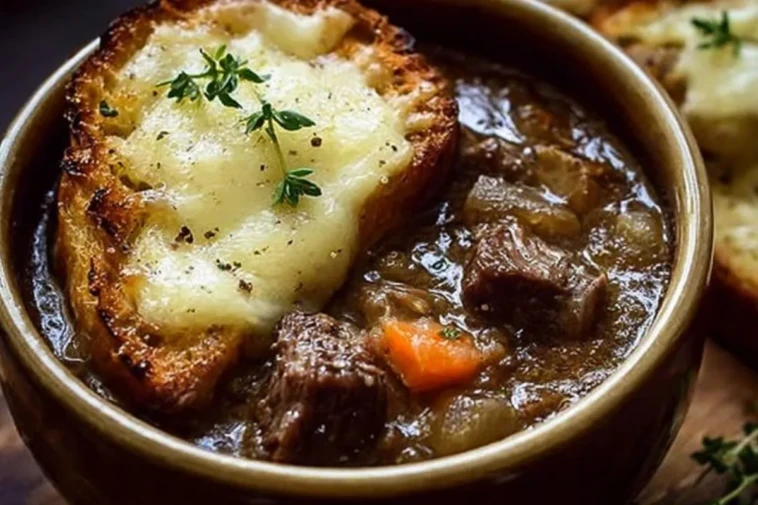

This French Onion Short Rib Soup brings a luxurious twist to a beloved classic without straying into overly complicated territory. If you can simmer a pot and toast a slice of bread, you can master this dish. My version teaches you how to layer flavor, control texture, and balance richness, all while keeping things practical for a home kitchen.
You’ll learn how to coax deep flavor from caramelized onions, tenderize short ribs to perfect fall-apart consistency, and build a broth that balances sweetness, umami, and a whisper of acidity. I’ll also guide you through the bread and cheese topping—getting the melt, the toast, and the seasoning just right.
Where typical onion soups can fall flat or greasy, and short rib stews can feel overly heavy, this soup strikes the perfect middle ground. It eats like a French onion soup that’s been upgraded with a slow-braised meat course and the satisfying chew of Gruyère-topped toast.
This recipe fits squarely in the “cold weather showstopper” category. It feels rustic yet elevated, traditional yet indulgent. And when you set it down at the table—piping hot with bubbling cheese and hunks of tender beef nestled in deeply savory broth—you’ll understand exactly why it’s worth mastering.
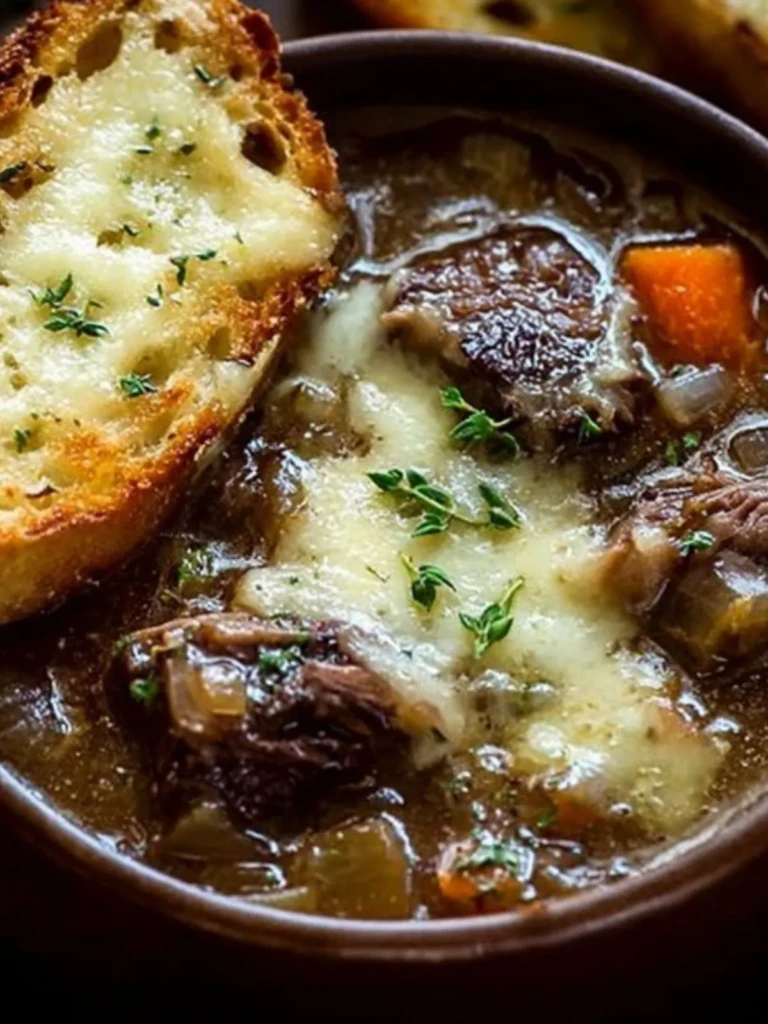
Ingredients for the French Onion Short Rib Soup
The foundational layer of this soup begins with the onions. I use a combination of yellow and sweet onions to create depth—yellow onions offer that essential allium bite, while sweet onions round things out with natural sugars that caramelize beautifully. Slowly cooked in butter and a touch of olive oil, they develop a jammy texture and golden-brown hue, which is critical to the soup’s complexity.
The short ribs bring richness and body. I prefer bone-in beef short ribs because the bones release gelatin during braising, giving the broth luxurious texture and flavor. Boneless can be used in a pinch, but the bone truly makes a difference. After searing to develop a deep crust, the ribs simmer until fork-tender, infusing the broth with beefy essence.
For the braising liquid, I build a base with beef stock and dry red wine. The wine adds acidity and brightness, essential for cutting through the richness. A splash of sherry or cognac right at the deglazing step adds another aromatic layer. Garlic, thyme, bay leaves, and black pepper round out the flavor profile, while a touch of balsamic vinegar at the end heightens the savoriness.
The bread topping is not just an afterthought—it’s integral. I use rustic sourdough or French bread, sliced thickly and toasted before being blanketed with grated Gruyère. Gruyère melts into creamy ribbons with nutty depth that enhances every spoonful. Fontina can work if you need a substitute, though it offers a slightly softer melt and a milder flavor.
Carrots and celery play a supportive role in the broth. While not always traditional in onion soup, they help anchor this version within the stew-soup hybrid space. Their gentle sweetness and earthy tones lift the overall flavor without distracting from the onions or short ribs. Every element is selected to balance and reinforce the others—and to reward slow cooking with rich, complex returns.
Choosing Between Bone-In and Boneless Short Ribs
When developing this soup, I tested both bone-in and boneless short ribs to understand how each influenced the final dish. The differences were subtle in some ways, but impactful in others. Bone-in short ribs emerged as the clear favorite when depth and texture mattered most. The bones slowly release collagen as they braise, transforming the broth into something slightly gelatinous and velvety, which clings to each spoonful and carries flavor more fully.
Boneless short ribs are undeniably convenient. They cook a bit faster and are easier to portion, especially for batch cooking or weeknight preparation. However, they tend to lack the same richness and mouthfeel. I found that the soup made with boneless ribs needed additional finishing fat or more cheese to reach the same level of satisfaction.
If you’re making this soup as a centerpiece for a dinner gathering or on a cold weekend when time is your ally, go for bone-in. It produces a more layered, rewarding result. If it’s a weeknight or you’re cooking for smaller appetites, boneless will suffice, but consider adding a bit of beef marrow or finishing with a knob of butter to bring back that luxurious depth.
In both cases, quality matters. Look for well-marbled meat, and avoid overly lean cuts which can dry out and become stringy during the long simmer. This decision mirrors choices made in traditional French braises and stews, where the bones are treated as key flavor contributors, not simply structural components.
The Braising Method That Protects the Broth’s Integrity
Braising the short ribs directly in the onion broth is where the transformation happens. But there’s a method to ensure the liquid stays clean, not greasy or murky. I always start by searing the short ribs in a separate pan. This allows me to control the browning process and render out excess fat, which can otherwise cloud the broth and mask the onion’s sweetness.
Once the meat is deeply caramelized, I deglaze the pan with wine, scraping up every fond-laden bit. This liquid is then added to the onion base, ensuring nothing flavorful is lost. Meanwhile, the onions are slowly caramelized with a touch of butter and a pinch of salt. This process takes time—a good 45 minutes—but it lays the groundwork for everything else. Stirring regularly and watching the heat prevents scorching and ensures even development.
After uniting the onions, broth, wine reduction, and short ribs, I let the mixture simmer gently, uncovered. This allows the liquid to reduce slightly and intensify, while also maintaining clarity. Periodically skimming off any fat that rises to the top helps keep the texture elegant. It’s tempting to rush, but patience is rewarded with a broth that sings with layered flavor.
Common concerns include overly salty results or undercooked meat. Always taste your broth before seasoning fully—stock and cheese both contain salt, so go light until the end. And don’t shortcut the simmer time. The meat should practically fall apart with a spoon, not resist it. This technique draws from French pot-au-feu and classic onion soup strategies, giving you the best of both worlds with none of the drawbacks.
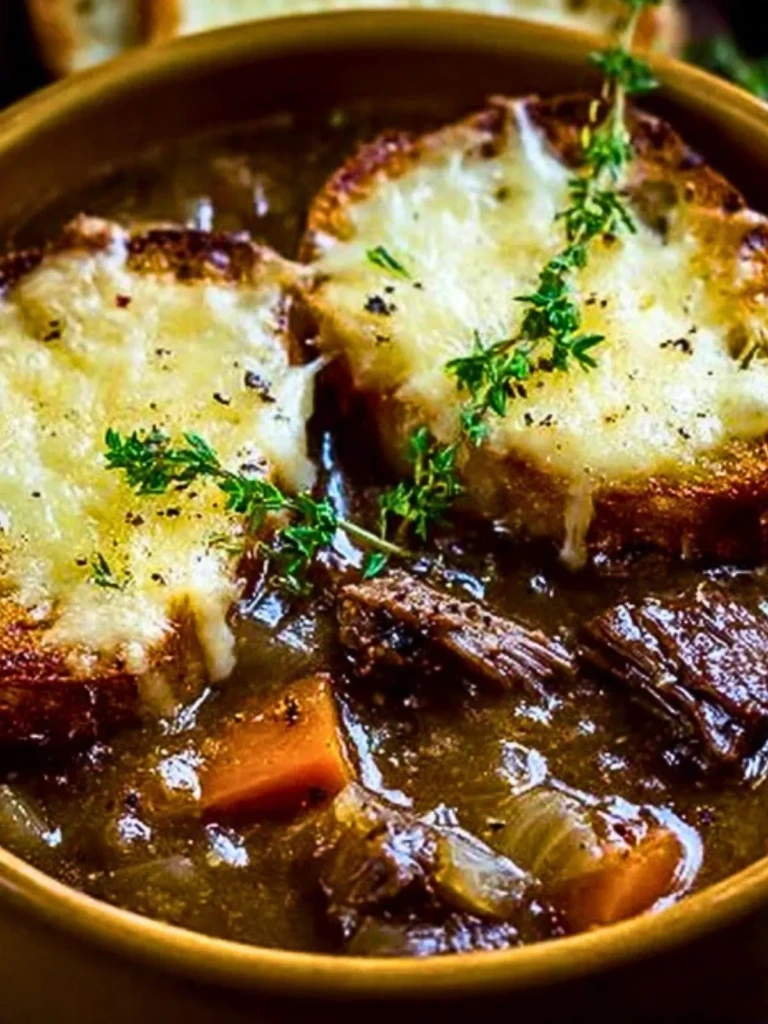
Serving and Storing French Onion Short Rib Soup
Presentation plays a major role in this dish’s appeal, and the finishing touch of Gruyère toasts shouldn’t be rushed. I recommend toasting the bread slices in the oven before topping them with cheese, then broiling them briefly until the tops are golden and bubbling. The contrast of crisp edge and molten center is essential. When ladling the soup, nestle the cheesy bread right on top, allowing it to soak slightly but remain structured. A fresh thyme sprig or a twist of cracked pepper adds a final flourish.
This soup holds up beautifully for make-ahead cooking. In fact, like many braises and stews, it improves with a night in the fridge. The flavors deepen, the broth thickens subtly, and the meat becomes even more tender. Just be sure to store the soup separately from the bread topping to preserve texture.
For storing, refrigerate the soup in an airtight container for up to four days. It also freezes well without the cheese toast, making it an excellent candidate for batch cooking. Reheat gently over medium-low heat to maintain meat tenderness. When ready to serve again, simply toast fresh bread and top with cheese for a just-made presentation.
This same approach works well with other French-inspired soups, like onion and mushroom soup or beef bourguignon variations. The key is separating the crunchy topping from the broth during storage, then reuniting them just before serving for the most satisfying result.
A Quick Note on Comparisons With Other Soup Recipes
This French Onion Short Rib Soup stands apart because it blends two comfort food favorites into one refined dish. Compared to a traditional French onion soup, which relies solely on caramelized onions and broth for its depth, this version offers a heartier, more protein-rich result thanks to the addition of short ribs. The texture shifts from purely sippable to something more substantial—a meal in a bowl rather than a starter.
When lined up next to classic beef stew or pot roast soups, this recipe leans more heavily on the elegance of onion-forward flavor and the restraint of French technique. There’s less emphasis on a chunky vegetable mix and more on the slow layering of aromatics and careful reduction of broth.
I’ve received feedback from cooks who were surprised by how much it elevated their standard winter soup lineup. What starts as a rustic one-pot meal quickly becomes something worthy of dinner parties or special Sunday suppers. The Gruyère toast topping is what seals that elevation—visually impressive and texturally addictive.
If you enjoy recipes like French Dip Soup or Red Wine Braised Brisket, this dish offers a kindred flavor experience with a bit more finesse. It’s especially suited to occasions when you want both comfort and culinary pride in the same bowl.
Print
French Onion Short Rib Soup – Rich, Hearty, and Deeply Satisfying
- Total Time: 3 hours 45 minutes
- Yield: 6 servings
Description
A rich, comforting twist on French onion soup featuring tender braised short ribs, deeply caramelized onions, and cheesy Gruyère toast topping. It’s a hearty, refined cold-weather centerpiece.
Ingredients
3 pounds bone-in beef short ribs
2 tablespoons olive oil
2 tablespoons unsalted butter
4 large yellow onions, thinly sliced
2 large sweet onions, thinly sliced
1 tablespoon balsamic vinegar
4 cloves garlic, minced
2 carrots, chopped
2 celery stalks, chopped
2 tablespoons all-purpose flour
1 cup dry red wine
6 cups beef stock
2 tablespoons sherry or cognac
2 bay leaves
6 sprigs fresh thyme
1 teaspoon freshly cracked black pepper
Salt, to taste
1 loaf rustic sourdough or French bread, sliced thick
2 cups grated Gruyère cheese
Instructions
1. Preheat oven to 325°F (163°C). Season the short ribs with salt and pepper on all sides.
2. Heat olive oil in a large Dutch oven over medium-high heat. Sear the short ribs on all sides until deeply browned. Remove and set aside.
3. In the same pot, lower the heat and add butter, onions, and a pinch of salt. Cook slowly, stirring often, for about 45 minutes until the onions are deeply caramelized and jammy.
4. Add garlic, carrots, and celery. Stir and cook for 5 minutes, then sprinkle with flour and stir well.
5. Deglaze the pot with red wine, scraping up any browned bits. Stir in sherry or cognac and simmer for 2 minutes.
6. Return the short ribs to the pot. Add beef stock, bay leaves, thyme, black pepper, and balsamic vinegar. Bring to a gentle simmer.
7. Cover and transfer to the oven. Braise for 2.5 to 3 hours, or until the short ribs are fork-tender.
8. Remove the short ribs and shred or leave whole as desired. Discard bay leaves and thyme stems. Skim excess fat from the surface.
9. Return meat to the pot. Adjust seasoning to taste with salt and pepper.
10. Toast the bread slices until golden. Top each with a mound of Gruyère and broil until melted and bubbly.
11. Ladle hot soup into bowls and top each with a cheese toast. Garnish with fresh thyme and serve immediately.
Notes
Let the onions take their time to caramelize—this is where the soup’s flavor base is built.
Use bone-in short ribs if possible for richer broth texture and flavor.
Store bread and soup separately if making ahead to maintain crisp cheesy topping.
- Prep Time: 45 minutes
- Cook Time: 3 hours
- Category: Soups & Stews
- Method: Braising
- Cuisine: French-American
Nutrition
- Serving Size: 1.5 cups with 1 toast
- Calories: 620
- Sugar: 6g
- Sodium: 880mg
- Fat: 38g
- Saturated Fat: 17g
- Unsaturated Fat: 18g
- Trans Fat: 0g
- Carbohydrates: 30g
- Fiber: 3g
- Protein: 38g
- Cholesterol: 120mg
Keywords: french onion soup, short ribs, braised beef, gruyere toast, hearty winter soup