
 Mia McKenny
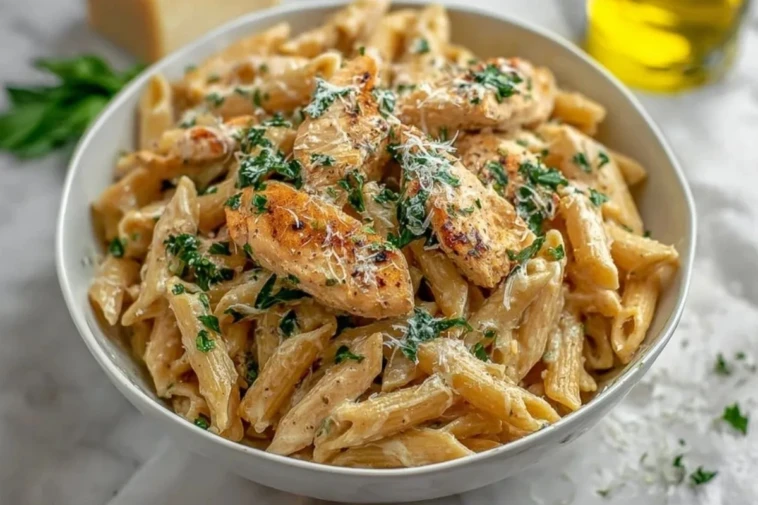
This Easy Garlic Parmesan Chicken Pasta is the kind of recipe you turn to when dinner needs to impress but time is limited. It’s weeknight-friendly but dinner-party capable. With tender pan-seared chicken, a creamy garlic-Parmesan sauce, and perfectly cooked pasta, this dish balances richness with comfort and familiarity.
You’ll learn how to master the balance between creaminess and flavor without relying on store-bought sauces. We’ll cover how to choose the right Parmesan for the best melt, how garlic behaves when cooked in cream, and why the cut of pasta truly matters in holding onto the sauce. This is also an ideal recipe for building kitchen confidence: it introduces foundational techniques like deglazing, emulsifying, and finishing pasta properly.
Many garlic cream pastas can feel either overly rich or disappointingly bland. This version threads the needle between flavor and finesse, with enough seasoning to satisfy and just enough restraint to keep the sauce from feeling heavy. Instead of a one-note cream overload, this pasta layers garlic flavor through multiple steps, and builds savory depth with real Parmesan—not a powdered stand-in.
In the broader world of creamy pasta dishes, this one leans into Italian-American comfort food but with a level of clarity and control that sets it apart. It borrows the best elements of Alfredo and garlic butter pasta but introduces enough structure through the pan sauce technique to make it feel cohesive and thoughtfully built.
The reward is a dish that feels both nostalgic and new. When you bring it to the table, it’s the kind of dinner that gathers everyone quickly, and finishes in contented silence. And yes—it reheats beautifully, which only adds to its practical appeal.
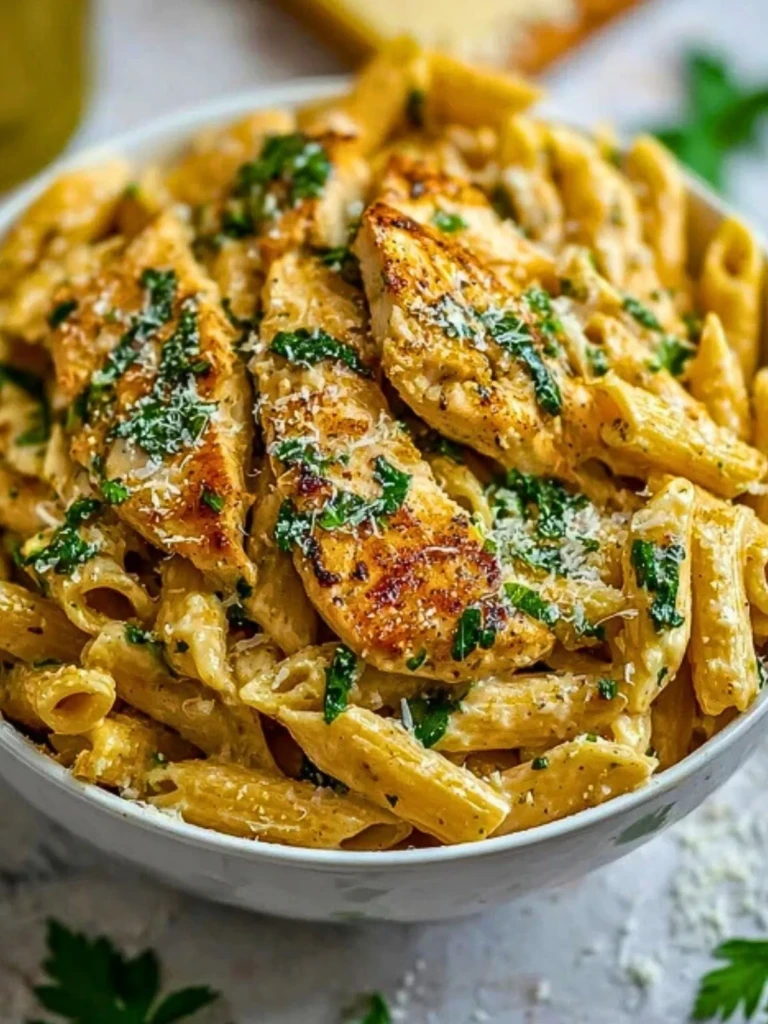
Ingredients for the Easy Garlic Parmesan Chicken Pasta
The dish starts with boneless, skinless chicken breasts—a choice made for their lean texture and fast cooking time. They sear beautifully and create just enough fond in the pan to enrich the base of the sauce. If you prefer a juicier bite, boneless chicken thighs are a good swap, adding a deeper flavor thanks to their higher fat content.
For the pasta, penne holds its own in the cream sauce. The ridged shape and hollow center make it ideal for capturing both the garlic and Parmesan elements, ensuring each bite is coated evenly. While fettuccine or rigatoni are acceptable, they either lack the containment (in the case of fettuccine) or can feel too bulky (as with rigatoni). Penne offers that perfect middle ground.
Heavy cream forms the luxurious base of the sauce. Its high fat content is crucial to emulsifying properly with the rendered chicken bits and Parmesan. Using half-and-half or milk creates a thinner result that often breaks when heated too quickly. For those seeking a slightly lighter version, a 2-to-1 ratio of cream to whole milk is workable, but the sauce will lose some of its signature cling and richness.
Fresh garlic is non-negotiable here. It brings complexity and aroma, but only when gently cooked—not scorched. Adding it after searing the chicken allows it to bloom in the residual fat, avoiding bitterness. Garlic powder won’t offer the same layered aroma and depth.
Parmesan cheese must be freshly grated. Pre-shredded varieties often contain anti-caking agents that resist melting and can cause a gritty texture in the final sauce. A wedge of aged Parmigiano Reggiano grated just before adding will melt into the cream without separation, providing sharpness and salt in perfect balance.
Butter finishes the sauce with sheen and smoothness. Added off the heat, it brings the emulsion together and softens the edges of the garlic and cheese. Olive oil is useful earlier—especially for cooking the chicken—but butter is essential in the final moments.
Fresh parsley isn’t just garnish. Its clean, slightly bitter tone cuts through the sauce and brings freshness to each bite. Dried herbs would not provide the same lift or color vibrancy. When testing with basil or thyme, parsley proved to be the most balanced option.
Finally, a bit of reserved pasta water is the unsung hero. It helps loosen the sauce if it tightens too much and enhances creaminess without adding more dairy. The starch in the water helps marry all the components naturally, a technique borrowed from classic Italian pasta sauces.
Choosing Between Chicken Breasts and Chicken Thighs
When it comes to choosing the right cut for this pasta, both chicken breasts and thighs have their merits, but the decision hinges on your desired texture and richness. Through testing, I found that chicken breasts deliver a cleaner, lighter protein that browns more quickly and pairs neatly with the cream-based sauce without overshadowing it. The lean texture allows the garlic and Parmesan to take the lead.
However, chicken thighs bring deeper flavor and a richer mouthfeel. The higher fat content results in a more succulent bite, and the juices left behind after searing add a more pronounced savory foundation to the sauce. Thighs also tend to be more forgiving if slightly overcooked, making them a reliable choice for less confident cooks.
If you’re cooking for a crowd or preparing this dish ahead, thighs hold their moisture better during reheating. But for a fast, refined weeknight dinner with a slightly cleaner profile, breasts win out. Cost-wise, thighs are often more affordable and widely available in value packs, making them a practical choice for feeding more people.
Another important decision point is the Parmesan. Aged Parmigiano Reggiano offers complexity, nuttiness, and a crystalline texture that melts into the cream with smoothness. Domestic Parmesan or pre-grated options are serviceable in a pinch, but they tend to dull the flavor and create a grainier finish. If you must choose, prioritize a wedge of real Parmesan and grate it yourself—the difference in taste and texture is noticeable.
Lastly, when comparing penne to other pasta shapes like fettuccine or shells, penne consistently offers the best surface area and interior space for the sauce to cling. Shells collect pockets of cream but can overwhelm the chicken, while fettuccine tends to let the sauce slide off. For balance and consistency, penne remains the ideal pairing here.
The Pan Sauce Technique That Protects the Creaminess
One of the most critical steps in making this dish is using a proper pan sauce method to ensure the cream and cheese form a cohesive, velvety coating rather than separating or curdling. The secret lies in temperature control, timing, and emulsification.
After searing the chicken, don’t clean the pan. Those browned bits stuck to the bottom—called fond—are flavor gold. Deglazing with a splash of pasta water or a bit of cream lifts those caramelized proteins and integrates them directly into the sauce. This provides a savory depth that makes the final dish more than the sum of its parts.
When you add garlic, it should go into the pan just after the chicken is removed, and the heat lowered. Garlic burns quickly and turns bitter, which can throw off the entire sauce. Let it soften and bloom gently in the residual oil, becoming fragrant without browning. Once the garlic has released its aroma, that’s the cue to add cream.
The cream must come to a gentle simmer—never a boil. Boiling causes the fat to separate, which breaks the sauce. A low simmer gives you control, thickening the sauce slowly while preserving the emulsion. Stirring regularly helps encourage even heating and prevents scorching.
Grated Parmesan should be added in stages, and off direct heat whenever possible. Stirring it in gradually ensures it melts evenly and bonds with the cream, creating a unified sauce instead of clumps. If the sauce feels too thick, a splash of pasta water thins it out while maintaining creaminess, thanks to the starch content.
The final move is to return the cooked pasta and sliced chicken to the pan and toss everything thoroughly while the pan is still warm. This not only coats the pasta in sauce, it allows the starches and proteins to bind with the cream and cheese fully. The technique is borrowed directly from Italian pasta-cooking traditions, and it’s what makes the difference between pasta sitting in sauce and pasta that tastes as though the sauce lives in every bite.
A common mistake is adding cheese too early or with the heat too high, which can cause a gritty texture. The solution is patience, gradual integration, and keeping the heat moderate throughout. Trust the process, and you’ll end up with a sauce that feels rich and smooth, not heavy or greasy.

Serving and Storing Easy Garlic Parmesan Chicken Pasta
When it comes to serving this dish, visual appeal and temperature matter most. Serve the pasta in a warm, shallow bowl to keep the sauce fluid and inviting. A final grating of fresh Parmesan and a sprinkle of chopped parsley not only adds contrast and brightness but also signals freshness and attention to detail. If you’re entertaining, a drizzle of good olive oil or a few cracks of black pepper adds another layer of sophistication without altering the flavor balance.
This pasta holds up well for make-ahead purposes, particularly when using chicken thighs, which retain moisture better upon reheating. Store any leftovers in an airtight container in the refrigerator for up to three days. Reheat gently in a skillet over low heat, adding a small splash of milk or reserved pasta water to restore the sauce’s texture.
The cream and cheese will thicken as they cool, so reheating too aggressively in the microwave can cause the sauce to break. For best results, reheat on the stove and stir frequently to bring everything back together. The flavor actually deepens slightly by the next day, making leftovers especially enjoyable.
If you’re planning to serve this dish as part of a meal prep routine, you can keep the components separate—store the cooked pasta and sauce together, and the chicken slices on the side. Combine and heat just before serving. This prevents the chicken from becoming overly soft or blending too much into the sauce.
As with many cream-based pasta dishes, freezing isn’t recommended. The emulsion of cream and cheese tends to separate and become grainy once thawed. However, if you’re determined to freeze it, undercook the pasta slightly, use a bit less Parmesan, and reheat slowly from frozen to mitigate textural changes.
This pasta shares similar storage principles with recipes like creamy Tuscan chicken pasta or Alfredo-based bakes. All benefit from gentle reheating, fresh finishing garnishes, and thoughtful storage to maintain the integrity of the sauce and texture.
A Quick Note on Comparisons With Other Creamy Pasta Recipes
When compared to classic Alfredo or chicken fettuccine, this Garlic Parmesan Chicken Pasta stands out for its layered approach to flavor and better balance between richness and brightness. Alfredo tends to rely heavily on cream and butter alone, sometimes lacking garlic depth or protein structure. Here, garlic is integrated at multiple stages, building a savory complexity that doesn’t overpower but enhances the Parmesan.
Unlike restaurant-style creamy pastas that can feel overly salted or drowned in sauce, this version is controlled. It coats, rather than smothers. The pasta isn’t lost in liquid; instead, every piece is evenly dressed in sauce that clings without pooling. It offers a more refined eating experience that still satisfies comfort food cravings.
Compared to dishes like Chicken Tetrazzini or baked pasta casseroles, this pasta is fresher, faster, and more direct. It’s cooked entirely on the stovetop, and there’s no need for baking or breadcrumbs. That immediacy gives it a weeknight edge while still being elegant enough for serving guests.
Readers often describe this dish as a “go-to staple” because of how adaptable it is. Some like to add spinach or sun-dried tomatoes for variety. Others report it as a great use of leftover rotisserie chicken when time is short. The most common feedback is how creamy and flavorful it is without being too rich or heavy, which speaks to the importance of the sauce-building method.
Its situational strength is how well it bridges everyday cooking and special occasion appeal. It’s easy enough for beginners, but its finish and flavor profile make it feel polished. That versatility is what elevates it in the creamy pasta category and makes it worth returning to again and again.
Print
Easy Garlic Parmesan Chicken Pasta – Creamy, Quick, and Family-Friendly
- Total Time: 35 minutes
- Yield: 4 servings
Description
This creamy, garlic-forward chicken pasta combines tender seared chicken, fresh Parmesan, and a velvety sauce that clings perfectly to penne. Ideal for weeknights or casual entertaining, it’s a flavor-packed dish that reheats beautifully and satisfies every time.
Ingredients
2 boneless skinless chicken breasts
2 tablespoons olive oil
8 ounces penne pasta
2 cups heavy cream
4 cloves garlic minced
1 cup freshly grated Parmesan cheese
2 tablespoons unsalted butter
2 tablespoons chopped fresh parsley
1 teaspoon salt
1/2 teaspoon black pepper
1/2 cup reserved pasta water
Instructions
1. Cook the penne pasta in salted water until al dente. Reserve 1/2 cup of the pasta water, then drain and set aside.
2. Heat olive oil in a large skillet over medium-high heat. Season chicken with salt and pepper, then sear until golden brown and cooked through, about 6-7 minutes per side. Remove and slice.
3. Lower the heat to medium and add garlic to the same pan. Sauté for 30 seconds until fragrant, avoiding browning.
4. Pour in the heavy cream and bring to a gentle simmer. Stir frequently to avoid boiling.
5. Add Parmesan gradually, stirring to melt into the sauce and form a smooth consistency.
6. Add butter off the heat to finish the sauce with a silky sheen.
7. Return pasta to the pan and toss to coat evenly. Add pasta water as needed to adjust the sauce texture.
8. Top with sliced chicken, fresh parsley, and more Parmesan before serving.
Notes
Use freshly grated Parmesan for the smoothest, most flavorful sauce.
Sear the chicken first for better flavor depth and a golden crust.
To reheat, warm gently on the stove with a splash of milk or reserved pasta water to restore creaminess.
- Prep Time: 10 minutes
- Cook Time: 25 minutes
- Category: Dinner
- Method: Stovetop
- Cuisine: Italian-American
Nutrition
- Serving Size: 1 plate
- Calories: 620
- Sugar: 2g
- Sodium: 520mg
- Fat: 35g
- Saturated Fat: 18g
- Unsaturated Fat: 14g
- Trans Fat: 0g
- Carbohydrates: 45g
- Fiber: 2g
- Protein: 38g
- Cholesterol: 130mg
Keywords: chicken pasta, garlic Parmesan, creamy pasta, weeknight dinner