
 Mia McKenny
If you’re looking for a dinner recipe that feels like a warm hug in a bowl, American Goulash is exactly that kind of comfort. It promises bold, beefy flavor, an ultra-satisfying texture, and the kind of simplicity that makes it just right for busy weeknights or lazy Sundays. You’ll learn not only how to bring this classic dish together quickly, but how to balance its richness with the right ingredients and techniques.
Unlike some tomato-beef pasta dishes that turn out greasy, bland, or overly acidic, this version of American Goulash leans on smart layering of flavor and texture. Where other recipes can be overly mushy or one-dimensional, here the pasta retains bite, the sauce is deeply savory without being heavy, and the cheese ties it all together with creamy saltiness.
This dish lives somewhere between a meaty stew and a pasta bake, but it’s done entirely in one pot and in under an hour. It has roots in Depression-era home cooking, where affordability and ease were essential, and it’s evolved into a staple of American family tables thanks to its irresistible mix of pantry staples and nostalgia.
Bringing this to the table means bringing smiles, full bellies, and a sense of having cooked something genuinely worthwhile. Whether it’s your first time making it or your fiftieth, this version gives you the confidence to master the method and make it your own.

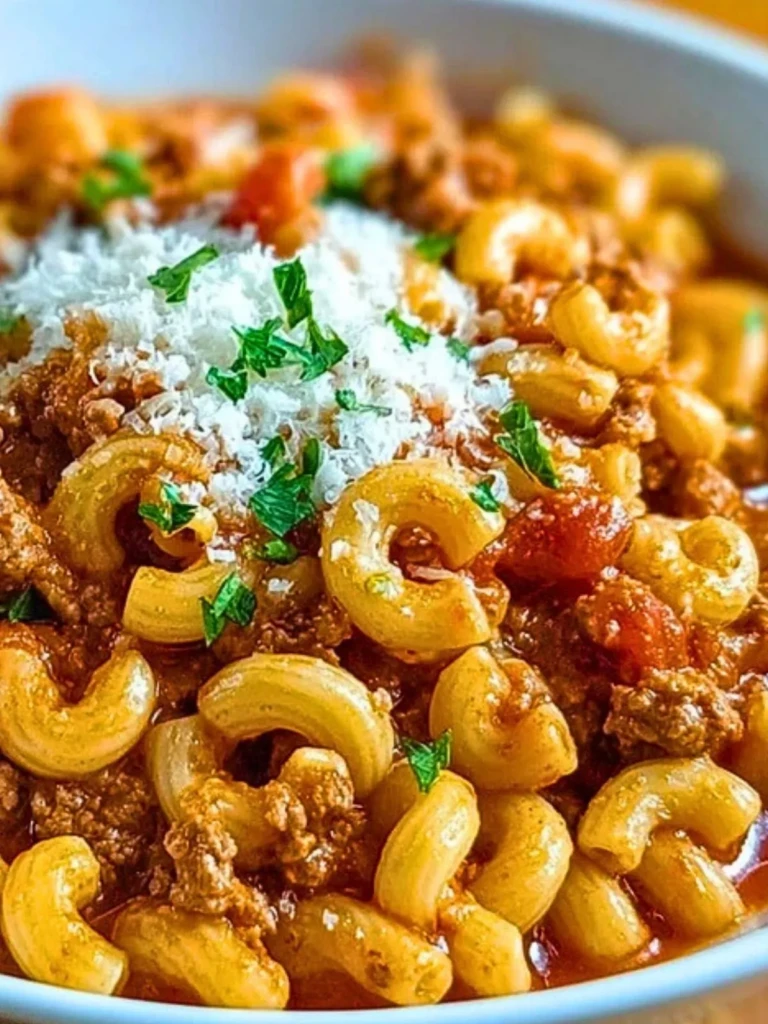
Ingredients for the American Goulash
The base of American Goulash is deceptively simple, but every ingredient plays a distinct, purposeful role. The ground beef is the foundational protein, and using 85/15 lean-to-fat ratio provides the ideal balance: enough fat to carry flavor and moisture, but not so much that it overwhelms the dish or creates greasy pooling. If you’re reaching for a leaner cut like 90/10, be prepared to add a touch more oil when browning to avoid dryness.
Onions and garlic come next, forming the aromatic backbone of the sauce. Yellow onions bring a mellow sweetness that deepens as they cook, while fresh garlic offers pungency and complexity. While garlic powder can fill in during a pinch, fresh cloves truly elevate the savory character here.
Canned diced tomatoes and tomato sauce serve different but complementary purposes. The diced tomatoes provide bursts of juicy acidity and a bit of texture, while the tomato sauce creates the cohesive, slightly sweet base that hugs the noodles. Some recipes lean heavily on tomato paste, which can concentrate flavor too quickly and risk bitterness; tomato sauce offers more flexibility and a gentler finish.
Beef broth is the hidden powerhouse here. It amplifies the meaty depth of flavor far beyond what water or even chicken broth can achieve. I recommend using low-sodium broth to give yourself full control over seasoning, especially since the dish reduces as it simmers.
Elbow macaroni is the classic pasta choice for good reason: its curved shape holds sauce beautifully, and it cooks evenly within the pot without turning to mush. Other short pastas like small shells or cavatappi work in a pinch, but nothing quite matches the nostalgia and function of the elbow.
Shredded cheddar or a combination of cheddar and mozzarella adds that final creamy, melty element. Cheddar brings tang and boldness, while mozzarella softens it with gooey richness. Pre-shredded cheese works if needed, but grating from the block gives smoother melt and cleaner flavor.
Finally, seasoning with bay leaf, paprika, salt, pepper, and a touch of Italian seasoning ties the whole dish together. The bay leaf infuses a subtle earthiness, paprika adds warmth, and the Italian blend provides a herby undertone that balances the acidity of the tomatoes. If you’re out of paprika, a pinch of chili powder can step in, though it will add a slightly smokier edge.
This collection of ingredients might look humble, but each one brings something essential to the table. Together, they form a dish that’s both deeply comforting and technically sound.
Choosing Between Ground Beef and Ground Turkey
Both ground beef and ground turkey can be used in American Goulash, but the results they yield are notably different. Ground beef, particularly with an 85/15 ratio, brings classic richness and depth that many associate with this nostalgic dish. Its fat content naturally infuses the sauce with flavor, helping emulsify the tomatoes and broth into a cohesive whole.
Ground turkey, while lighter in flavor and fat, offers a leaner profile for those looking to cut back on red meat or saturated fats. When using turkey, especially breast meat, you’ll notice a milder taste and a slightly drier texture unless adjustments are made. I recommend adding a small splash of olive oil during the browning stage to replicate the richness of beef and prevent it from drying out.
In testing, ground beef delivered the most traditional result, with a rounder mouthfeel and a sauce that tasted more integrated. Ground turkey, on the other hand, produced a lighter dish that still satisfied, especially when enhanced with slightly more seasoning and a touch of Worcestershire sauce to mimic umami.
For weeknight meals where speed and familiarity matter most, ground beef remains the go-to. For those seeking a lighter or more health-conscious version, turkey holds its own with a few mindful tweaks. Both proteins absorb the tomato flavors beautifully, but the final decision often comes down to dietary preference and how hearty you want your goulash to feel.
Cost-wise, ground turkey can sometimes be more budget-friendly depending on your location and store sales. Both options are widely available, but if you’re aiming for that quintessential diner-style, beef is your best bet.
The One-Pot Simmer That Protects the Pasta
The technique that defines American Goulash—and protects its comforting texture—is the one-pot simmer. This approach allows starch, flavor, and aroma to develop simultaneously in a single vessel, creating depth without complexity. More importantly, it safeguards against the most common pitfall: overcooked, mushy pasta.
Unlike recipes where the pasta is cooked separately and added at the end, simmering the macaroni directly in the sauce means it absorbs the beef broth and tomato base as it cooks. This infuses the pasta with flavor rather than simply coating it, and it thickens the sauce naturally through the slow release of starch.
Timing is key. Pasta should be added when the sauce has reached a gentle simmer, not a rolling boil. Stirring occasionally ensures even cooking and prevents sticking. Look for the pasta to be al dente—tender but with a slight chew—and stop cooking at that point, as carryover heat will finish the job.
Common mistakes to avoid include adding the pasta too early, which can cause it to bloat and disintegrate, or using too little liquid, which results in uneven cooking. The ratio of broth to tomato should be generous but not soupy. If needed, a splash of water or broth can be added late in the cooking process to loosen the mixture.
This one-pot method not only saves time and cleanup, but it also gives you a more cohesive dish. The pasta, meat, and sauce become inseparable parts of the same savory story—a hallmark of truly satisfying goulash.
This technique is also transferable to other comfort dishes like chili mac or skillet lasagna, where pasta cooks directly in a sauce for maximum flavor absorption. It’s an efficient, reliable method that makes weeknight cooking feel a little more professional.
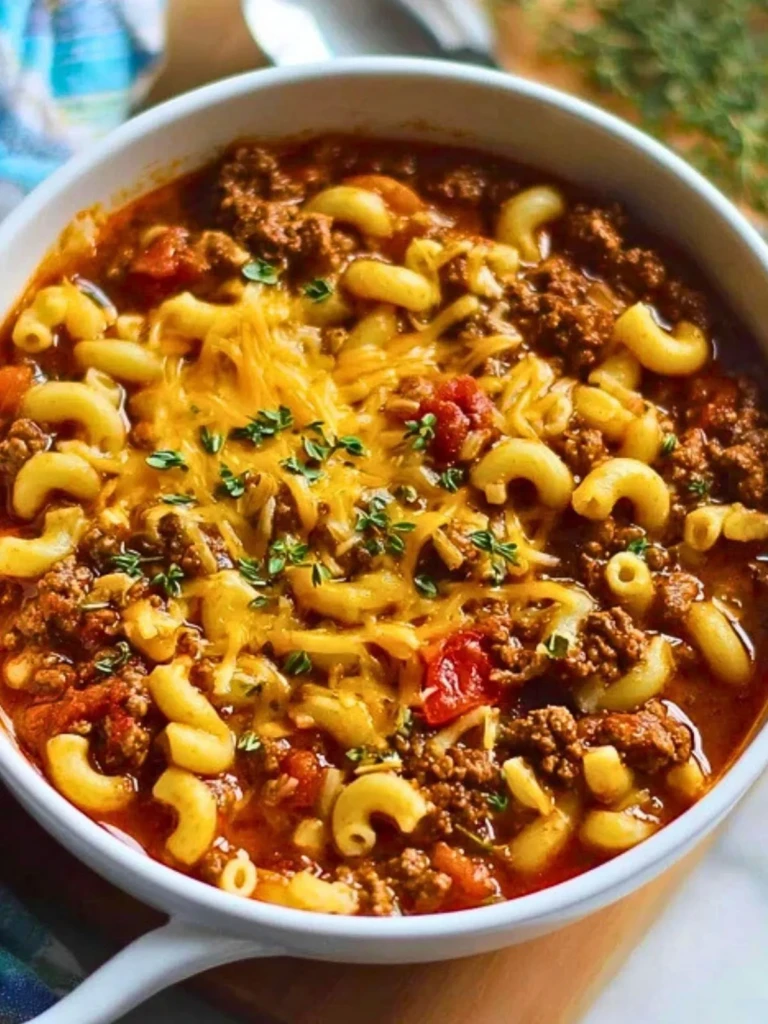
Serving and Storing American Goulash
For serving, a finishing touch of shredded parmesan or freshly chopped parsley brightens the dish and cuts through its rich, meaty base. Serving it hot from the pot is traditional, but it also plates beautifully with a side of crusty bread or a sharp green salad for contrast. The cheese on top should melt slightly into the dish without losing its texture—a sign that the goulash is at its peak temperature for serving.
This is a dream dish for make-ahead cooking. Like many tomato-based meals, the flavor improves on the second day. If you plan to make it in advance, undercook the pasta slightly during the first round so it doesn’t go overly soft when reheated. A splash of water or broth helps revive the consistency when bringing it back to life on the stovetop or in the microwave.
Stored properly, American Goulash lasts up to four days in the refrigerator in an airtight container. It also freezes well for up to three months. I recommend portioning it before freezing for easy reheating. When reheating from frozen, let it thaw in the fridge overnight and reheat gently with a touch of added liquid to maintain the creamy-saucy balance.
The flavor actually deepens over time, as the tomato, herbs, and meat meld further. This makes leftovers especially satisfying, and it’s a strong candidate for meal prep or batch cooking during the colder months.
Other dishes like beef chili or baked ziti follow similar reheating and storage principles, but American Goulash stands out because it requires no oven time and keeps its creamy-saucy integrity even after days in the fridge. It’s a recipe built for real life, where time and convenience matter as much as flavor.
A Quick Note on Comparisons With Other Pasta Skillet Meals
American Goulash often gets lumped together with other one-pot pasta dishes like chili mac or beefy pasta bakes, but it holds a distinct identity. Classic chili mac leans heavily into spices and beans, often borrowing from Tex-Mex traditions, while goulash stays grounded in Eastern European simplicity with paprika, tomato, and beef as its anchors. Pasta bakes, by contrast, tend to use heavier cheeses and require oven time for finishing—a step American Goulash smartly avoids.
In terms of texture and flavor, this version of goulash positions itself between a soup and a skillet. It’s saucy, but not brothy; rich, but not overloaded. Many readers comment on how balanced and nostalgic it tastes, often reminding them of cafeteria lunches “but better.” That balance is what makes it work equally well for kids and adults, weeknights or potlucks.
The biggest situational advantage of this dish is its adaptability. Whether you’re feeding a crowd, planning for leftovers, or working with a sparse pantry, American Goulash delivers. It’s one of the few dishes that satisfies the need for comfort, efficiency, and versatility all in one pot.
If you’re drawn to this kind of one-pot efficiency, similar dishes like hamburger stroganoff or creamy tomato pasta with sausage follow similar principles but shift the flavor profile. Still, American Goulash keeps its place as a genre-defining comfort food that wears its simplicity proudly.
Print
American Goulash – Cozy, Hearty, and One-Pot Easy
- Total Time: 35 minutes
- Yield: 6 servings
Description
This American Goulash is the ultimate one-pot comfort dish, combining tender elbow macaroni, seasoned ground beef, and a rich tomato sauce all simmered together for maximum flavor. It’s quick, hearty, and ideal for both weeknight dinners and make-ahead meals. A nostalgic classic that’s flexible, freezer-friendly, and loved by all ages.
Ingredients
1 tablespoon olive oil
1 medium yellow onion, diced
3 cloves garlic, minced
1.5 pounds ground beef (85/15)
2 teaspoons paprika
1 teaspoon Italian seasoning
1 teaspoon salt
0.5 teaspoon ground black pepper
1 bay leaf
2 cups beef broth (low sodium)
2 cups tomato sauce
1 can (14.5 ounces) diced tomatoes
2 cups elbow macaroni (uncooked)
1 cup shredded cheddar cheese
0.5 cup shredded mozzarella cheese
Fresh parsley, chopped (optional, for garnish)
Grated parmesan (optional, for garnish)
Instructions
1. In a large pot or Dutch oven, heat olive oil over medium heat. Add diced onion and cook for 3–4 minutes until softened.
2. Add the garlic and sauté for another minute until fragrant.
3. Add ground beef and cook, breaking it up with a spoon, until fully browned and no longer pink.
4. Stir in paprika, Italian seasoning, salt, black pepper, and the bay leaf.
5. Pour in beef broth, tomato sauce, and diced tomatoes (with their juices). Stir to combine.
6. Bring the mixture to a simmer, then add elbow macaroni. Stir well to distribute evenly.
7. Simmer uncovered for 12–15 minutes, stirring occasionally, until pasta is al dente and the sauce has thickened.
8. Remove from heat, discard the bay leaf, and stir in cheddar and mozzarella cheese until melted.
9. Serve hot, topped with chopped parsley or grated parmesan if desired.
Notes
Cook the pasta until just al dente to avoid mushiness as it sits.
If using ground turkey instead of beef, add a splash of olive oil during browning for moisture.
For best texture when reheating, add a splash of broth or water and reheat gently.
- Prep Time: 10 minutes
- Cook Time: 25 minutes
- Category: Dinner
- Method: Stovetop
- Cuisine: American
Nutrition
- Serving Size: 1.5 cups
- Calories: 495
- Sugar: 6g
- Sodium: 720mg
- Fat: 24g
- Saturated Fat: 10g
- Unsaturated Fat: 11g
- Trans Fat: 0.5g
- Carbohydrates: 40g
- Fiber: 3g
- Protein: 32g
- Cholesterol: 90mg
Keywords: one-pot pasta, comfort food, beef macaroni