
 Mia McKenny

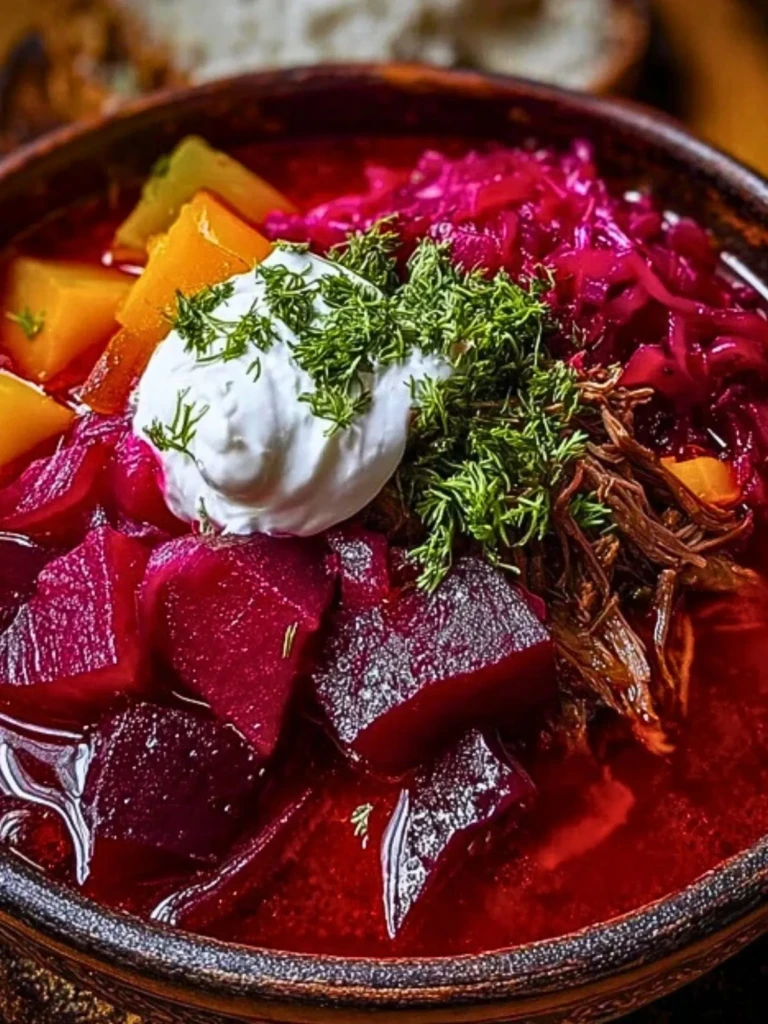
This borscht delivers a complex layering of sweet, earthy beets and rich, slow-simmered beef in a deeply flavorful broth. The texture is hearty, with fork-tender vegetables and strands of pulled meat floating in a crimson base that hints at tangy fermented notes.
What sets this version apart is the careful browning of aromatics and the use of fermented beet brine or vinegar right at the end. It gives the soup its signature zing without overpowering the natural sweetness of the beets. Each spoonful brings warmth, acidity, and depth.
I’ve tested many versions over the years, and this one always wins. It’s not just about tossing everything into a pot. This borscht builds layers—from sautéed onions and garlic to slow-cooked beef—and then finishes with fresh dill and a cooling dollop of sour cream. It’s winter comfort at its best.

Beets Bring the Foundation and the Flair
Beets are the heart of borscht—there’s no shortcut around that. I use both grated and chunked beets in this recipe for contrast in texture. The grated ones cook down into the broth, staining it that bold ruby red, while the cubes stay a bit firmer and give you that sweet bite in every spoonful.
I always sauté my beets with a touch of vinegar and a pinch of sugar before they go into the soup pot. That step locks in their color and starts building flavor early. Raw beets directly boiled into the broth never give the same richness, and they tend to bleed out their flavor too fast.
Skip the pre-cooked or canned beets. They just don’t bring the same vibrancy. Fresh is essential.
The Beef Adds Body and Soul
A good borscht isn’t thin or brothy—it should have some weight to it. That’s where beef comes in. I use chuck roast or short ribs, simmered slowly until the meat practically shreds itself. Don’t rush this part. The longer it cooks, the better your broth gets.
Once the beef is tender, I pull it out, shred it, and return it to the pot. That way you get both the deep flavor from the bones and the satisfying texture of the meat in every bowl.
For a vegetarian version, skip the beef and use mushrooms—ideally porcini or shiitake. They bring their own umami punch that keeps the soup grounded.
Cabbage and Carrot for Comforting Contrast
Cabbage softens into silky ribbons, while carrots add gentle sweetness. I chop the cabbage a little chunkier than usual so it holds its own among the beets. Overcooked cabbage turns to mush, so I drop it in during the last 20 minutes.
Carrots go in earlier—their sugars deepen as they cook and bring out the mellow side of the beets. If I’m feeling fancy, I’ll use a mix of red and yellow carrots to layer in color.
Garlic, Onion, and Tomato Paste for Umami
The aromatic base is where I start every single time. I brown onions low and slow in oil, then add minced garlic and a good spoonful of tomato paste. It’s not a tomato-heavy soup, but that concentrated paste gives it backbone.
If I skip this step, I notice the soup feels flat. That browned tomato paste and garlic give just enough savoriness to balance the beet sweetness. Don’t rush the onion browning—that’s where a lot of flavor happens.

Simmer Gently, Stir Occasionally, and Watch the Color Bloom
Once everything’s in the pot, the soup simmers gently for about an hour. The broth deepens in color and flavor, and the kitchen smells like you’ve been cooking all day—which, in a way, you have.
Don’t boil it hard. A fast boil dulls the color and toughens the meat. Keep it at a low burble. You’ll know it’s ready when the beet cubes are tender and the broth looks almost velvety.
If I’m making it ahead, I stop here and refrigerate it overnight. It always tastes better the next day—brighter, richer, deeper. The flavors have time to marry, and the tanginess of the vinegar smooths out beautifully.
I recommend a wide pot over a tall one—it gives better evaporation and balance. And be sure to stir from the bottom gently every so often to keep everything cooking evenly.
Serving Notes and Simple Ways to Store Leftovers
I serve borscht steaming hot, ladled into heavy bowls, with a generous scoop of sour cream that melts in slowly. Fresh dill goes on top, along with a bit of grated raw beet for crunch and color. That contrast of hot soup and cold cream is part of what makes this dish so satisfying.
Some people like a slice of dark rye on the side—personally, I toast it and rub it with garlic for even more bite. If you want something richer, try a boiled potato in the bowl. It soaks up the broth like a sponge.
Leftovers are golden. The soup thickens as it sits and the flavors deepen even more. I store it in the fridge up to 5 days. To reheat, I bring it up slowly on the stove, not the microwave—it keeps the texture better that way.
If you want to freeze it, hold back on the sour cream and dill. Add those fresh when you serve. Frozen borscht can last up to 2 months and tastes just as soulful after a gentle thaw and reheat.
Why This Soup Belongs in Your Cold-Weather Repertoire
Borscht is one of those dishes that works on every level. It’s packed with nutrition, inexpensive to make, and endlessly adaptable. You can use pork instead of beef, or go fully vegetarian. Add kidney beans or swap in sweet potatoes—whatever feels right for the season.
But more than that, it feels like home. Every time I make this, it reminds me of meals where people gathered slowly, taking their time with each bite. It’s not fast food. It’s thoughtful, bold, and worth every minute.
When winter stretches long and the light feels thin, I reach for this recipe. It’s warm, grounding, and quietly celebratory. Whether you grew up with it or are making it for the first time, borscht has a way of becoming tradition fast.
Before You Go, Pin and Comment Below
If this recipe made it into your winter cooking list, pin it to your “Comfort Food Dinners” or “Eastern European Favorites” board.
Tried it with a twist? Left the meat out? Added mushrooms or a dash of smoked paprika? I want to hear about it. Drop a comment and tell me how it turned out for you!
And if you’re serving it for the first time, let me know the reaction. Borscht has a way of surprising people—especially those who think they don’t like beets. This version might just change their minds.
Print
Authentic Ukrainian Borscht Soup: Earthy, Tangy, and Deeply Nourishing
- Total Time: 2 hours 30 minutes
- Yield: 6 servings
Description
Authentic Ukrainian Borscht is a deeply nourishing soup made with earthy beets, tender beef, sweet carrots, and tangy fermented notes. A balance of savory and sweet, this traditional soup builds flavor in layers and finishes with fresh dill and a generous dollop of sour cream. It’s rich, hearty, and comforting—perfect for cold-weather meals or anytime you crave something bold and homey.
Ingredients
1 pound chuck roast or short ribs
3 medium beets, peeled and grated
2 medium beets, peeled and chopped into cubes
1 tablespoon white vinegar
1 teaspoon sugar
2 tablespoons sunflower or neutral oil
1 large onion, finely chopped
3 cloves garlic, minced
1 tablespoon tomato paste
2 medium carrots, peeled and sliced
2 cups green cabbage, chopped
8 cups water or beef broth
1 ½ teaspoons salt (plus more to taste)
½ teaspoon black pepper
1 tablespoon beet brine or additional vinegar (optional, for extra tang)
1 cup sour cream, for serving
¼ cup fresh dill, chopped, for garnish
Instructions
1. In a large pot, add the beef and cover with water or broth. Bring to a gentle simmer and cook for about 1.5 to 2 hours until the meat is tender. Skim any foam that rises to the surface.
2. Remove the meat, shred it using two forks, and set it aside. Return the shredded meat to the pot.
3. In a skillet, heat oil over medium heat. Add the grated and cubed beets. Sauté with vinegar and sugar for 5–7 minutes to develop flavor and lock in color.
4. In another pan, sauté the onion in oil until golden brown, about 10 minutes. Stir in the garlic and tomato paste. Cook for another 2 minutes.
5. Add sautéed onions, garlic, and tomato paste to the soup pot. Stir in the carrots and simmer for 15 minutes.
6. Add the sautéed beets and chopped cabbage. Season with salt and pepper. Simmer gently for 30–35 minutes until vegetables are tender and broth is deep red.
7. Adjust seasoning and add beet brine or more vinegar for tanginess, if desired.
8. Serve hot with a generous spoon of sour cream and a sprinkle of fresh dill.
Notes
For vegetarian borscht, replace beef with mushrooms and use vegetable broth.
Always sauté beets before adding to soup to preserve color and enhance flavor.
Borscht is even better the next day—make ahead and refrigerate overnight for deeper taste.
- Prep Time: 30 minutes
- Cook Time: 2 hours
- Category: Soup
- Method: Simmering
- Cuisine: Ukrainian
Nutrition
- Serving Size: 1 bowl
- Calories: 285
- Sugar: 9g
- Sodium: 620mg
- Fat: 16g
- Saturated Fat: 6g
- Unsaturated Fat: 9g
- Trans Fat: 0g
- Carbohydrates: 19g
- Fiber: 4g
- Protein: 16g
- Cholesterol: 55mg
Keywords: borscht, Ukrainian soup, beet soup, beef soup