
 Mia McKenny

What makes these pancakes so good isn’t just the fluff factor—it’s how they stay tender inside, with a golden, crisp edge that holds up under real maple syrup. Each bite is warm, buttery, and just sweet enough to stand on its own.
I use a simple trick to get them thick and light without being cakey: buttermilk and a generous rest for the batter. That tang from the buttermilk isn’t just for flavor—it helps give them a lift and keeps the texture melt-in-your-mouth soft.
I’ve made dozens of pancake recipes over the years, and this is the one I return to. It beats boxed mix every time, and it’s faster than you’d think. No whipped egg whites, no overly fussy steps. Just solid technique, pantry ingredients, and a skillet hot enough to sizzle.

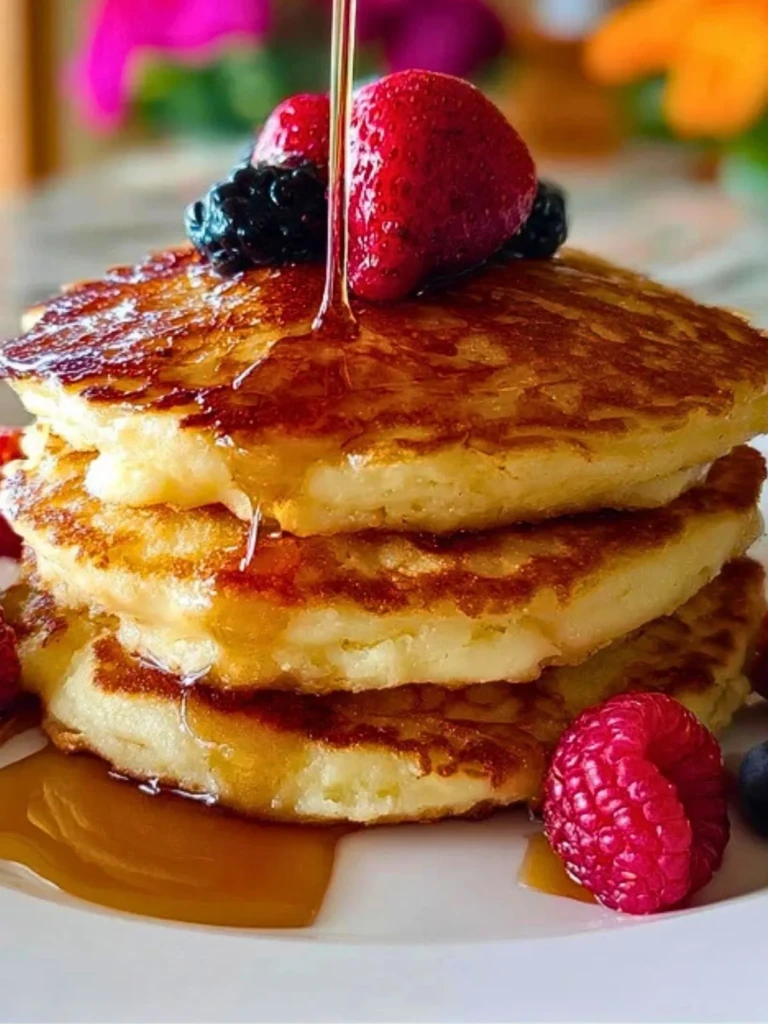
Buttermilk Makes the Difference
Real buttermilk is the reason these pancakes have that signature tang and impossibly tender crumb. You can use a substitute, but I’ve never gotten quite the same result with lemon juice and milk. The acidity reacts with baking soda to give lift, but it also brings a softness that sticks around, even after the pancakes cool.
Don’t skip the rest after mixing. Ten minutes gives the flour time to hydrate and the batter time to thicken. You’ll see bubbles starting to form, which means those pancakes are going to rise high.
The Trick to Golden Edges
A hot skillet is non-negotiable. I let mine preheat for a full five minutes, then test with a drop of water—if it dances, it’s ready. I melt a little butter right before the batter goes in. It’s what creates those crisp, browned edges while keeping the center fluffy.
I use about 1/3 cup of batter per pancake and never crowd the pan. That space around each one helps the edges cook evenly and gives you more control when flipping.
Mixing: Less Is More
Overmixing is the fastest way to ruin fluffy pancakes. I whisk the dry and wet ingredients separately, then use a spatula to gently fold them together. Some lumps are fine—actually, they’re ideal. Smooth batter means overworked gluten and tough pancakes.
I also avoid mixing straight from the fridge. Let your eggs and buttermilk come to room temp so everything blends easily without needing extra stirring.
Watch for Bubbling Tops and Dry Edges
Once the batter hits the skillet, it only needs about 2-3 minutes per side. You’ll know it’s ready to flip when bubbles form all across the top and the edges start looking matte and dry. That’s your signal.
I flip once, gently, and avoid pressing down. You’re not making smash burgers. Pressing deflates all the lift you just worked for. The second side cooks even faster, usually in 1-2 minutes.
If I’m making a big batch, I keep the finished pancakes on a baking sheet in a warm oven (200°F) while I finish the rest. They stay warm without drying out, and I can serve them all at once without stress.
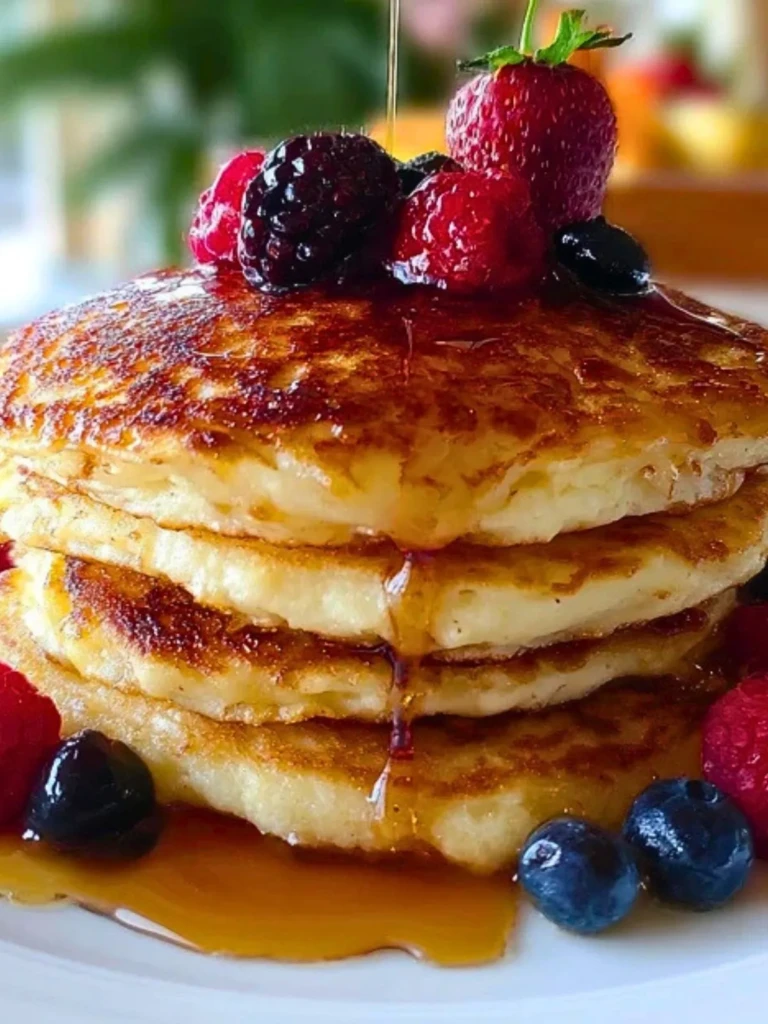
Planning Ahead Without Compromise
You can make the batter a few hours ahead—just cover and refrigerate it. The bubbles might mellow out, but you’ll still get a fluffy pancake, especially if you let the batter come back to room temperature before cooking.
Leftover pancakes? Let them cool, then freeze in a single layer before stacking. Reheat in a toaster or a dry skillet for crisp edges again.
Serving Tips and Storage That Actually Works
When they’re fresh off the skillet, I stack them tall and top them with a slab of salted butter, letting it melt into the ridges. Real maple syrup is a must, but I also love adding fresh berries—especially blackberries or raspberries that add a tart bite against the sweetness.
For special mornings, I serve them with a side of bacon or scrambled eggs, and a strong cup of coffee to balance it all out.
Stored pancakes keep surprisingly well. Once they’re completely cool, I layer them between parchment and seal in an airtight container or bag. In the fridge, they last about 3 days. In the freezer, closer to 2 months. I pop them in the toaster straight from frozen, and they come out warm with just enough crispness around the edges.
If you’re storing a big batch, avoid microwaving—you’ll lose that textural magic.
Why These Pancakes Are a Forever Favorite
There’s a reason these pancakes are in constant rotation in my kitchen. They’re fast enough for a lazy weekend but special enough to make for guests. I’ve served them at brunches, birthdays, and even late-night snacks when only comfort food will do.
What I love most is how flexible the base recipe is. Want to fold in blueberries, chocolate chips, or even a swirl of cinnamon sugar? Go for it. It holds up without falling apart. I’ve even made a version with mashed banana and a sprinkle of walnuts, and it still delivered that same tender bite.
Compared to other pancake recipes I’ve tried—the overly eggy ones, or the ones that go flat halfway through cooking—this one stays consistent. Every single time. And that kind of reliability is gold when you’re trying to make mornings feel a little easier and a lot more delicious.
Before You Go, Pin and Comment Below
If you’re the kind of person who keeps a “Weekend Brunch” or “Breakfast Favorites” board on Pinterest, this one belongs there. The golden edges, the airy texture—it all deserves a spot next to your best comfort food finds.
And if you try it, I’d love to hear how you topped them. Did you go classic with syrup and butter, or take a twist with lemon curd or peanut butter drizzle?
Leave a comment with your tweaks, or any questions you have. I read every one, and I’m always up for new ideas that make breakfast even better.
Print
Best Fluffy Pancakes: Golden Clouds You Can Fork Through
- Total Time: 25 minutes
- Yield: 10 pancakes
Description
These golden, fluffy pancakes are soft on the inside with crispy edges that hold up beautifully to maple syrup. Made with buttermilk and a no-fuss mixing method, they’re reliable, tender, and endlessly customizable.
Ingredients
1 ½ cups all-purpose flour
2 tablespoons granulated sugar
1 teaspoon baking powder
½ teaspoon baking soda
½ teaspoon salt
1 ¼ cups buttermilk
2 large eggs
3 tablespoons unsalted butter, melted (plus more for cooking)
1 teaspoon vanilla extract
Instructions
1. In a large bowl, whisk together flour, sugar, baking powder, baking soda, and salt.
2. In a separate bowl, whisk the buttermilk, eggs, melted butter, and vanilla until combined.
3. Gently fold the wet ingredients into the dry using a spatula until just combined. Small lumps are okay.
4. Let the batter rest for 10 minutes to thicken.
5. Preheat a nonstick skillet or griddle over medium heat for 5 minutes.
6. Grease lightly with butter, then scoop about ⅓ cup batter per pancake into the pan.
7. Cook until bubbles form on top and edges look dry, about 2–3 minutes. Flip and cook 1–2 minutes more.
8. Repeat with remaining batter, keeping cooked pancakes warm in a 200°F oven if needed.
9. Serve with butter, syrup, and toppings of choice.
Notes
Letting the batter rest helps develop fluffiness—don’t skip it.
Avoid pressing the pancakes down after flipping to keep them light.
To freeze, cool completely and store between parchment layers in a zip-top bag.
- Prep Time: 10 minutes
- Cook Time: 15 minutes
- Category: Breakfast
- Method: Stovetop
- Cuisine: American
Nutrition
- Serving Size: 2 pancakes
- Calories: 290
- Sugar: 5g
- Sodium: 360mg
- Fat: 13g
- Saturated Fat: 7g
- Unsaturated Fat: 5g
- Trans Fat: 0g
- Carbohydrates: 35g
- Fiber: 1g
- Protein: 7g
- Cholesterol: 90mg
Keywords: fluffy pancakes, buttermilk pancakes, easy breakfast