
 Mia McKenny
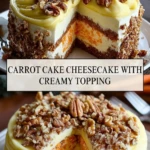
This Carrot Cake Cheesecake with Creamy Topping is designed to give you the best of two beloved desserts in one refined and reliable format. You’ll walk away from this recipe understanding not just how to make a stunning hybrid cake, but why each step matters—and how to consistently achieve the ideal balance of textures and flavors. If you’ve ever had a carrot cake that felt dense or overly sweet, or a cheesecake that cracked or slumped, this version addresses those exact issues head-on.
In the world of hybrid desserts, carrot cake cheesecake has carved out a niche for its impressive presentation and crave-worthy flavor contrasts. Many versions, however, lean too heavily on either the carrot cake or the cheesecake component, resulting in imbalance. This recipe corrects that by ensuring the carrot cake base is spiced and tender but restrained in volume, while the cheesecake layer stays light yet creamy—not overly rich or gelatinous.
The creamy topping here is not a standard frosting or whipped cream. It’s a stabilized custard-like glaze that smooths over the cheesecake with a gentle sweetness, anchoring the roasted nut topping and locking in moisture. It adds finesse and serves a functional role in both flavor and texture continuity.
Bringing this cake to the table means delivering both visual and sensory reward. You’ll see clean layers, a flawless creamy crown, and a golden crunch of nuts on top. More importantly, you’ll taste the intention in every bite—the warm spice of carrot cake, the tang of cheesecake, and the satiny topping tying it all together.

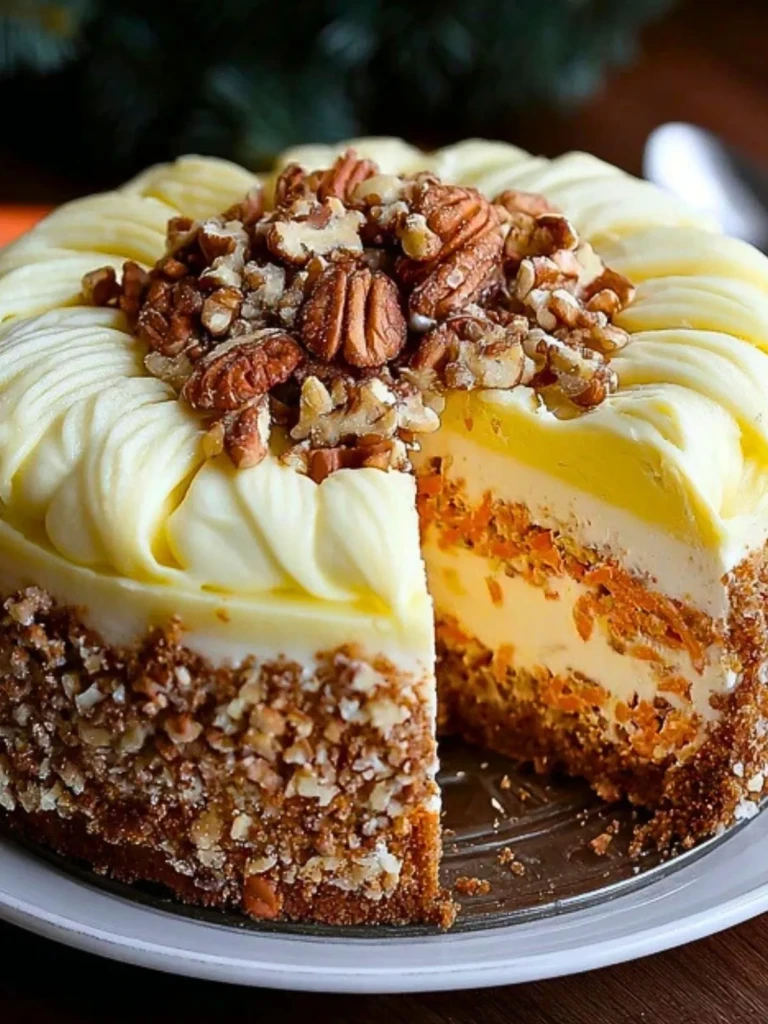
Ingredients for the Carrot Cake Cheesecake with Creamy Topping
The crust begins with finely ground graham crackers blended with just enough brown sugar and melted butter to hold together firmly yet yield easily to the fork. The brown sugar adds a hint of molasses warmth that echoes the spice in the carrot cake. Testing with digestive biscuits and vanilla wafers proved too bland against the richness of the cheesecake.
The cheesecake base uses full-fat cream cheese for structure and tang. It’s essential to let it soften fully before mixing, which prevents overbeating and cracking. Sour cream is added to round out the tang and soften the texture—Greek yogurt is a reasonable substitute in a pinch but produces a slightly firmer bite. Granulated sugar sweetens predictably and cleanly, while eggs bind the mixture and provide silkiness when mixed in gradually and gently. A touch of vanilla extract lifts the flavor just enough to make the cheesecake layer shine through the carrot elements.
The carrot cake ribbons are made by folding in freshly grated carrots into a mixture of flour, eggs, oil, sugar, cinnamon, nutmeg, and baking soda. Finely shredding the carrots is key—they melt into the batter, creating streaks of moisture and natural sweetness without leaving fibrous strands. I tested oil versus butter here, and oil won out for maintaining a moist texture after baking and refrigeration. The spices are kept balanced so they don’t overwhelm the tangy cheesecake—ground ginger is intentionally left out to avoid clashing with the topping.
The creamy topping begins with whole milk, cornstarch, sugar, and egg yolks cooked into a thick pudding base. A knob of butter added off-heat enriches the texture, and a splash of vanilla finishes it with softness. This topping was chosen over traditional cream cheese frosting because it sets cleanly and supports the nut garnish without weeping or sliding.
Finally, the nut topping uses a mix of toasted walnuts, pecans, and whole almonds. Toasting is non-negotiable here—it intensifies their flavor and creates a satisfying contrast to the soft layers beneath. While you can use just one type of nut, the variety adds visual texture and rounds out the flavor spectrum beautifully.
Choosing Between Fresh Carrots and Pre-Shredded Carrots
When it comes to the carrot component, choosing between fresh, hand-shredded carrots and pre-shredded bagged carrots has a noticeable impact. I tested both approaches across multiple bakes, and the difference in texture and flavor was clear. Fresh carrots, finely grated using the small holes of a box grater, released more natural sweetness and moisture into the batter. This translated to softer, more integrated carrot ribbons that melded seamlessly into the cheesecake layer.
Pre-shredded carrots, by contrast, often come drier and thicker. They don’t hydrate as readily in the batter and tend to remain slightly firm even after baking and chilling. This disrupts the smooth bite of the dessert and can even lead to minor weeping around the carrot strands during refrigeration. In terms of convenience, bagged carrots save time but compromise the final texture. For a dessert where texture contrast is the highlight, this trade-off is not worth it unless absolutely necessary.
Cost and availability can sway this decision—pre-shredded carrots might appeal for speed, especially in commercial or high-volume settings. But for home bakers aiming for professional-level results, the extra few minutes to shred fresh carrots pays off tremendously in visual uniformity, moisture balance, and flavor cohesion. In the broader world of carrot-forward desserts, this parallels how freshly grated zucchini or apple often outperforms their pre-processed counterparts in quick breads and muffins.
Similarly, for the creamy topping, a choice arises between whole milk and half-and-half. Whole milk keeps the topping light and silky, which complements the dense base layers. Half-and-half offers a richer texture but can firm up too much, creating a pudding-like top that overshadows the cheesecake beneath. I recommend sticking with whole milk unless you’re specifically aiming for a firmer, almost pastry cream-style layer.
The Layering Method That Protects the Texture
Creating distinct yet harmonious layers in this carrot cake cheesecake requires more than just pouring one batter over another. The method that ensures the right texture in every bite involves strategic chilling, gentle layering, and staggered baking times. The cheesecake layer, in particular, benefits from a smooth, undisturbed setting process. Pouring the batters together haphazardly can cause the layers to swirl unintentionally, leading to uneven texture and aesthetic.
To protect the cheesecake’s integrity, I recommend partially baking the crust first, then adding the cheesecake mixture and letting it set for about 10 minutes in the fridge before introducing the carrot batter. This resting step prevents the denser carrot mixture from sinking or swirling too aggressively into the creamy layer. Think of it like building a trifle—you want a clean definition between soft and structured.
Baking the full cake in a water bath is also key. It regulates the temperature and prevents cracking. Many home bakers shy away from water baths due to fear of leakage, but wrapping the pan tightly in two layers of foil and placing it in a larger dish of hot water really does shield the cheesecake. Without this step, you’re far more likely to get an overbaked edge and a sunken center.
Once baked, cooling slowly is another protective technique. I cool the cake inside the oven with the door ajar for an hour, then move it to the fridge. This gradual temperature transition reduces structural stress and keeps the creamy texture smooth from edge to center. You’ll find this same principle in successful classic cheesecake and custard-style pies.
Finally, only apply the creamy topping after the cake has fully chilled. It should glide on smoothly, creating a luscious, sealed finish that locks in freshness and supports the nut topping without any risk of sinking or splitting.
Serving and Storing Carrot Cake Cheesecake with Creamy Topping
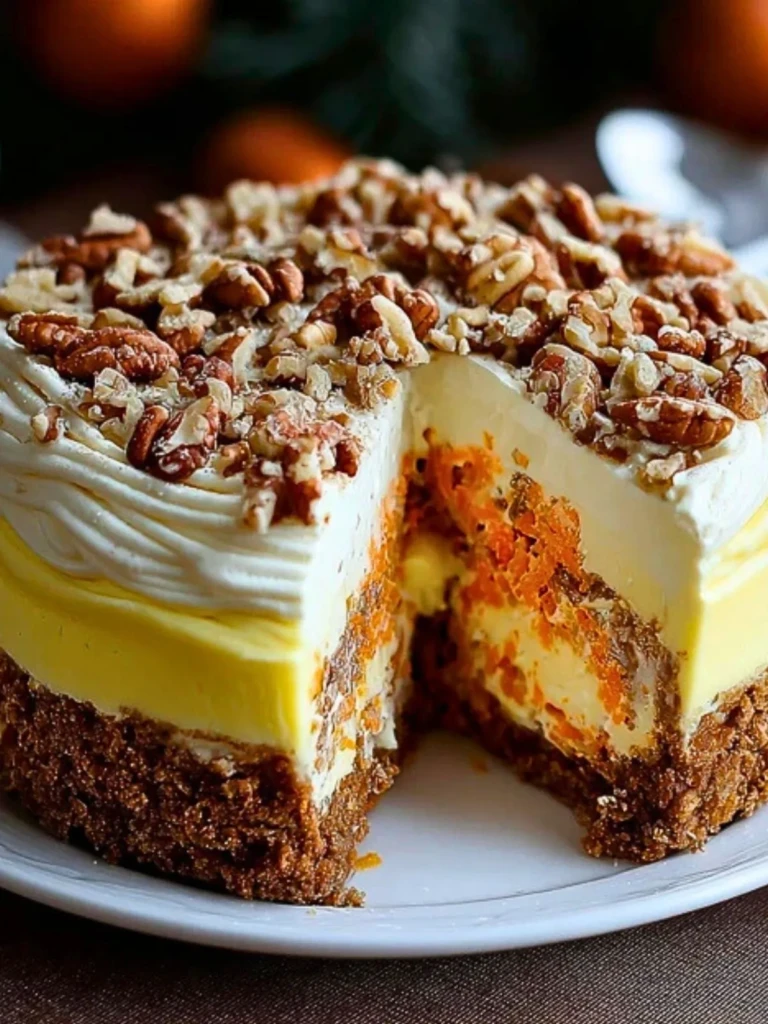
To serve this carrot cake cheesecake at its best, it should be fully chilled but not ice-cold. I recommend removing it from the refrigerator about 15 to 20 minutes before slicing, which allows the creamy topping and cheesecake layer to soften slightly for a cleaner cut and smoother mouthfeel. A warm, thin knife wiped clean between slices helps reveal the distinct layers and maintain a polished presentation on the plate.
For professional-looking plating, serve each slice with a few toasted nuts scattered around the edge or a drizzle of light maple glaze. Because the cake itself is visually rich, additional garnishes should be minimal and intentional. A sprig of mint or a whisper of powdered sugar can also enhance contrast without overwhelming the centerpiece.
This cake excels as a make-ahead dessert. It actually improves after resting in the fridge overnight. The flavors meld, and the creamy topping sets to its ideal texture. I recommend preparing it a full day in advance when possible. It can be stored tightly wrapped in the refrigerator for up to five days without losing its integrity.
For longer storage, individual slices can be frozen—just be sure to freeze them on a parchment-lined tray first, then wrap them in plastic and store in an airtight container. Thaw slices in the refrigerator overnight before serving. While freezing doesn’t affect flavor, the nut topping may soften slightly after thawing, so a quick re-toast and sprinkle of fresh nuts can restore its crunch.
Flavor development over time is a hidden benefit of this cake. On day two and three, the spice notes in the carrot cake deepen and the tang of the cheesecake becomes more integrated. Like many layered desserts—think tiramisu or trifle—it benefits from patience, offering an even more luxurious taste with each passing day.
A Quick Note on Comparisons With Other Cheesecake and Carrot Cake Hybrids
This carrot cake cheesecake with creamy topping stands apart from most layered hybrids in both execution and balance. Traditional carrot cake cheesecakes often feature a dense bottom layer of carrot cake and a firm top cheesecake that can feel like two separate desserts stacked together. That style certainly has visual impact but lacks textural harmony. My version integrates a ribboned carrot mixture into the cheesecake layer itself, offering cohesion and contrast in every forkful rather than a split experience.
Compared to fully baked carrot cake bases, this version uses less flour and fat, giving a more delicate lift that complements rather than competes with the cheesecake. It borrows technique from recipes like pumpkin swirl cheesecake, where the two components are blended in visual and flavor dialogue. Readers often mention how surprised they are by the lightness of the cheesecake in this recipe, especially given its rich appearance.
The creamy topping also marks a departure from the standard cream cheese frosting. While most carrot cake hybrids lean on thick swaths of sweetened frosting, this custard-style glaze adds a gentle, silky sweetness that doesn’t overpower. It draws inspiration from pastry shop finishes—glossy but not stiff, and just structured enough to carry the roasted nuts.
Many who try this recipe remark on its adaptability to seasons and occasions. It feels at home on a holiday table but also sophisticated enough for year-round celebrations. Its make-ahead nature and visual appeal make it a favorite for both intimate dinners and larger gatherings. If you’re looking for another recipe that demonstrates the same balance of creamy and spiced, consider something like a chai-spiced cheesecake or a gingerbread cheesecake tart—recipes that understand the value of layered warmth and tang.
Print
Carrot Cake Cheesecake with Creamy Topping – Moist, Tangy, and Nutty in Every Bite
- Total Time: 6 hours including chilling
- Yield: 12 servings
- Diet: Vegetarian
Description
This Carrot Cake Cheesecake with Creamy Topping delivers the perfect balance of spiced carrot cake, tangy cheesecake, and a luscious custard-style topping crowned with toasted nuts. Ideal for celebrations and make-ahead entertaining.
Ingredients
1 1/2 cups graham cracker crumbs
2 tablespoons brown sugar
5 tablespoons unsalted butter, melted
24 ounces cream cheese, softened
1 cup granulated sugar
1/2 cup sour cream
3 large eggs
2 teaspoons vanilla extract
3/4 cup all-purpose flour
1/2 teaspoon baking soda
1/4 teaspoon cinnamon
1/8 teaspoon nutmeg
1/4 teaspoon salt
1 cup finely grated fresh carrots
2 large eggs (for carrot batter)
1/2 cup vegetable oil
1/2 cup granulated sugar (for carrot batter)
1 1/2 cups whole milk
1/4 cup cornstarch
1/2 cup granulated sugar (for topping)
2 egg yolks
2 tablespoons unsalted butter
1 teaspoon vanilla extract
1/3 cup chopped toasted walnuts
1/3 cup chopped toasted pecans
2 tablespoons whole almonds
Instructions
1. Preheat the oven to 325°F (163°C). Wrap the bottom of a 9-inch springform pan in two layers of foil and lightly grease the inside.
2. Mix graham cracker crumbs with brown sugar and melted butter. Press into the bottom of the pan. Bake for 8 minutes. Cool slightly.
3. Beat the softened cream cheese until smooth. Add sugar and mix until incorporated. Blend in sour cream, vanilla, and then the eggs one at a time, mixing gently.
4. Pour the cheesecake layer over the baked crust and refrigerate for 10 minutes to slightly firm up.
5. In a separate bowl, whisk flour, baking soda, cinnamon, nutmeg, and salt. In another bowl, whisk eggs, oil, and sugar. Combine wet and dry ingredients, then fold in grated carrots.
6. Carefully spoon the carrot batter in swirls into the cheesecake layer. Smooth the top gently.
7. Place the pan into a water bath and bake for 60-70 minutes until the center is just set. Turn off oven, crack the door, and cool for 1 hour.
8. Remove from the oven, then refrigerate the cake for at least 4 hours or overnight.
9. For the topping, whisk milk, cornstarch, sugar, and egg yolks in a saucepan. Cook over medium heat until thickened. Remove from heat and stir in butter and vanilla. Cool slightly.
10. Spread topping over the chilled cheesecake and top with toasted nuts.
11. Chill at least 1 hour more before slicing. Serve at room temperature for best texture.
Notes
Use freshly grated carrots for best moisture and flavor.
Ensure cheesecake is fully chilled before adding topping to avoid melting.
Store slices in the fridge for up to 5 days or freeze individually for later enjoyment.
- Prep Time: 30 minutes
- Cook Time: 1 hour 10 minutes
- Category: Dessert
- Method: Baking
- Cuisine: American
Nutrition
- Serving Size: 1 slice
- Calories: 460
- Sugar: 32g
- Sodium: 290mg
- Fat: 31g
- Saturated Fat: 16g
- Unsaturated Fat: 12g
- Trans Fat: 0g
- Carbohydrates: 38g
- Fiber: 1g
- Protein: 7g
- Cholesterol: 110mg
Keywords: carrot cake cheesecake, creamy topping, hybrid dessert, make-ahead cheesecake