
 Mia McKenny
Chocolate pudding should be one of the easiest, most gratifying desserts in your repertoire, and this version is exactly that. It delivers the rich, velvety texture you expect, with an intensity of flavor that rivals more elaborate chocolate desserts. Whether you’re cooking for a weekday treat or presenting dessert at a dinner party, this pudding earns its place with elegance and ease.
In this recipe, you’ll learn how to balance cocoa powder and real chocolate for a depth of flavor, how to cook the custard gently for the perfect set, and how to choose the right dairy for maximum creaminess. You’ll also gain insights into avoiding common issues like graininess or separation, and understand how each ingredient supports the smooth finish of a proper pudding.
Many chocolate puddings fall flat for one of two reasons: they’re either too thin and taste watery, or they’re overly thick and oddly starchy. This version strikes the balance by using a tested ratio of cornstarch to dairy and enriching the base with egg yolks for a creamy, spoon-coating consistency.
Sitting somewhere between a French pot de crème and the nostalgic stovetop pudding, this recipe brings together the best of both worlds. When chilled and topped with softly whipped cream and dark chocolate shavings, it becomes an understated showstopper that never fails to impress.

Ingredients for the Chocolate Pudding
The foundation of this chocolate pudding begins with whole milk and heavy cream. Whole milk brings the necessary liquidity while still maintaining a subtle richness, but it’s the heavy cream that gives the pudding its luxurious body and lasting mouthfeel. Skimping on cream or substituting with lower-fat milk will produce a thinner, less satisfying dessert.
Egg yolks are essential for silkiness and structure. They provide both flavor and emulsification. In testing, I found that using just yolks—rather than whole eggs—eliminates any potential for a rubbery texture and leads to a custard that’s both lush and stable.
Cornstarch plays the role of thickener, but the quantity matters. Too much, and you get a gummy, pasty result; too little, and the pudding refuses to set. Here, I’ve settled on just enough to give the pudding body without overtaking the texture.
Granulated sugar sweetens the base and balances the bitterness of the cocoa and dark chocolate. While some recipes lean heavily on sugar to compensate for inferior chocolate, this one uses just enough to enhance, not overwhelm, the other flavors.
Unsweetened cocoa powder builds the chocolate flavor from the ground up. I use Dutch-processed cocoa for its smooth, mellow profile and deep color, though natural cocoa can work if you prefer a brighter, more acidic finish.
Bittersweet chocolate is stirred in at the end for depth and complexity. A chocolate between 60-70% cocoa solids offers the best balance—dark enough to be rich, but still meltable and smooth. I’ve tested with both baking bars and high-quality chips and found that chopped bars melt more evenly and contribute a glossier texture.
Finally, a touch of butter and pure vanilla extract round out the pudding. The butter adds sheen and a final hit of richness, while vanilla smooths the edges of the chocolate and brings everything into balance. If you’re short on one or the other, the pudding will still work, but both elevate it from good to great.
For those working with dairy-free or gluten-free considerations, full-fat canned coconut milk can be used in place of the milk and cream, and cornstarch is naturally gluten-free. However, the final texture may lean slightly looser and more tropical in flavor. Still delicious—just different.
Choosing Between Cocoa Powder and Melted Chocolate
There is often a debate in the chocolate pudding world over whether to rely solely on cocoa powder or to incorporate melted chocolate. I’ve tested both approaches extensively, and each brings something distinct to the table.
Cocoa powder alone results in a lighter-textured pudding with a more pronounced cocoa sharpness. It dissolves cleanly into the custard and is easy to control in terms of flavor. However, when used by itself, the flavor can feel one-dimensional, and the final pudding lacks the silky body that makes it feel truly indulgent.
Melted chocolate, on the other hand, adds complexity, creaminess, and a more luxurious mouthfeel. It also brings cocoa butter into the mix, which contributes to a firmer set and shinier surface. The downside? If used alone without cocoa powder, the pudding can end up overly rich and slightly flat in terms of layered flavor.
In this recipe, I combine both: cocoa powder for depth and aromatic top notes, and melted bittersweet chocolate for texture and richness. This dual approach mimics the balance found in high-end chocolate desserts like ganache-based tarts or layered mousse cakes, but with much less effort.
If cost or availability is a concern, you can lean more heavily on cocoa powder and reduce the chocolate, but keep in mind the mouthfeel will be noticeably different. For the most well-rounded and rewarding result, the two together are undeniably stronger than either alone.
The Gentle Simmer That Protects the Creaminess
The method used to cook the pudding has everything to do with its final texture, and mastering the gentle simmer is the single most important step. Unlike a boil, which can scramble the yolks or activate the starch too aggressively, a low and slow simmer allows the mixture to thicken gradually and evenly.
Start by tempering the egg yolks—this means whisking a small amount of the warm milk mixture into the yolks before adding them to the pot. This crucial step prevents the eggs from curdling and ensures they integrate seamlessly into the base.
Once combined, the entire mixture should be stirred constantly over medium-low heat. Use a heatproof spatula or flat-bottomed whisk to gently scrape the bottom and sides of the pot. You’ll feel it begin to thicken after several minutes; that’s when you switch to closer attention. It should reach the consistency of thick cream or a loose custard—coating the back of a spoon without being gloopy.
A common mistake is removing the pudding too early, which results in a loose or unset texture after chilling. Equally problematic is overheating, which causes graininess or a split structure. You want the mixture to reach just below a boil—small bubbles at the edge, steam rising steadily, but no aggressive bubbling.
Finishing with chopped chocolate, butter, and vanilla after the heat is off guarantees a smooth incorporation and prevents any scorching. This technique is directly borrowed from custard-based ice cream recipes and pastry cream, both of which demand precision in temperature control for the creamiest results.
Trust the process: slow thickening, constant stirring, and post-heat flavor addition are your keys to that glossy, smooth finish that defines a perfect chocolate pudding.
Serving and Storing Chocolate Pudding
Chocolate pudding is most satisfying when served chilled, allowing its full flavor and texture to develop. After cooking, I recommend pouring the hot pudding directly into serving dishes, then pressing a layer of plastic wrap directly onto the surface of each to prevent a skin from forming. Refrigerate for at least 2 hours, though overnight is even better for flavor maturity.
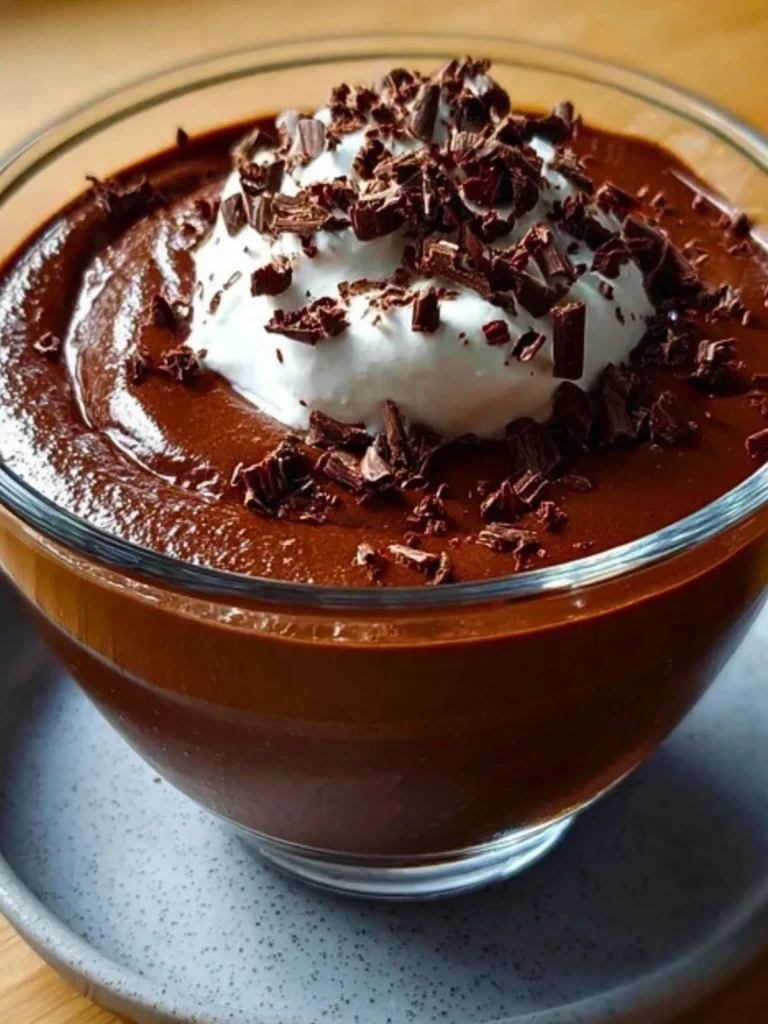
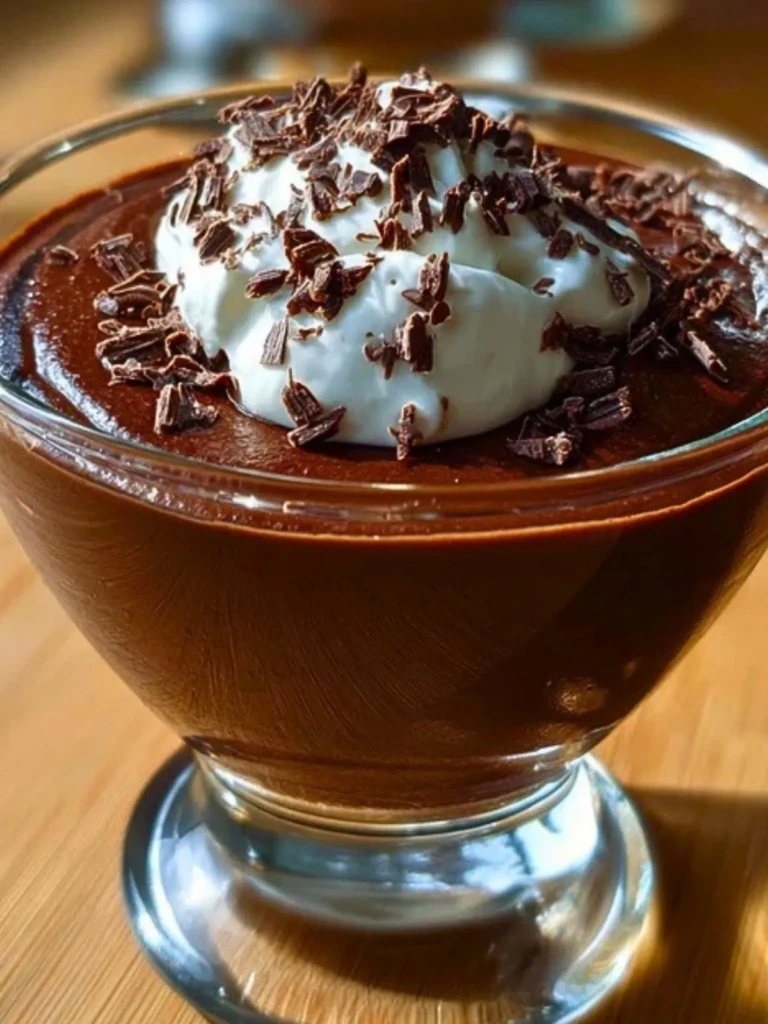
For presentation, a dollop of softly whipped cream adds contrast in both texture and taste. I like to finish with a few chocolate shavings or a dusting of cocoa powder—it signals what’s inside and gives the pudding a patisserie-worthy touch.
If you’re serving for a dinner party or a make-ahead dessert, this pudding holds beautifully in the fridge for up to 3 days. It does not freeze well, as the texture can become grainy upon thawing.
You can also prepare the pudding in one large bowl and scoop it into dishes later, though this method risks disturbing the smooth top. If going this route, give it a gentle stir to loosen it slightly before spooning it out.
Interestingly, the flavor deepens noticeably after a day in the fridge, which is why this dessert is such a strong candidate for make-ahead entertaining. Like a good chocolate ganache or mousse, the chocolate notes mellow and integrate, offering a fuller, rounder taste experience the next day.
This storage method also applies to similar custard-style desserts like banana pudding or butterscotch pots, which rely on similar dairy-based cooking and chilling for their final set.
A Quick Note on Comparisons With Other Pudding Recipes
This chocolate pudding stands apart from the boxed versions and quick microwave fixes, not just in flavor but in intention. While those shortcuts often rely on artificial thickeners and flavorings, this version is anchored in traditional custard techniques, which create a much deeper and more complex chocolate profile.
Compared to French pot de crème, this pudding is less rich but far more accessible and forgiving. Pot de crème requires baking in a water bath and precision with temperature; this stovetop method removes that pressure while delivering a similarly indulgent result.
Readers often say this pudding reminds them of childhood treats but with a noticeable upgrade in depth and finish. It hits that balance between nostalgic and sophisticated—a rare find in the dessert world.
Its key advantage lies in its flexibility. Unlike mousse, it doesn’t require whipping egg whites or folding in cream. Unlike ganache, it isn’t overly dense or reliant on perfect ratios of cream to chocolate. It lives comfortably in the realm of comfort food but can be dressed up beautifully for more refined settings.
If you’re looking for another example of this kind of smart dessert structure, think of butterscotch pudding made from brown sugar and butter—a sibling in method and payoff. Both recipes showcase how modest ingredients and thoughtful technique can yield something worthy of the best table.
Print
Chocolate Pudding – Silky, Deeply Chocolate, and Comfortingly Simple
- Total Time: 2 hours 25 minutes
- Yield: 6 servings
- Diet: Vegetarian
Description
Silky, rich, and deeply chocolate, this pudding delivers a spoon-coating creaminess that’s elevated by real chocolate and Dutch-processed cocoa. Whether served casually or dressed up, it’s a reliable, make-ahead dessert with big payoff and minimal effort.
Ingredients
2 cups whole milk
1 cup heavy cream
4 large egg yolks
0.25 cup cornstarch
0.5 cup granulated sugar
0.33 cup Dutch-processed cocoa powder
4 ounces bittersweet chocolate chopped
2 tablespoons unsalted butter
1 teaspoon pure vanilla extract
Instructions
1. In a medium saucepan, combine the whole milk and heavy cream over medium heat until steaming but not boiling.
2. In a separate bowl, whisk the egg yolks, sugar, cornstarch, and cocoa powder until smooth and fully combined.
3. Slowly pour a small amount of the warm milk mixture into the egg yolk mixture, whisking constantly to temper the eggs.
4. Pour the tempered egg mixture back into the saucepan with the remaining milk mixture.
5. Cook over medium-low heat, stirring constantly with a heatproof spatula or whisk, scraping the bottom and sides of the pot.
6. Continue cooking until the mixture thickens to the consistency of a loose custard that coats the back of a spoon, about 5 to 7 minutes.
7. Remove the saucepan from heat and immediately stir in the chopped bittersweet chocolate, butter, and vanilla extract until smooth.
8. Divide the hot pudding into individual serving dishes. Press plastic wrap directly on the surface to prevent skin from forming.
9. Chill in the refrigerator for at least 2 hours, preferably overnight, until fully set and chilled.
10. Serve with whipped cream and chocolate shavings for garnish, if desired.
Notes
Use Dutch-processed cocoa for the smoothest chocolate flavor and deepest color.
Tempering the yolks is critical—always add warm liquid slowly while whisking to avoid scrambling.
Chilling overnight enhances the chocolate flavor and results in a firmer, silkier texture.
- Prep Time: 10 minutes
- Cook Time: 15 minutes
- Category: Dessert
- Method: Stovetop
- Cuisine: American
Nutrition
- Serving Size: 1 serving
- Calories: 310
- Sugar: 22g
- Sodium: 60mg
- Fat: 21g
- Saturated Fat: 12g
- Unsaturated Fat: 8g
- Trans Fat: 0g
- Carbohydrates: 28g
- Fiber: 3g
- Protein: 5g
- Cholesterol: 130mg
Keywords: chocolate pudding, creamy chocolate dessert, homemade pudding