
 Mia McKenny
There are a few desserts that feel as rewarding to make as they are to eat, and classic apple strudel is one of them. Crisp, golden layers of phyllo wrap around a juicy, warmly spiced apple filling, finished with a snowfall of powdered sugar. It feels elegant, but not fussy. Traditional, but not outdated. And the truth is—once you understand the technique, it’s surprisingly doable.
I started making this version for Thanksgiving a few years ago when we needed a lighter finish than pie, but still wanted all those cinnamon-apple notes. Since then, it’s become a holiday staple and an autumn weekend baking project I actually look forward to. The contrast of textures is what makes it shine: shatteringly crisp pastry, soft tender fruit, and just enough syrupy sauce to bind it all together.
This version sticks closely to the Austrian roots, but makes a few smart updates for the modern home baker. I use pre-made phyllo (more on that soon) and a stovetop apple filling that avoids sogginess. It slices clean, holds beautifully at room temp, and honestly looks like you bought it from a Viennese bakery.
“I made your apple strudel for my book club and they thought I’d taken a class in Austria! The filling was so flavorful and not runny at all.” — Karen D.

What Makes This Classic Apple Strudel Stand Out
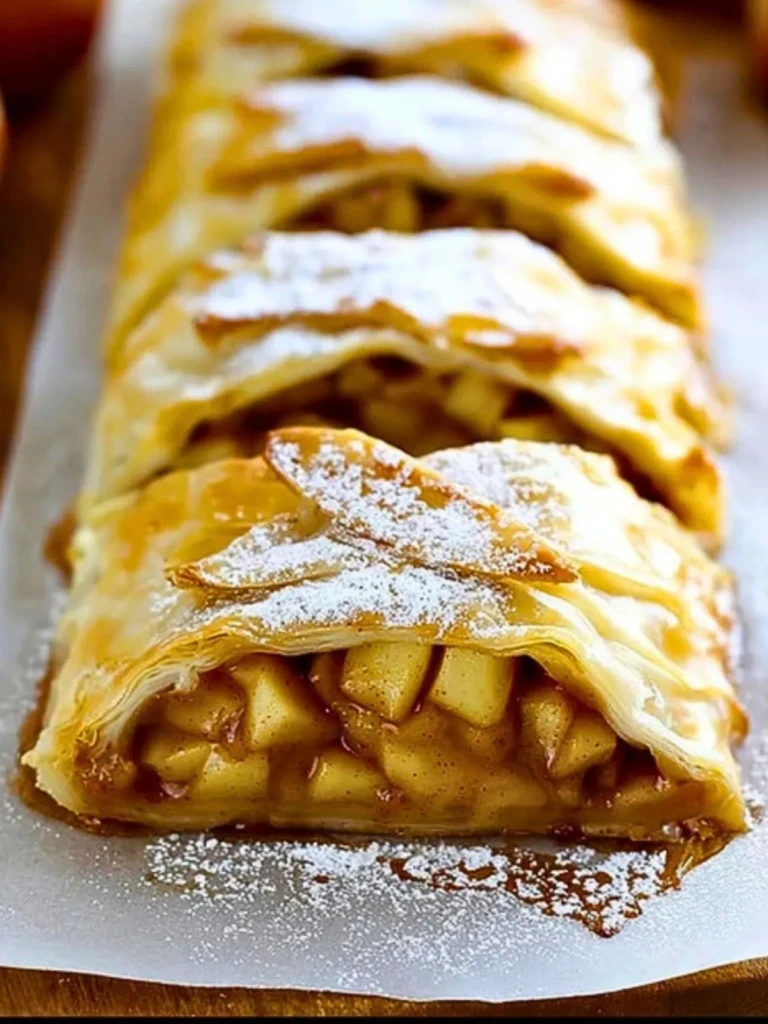
This isn’t your average apple dessert. Where pies lean heavy and rustic, strudel is about finesse. The paper-thin phyllo layers turn glassy in the oven, creating a crunch that gives way to soft, buttery apples underneath. Every bite is layered in texture—flaky, juicy, warm, and spiced just right.
What makes this version special is the use of stovetop-cooked apples. Most strudel recipes bake the raw filling inside the pastry, but that tends to leak or stay too crisp. Cooking it ahead allows the flavors to concentrate, and it ensures you get that thick, luscious filling with none of the sog.
The balance of spices is another deliberate choice. I use cinnamon and nutmeg, yes, but also a tiny bit of clove and lemon zest to brighten everything up. It’s subtle, but it adds complexity. The breadcrumbs, lightly toasted in butter, form a barrier that protects the pastry and adds nutty flavor.
Skill-wise, it’s beginner-friendly with just a touch of patience required. You don’t need to make the dough from scratch—I’ve tested that too, and while it’s a beautiful process, phyllo delivers 90% of the experience with 10% of the work. A pastry brush, a clean towel, and a good baking sheet are really all you need. If you can layer sheets and roll a log, you can make this.
Phyllo Dough vs. Homemade Dough – Which Is Better?
Let’s talk about one of the first decisions you’ll make when prepping your strudel: phyllo or homemade dough. I’ve made both, and while traditionalists might champion the hand-stretched route, I’ll be straight with you—unless you love a technical challenge, there is zero shame in reaching for good-quality frozen phyllo.
In my notes: Homemade strudel dough gives you a slightly chewier texture and more rustic character. It’s also incredibly satisfying to pull paper-thin by hand—once you get the hang of it. But it takes time, space, and a willingness to mess up a few times. Phyllo, on the other hand, is consistent, fast, and when handled properly, bakes into a shatteringly crisp shell that’s nearly indistinguishable from the real deal.
I recommend Athens brand phyllo dough—it’s widely available and has the best stretch-to-strength ratio. Let it thaw in the fridge overnight, then keep it under a slightly damp towel while you work to prevent tearing or drying. If you layer with enough butter and don’t skimp on the edges, it crisps up beautifully.
Bottom line? If it’s your first or even fifth time making strudel, go with phyllo. You’ll get to the good part faster: that first bite.
Why I Recommend 6 Cups of Mixed Tart Apples
This isn’t a one-variety situation. I always go with a mix of tart and firm apples—usually Granny Smith and Honeycrisp. That combo gives you depth: the Granny Smiths hold their structure, and the Honeycrisp adds a little juice and sweetness without turning to mush.
I tested this recipe using all-Gala once. The result? Too soft, too sweet, and lacking that bright snap you want against the buttery pastry.
Six cups diced small (roughly ½-inch cubes) is the sweet spot. That size gives you even distribution, faster cooking, and easier rolling.
Use the Right Baking Sheet for Best Results
Skip glass or ceramic. For the crispiest bottom and best airflow, go with a light-colored, rimmed metal baking sheet lined with parchment. A dark sheet will brown the strudel too quickly, and ceramic traps moisture—you’ll end up steaming the bottom.
Also key: make sure your oven is fully preheated. A pizza stone placed on the lower rack beneath the sheet helps too. It boosts the initial heat kick that sets the phyllo layers.
Buttered Breadcrumbs: The Hidden Hero and Never Skipped
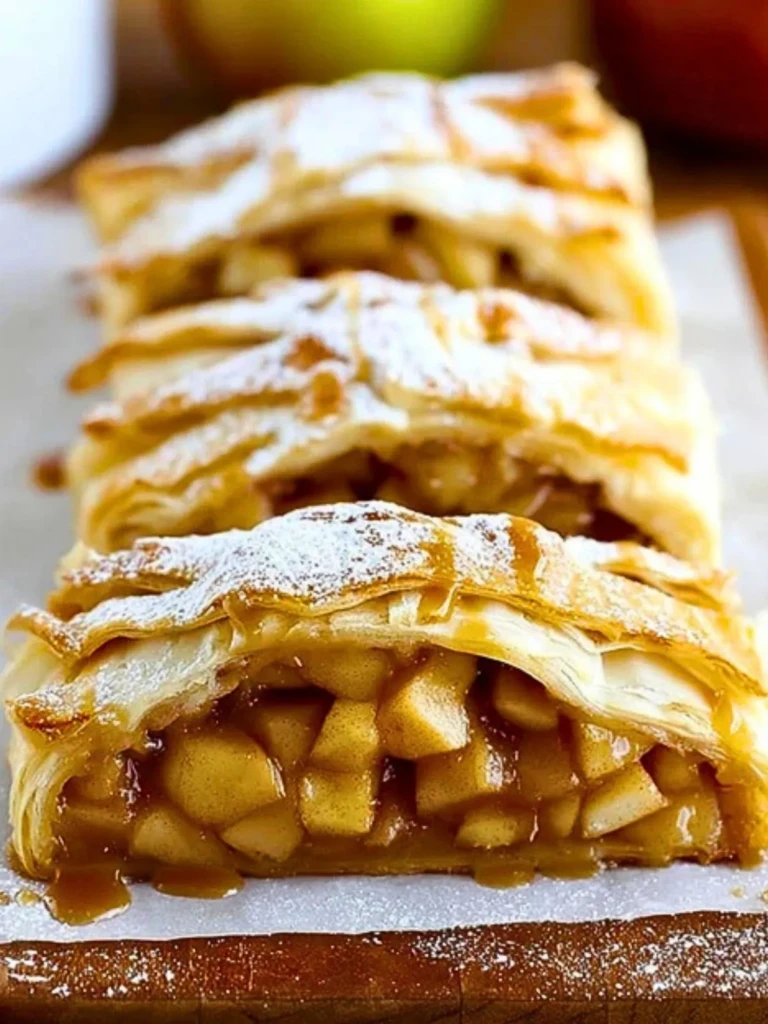
Breadcrumbs might not seem like much, but they’re critical here. I toast plain dry breadcrumbs in butter until golden and nutty. That layer sits right under the filling and soaks up excess juice—keeping everything crisp.
I’ve tried the recipe without it once. Never again. The bottom was soggy and the phyllo layers fused into one dense sheet. Don’t skip the breadcrumbs, and don’t use panko—they’re too coarse. Plain store-brand works perfectly once toasted in butter for about 5 minutes.
How to Bake for a Crisp Shell and Juicy Center
Start with a 375°F oven and make sure it’s fully preheated. I bake my strudel on a parchment-lined rimmed sheet placed directly on a preheated pizza stone for maximum bottom crisp.
The strudel should bake for 35 to 40 minutes, or until the top is deep golden brown and you can hear a faint crackle when tapped. Don’t worry if a little filling bubbles out—that’s actually a good sign.
Let it rest for at least 20 minutes before slicing. The filling sets up as it cools, so you get clean slices instead of a spill of syrup and apples. Don’t tent it or cover it while cooling—steam will soften the shell.
If you skip the resting period, it’ll taste great but won’t hold shape. It also helps to slice with a serrated knife using a gentle sawing motion to preserve the layers.
How Long It Lasts and How to Store This Classic Apple Strudel
This strudel is best the day it’s baked—the shell is at its crispiest and the filling still warm. That said, it keeps surprisingly well at room temperature for up to two days, loosely covered with parchment or a tea towel.
If you need to keep it longer, refrigerate it in an airtight container for up to 4 days. Reheat slices in a 300°F oven for 10 minutes to bring back some crispness—never microwave it, or the pastry goes limp.
You can freeze it fully baked. Cool completely, wrap tightly in foil, and store for up to a month. Reheat from frozen at 350°F for 25 to 30 minutes. Texture won’t be quite as sharp, but the flavor holds.
I like to serve it just barely warm, with unsweetened whipped cream or a scoop of vanilla ice cream. The pastry stays crisp, and the cold cream contrasts beautifully.
Other Apple Desserts I Bake Just As Often
When I’m not making strudel, I turn to a few other favorites that hit similar notes. My caramel apple cake leans more rustic and bakes in a bundt pan. Apple galette gives you the same flaky-crisp texture but in freeform style with puff pastry.
Apple crisp is my no-fuss standby—especially for weeknights—with an oat and brown sugar topping. And when I want something portable, my apple cinnamon bars give you strudel vibes with half the work. Each has its place, but classic strudel is the one that draws the biggest reaction.
Pin This Recipe and Come Back to It Anytime
Save this to your “Holiday Baking”, “European Classics”, or “Cozy Weekend Projects” boards.
Have you ever tried stretching your own strudel dough, or do you stick with phyllo like I do? Let me know what apple combos you used—and send pics if yours looked like it came from a bakery!
Print
Classic Apple Strudel Recipe
- Total Time: 1 hour 10 minutes
- Yield: 8 servings
- Diet: Vegetarian
Description
Crisp, golden phyllo pastry wrapped around a warm, spiced apple filling—this classic apple strudel is elegant yet surprisingly approachable. With stovetop-cooked apples, buttered breadcrumbs, and smart baking tricks, this version delivers bakery-style results right from your home oven.
Ingredients
6 cups diced Granny Smith and Honeycrisp apples
3 tablespoons granulated sugar
2 teaspoons ground cinnamon
1/4 teaspoon ground nutmeg
1/8 teaspoon ground cloves
1 teaspoon lemon zest
1 tablespoon lemon juice
1/3 cup raisins (optional)
1/2 cup plain dry breadcrumbs
3 tablespoons unsalted butter (for breadcrumbs)
1/2 cup unsalted butter, melted (for phyllo)
10 sheets phyllo dough, thawed
Powdered sugar, for dusting
Instructions
1. Preheat your oven to 375°F. Place a pizza stone on the lower rack if using.
2. In a skillet, cook diced apples with sugar, cinnamon, nutmeg, cloves, lemon zest, and lemon juice until softened and juices thicken slightly, about 10 minutes. Stir in raisins if using. Let cool.
3. In a small pan, toast breadcrumbs in 3 tablespoons of butter until golden. Set aside.
4. Lay one sheet of phyllo on parchment paper and brush with melted butter. Repeat, layering 5 sheets total.
5. Sprinkle the toasted breadcrumbs evenly over the phyllo.
6. Spread apple filling in a log shape along one short edge, leaving a 2-inch border.
7. Roll up the strudel jelly-roll style, tucking in sides as you go. Place seam-side down on baking sheet.
8. Brush top with butter and layer 2-3 more buttered phyllo sheets over the top, trimming excess and sealing.
9. Bake for 35 to 40 minutes until golden brown and crisp. Let cool 20 minutes before slicing.
10. Dust with powdered sugar before serving.
Notes
Use a mix of tart and firm apples like Granny Smith and Honeycrisp for best texture.
Toast plain breadcrumbs in butter to prevent sogginess and add nutty depth.
Let the strudel rest at least 20 minutes before slicing for clean cuts and set filling.
- Prep Time: 30 minutes
- Cook Time: 40 minutes
- Category: Dessert
- Method: Baking
- Cuisine: Austrian
Nutrition
- Serving Size: 1 slice
- Calories: 280
- Sugar: 14g
- Sodium: 110mg
- Fat: 15g
- Saturated Fat: 9g
- Unsaturated Fat: 5g
- Trans Fat: 0g
- Carbohydrates: 35g
- Fiber: 3g
- Protein: 3g
- Cholesterol: 25mg
Keywords: apple strudel, phyllo, apple dessert