
 Mia McKenny
If you’re craving a macaroni and cheese that doesn’t skimp on indulgence or simplicity, this version delivers creamy richness with a bronzed, bubbling crust that promises a deeply satisfying bite. Whether you’re a first-timer or a seasoned home cook, I’ll guide you through mastering a mac and cheese that sets itself apart from the typical overly dry, bland, or greasy attempts you may have encountered. You’ll walk away with not only a dependable go-to recipe, but a working understanding of how to adapt and perfect it every time.
This recipe takes the idea of macaroni and cheese back to basics—but with modern refinements. It eliminates the grainy, split sauces that often plague stove-top versions and fixes the chalky, stodgy textures common in baked ones. Here, you’ll learn how to craft a béchamel-based cheese sauce that stays smooth and luscious while baking into a perfectly set casserole. From pasta shape to cheese blend, every choice has a clear purpose.
Within the wide world of comfort food, this baked mac and cheese sits squarely in the tradition of Southern-style casseroles, but with a sharper flavor profile and an engineered creaminess that holds up even as leftovers. It bridges homestyle familiarity with professional consistency, making it suitable for weeknight dinners, holiday sides, or potluck centerpieces.
When you bring this bubbling, golden-topped dish to the table, the satisfaction is instant. The first spoonful reveals a molten, cheese-cloaked tangle of pasta beneath the crispy cap—inviting, nostalgic, and entirely worthy of seconds.

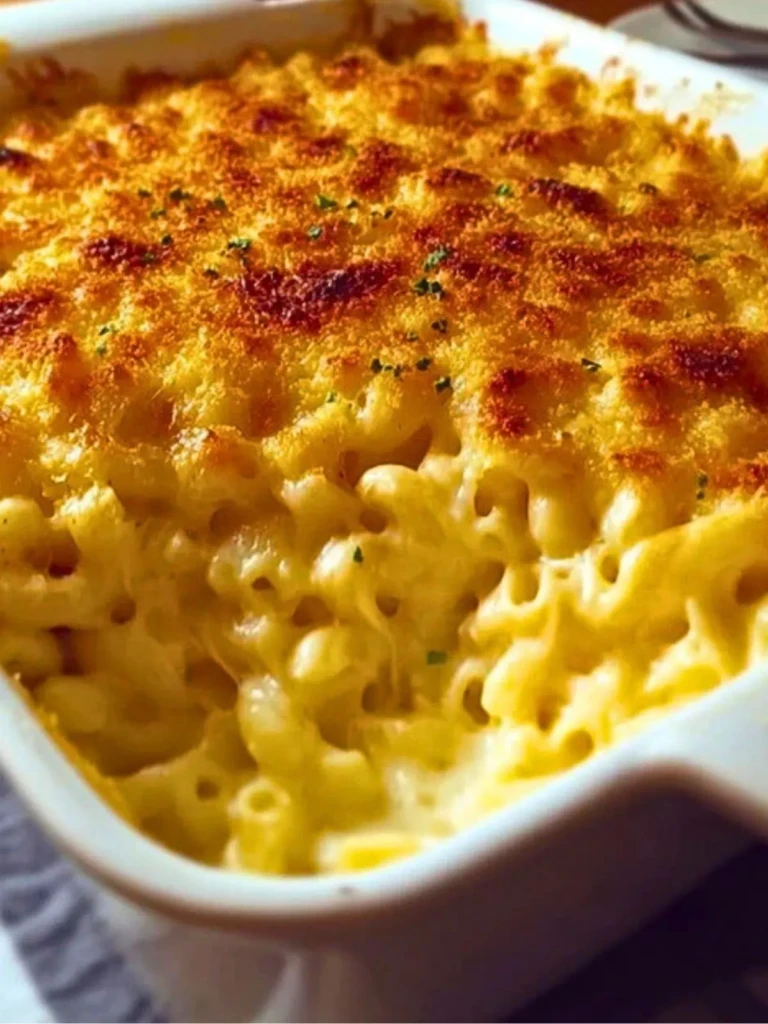
Ingredients for the Classic Macaroni and Cheese
The base of this dish begins with elbow macaroni, and for good reason: the tube shape allows cheese sauce to flow through and cling to every bite. While you can substitute other short pasta shapes like cavatappi or small shells, I find traditional elbows strike the best balance between texture and sauce retention.
For the sauce, we start with whole milk and heavy cream. This 2:1 dairy ratio creates a luxuriously rich mouthfeel without being overly heavy. Skim or low-fat milk simply can’t deliver the same body, and using only cream can lead to a greasy result. The roux begins with unsalted butter and all-purpose flour, forming a stable base that thickens the sauce without separating. Cooking the roux just until pale golden ensures the flour taste cooks off without darkening the flavor.
Cheese is where technique and testing matter most. I use a blend of sharp cheddar and Gruyère: the cheddar brings bite and familiarity, while Gruyère melts beautifully and adds depth. Pre-shredded cheeses often contain anti-caking agents that disrupt smooth melting, so I always recommend grating fresh from the block. If you need substitutions, fontina or Monterey Jack can replace Gruyère, while a bit of Parmesan can amplify sharpness.
The topping is built from a mix of butter-toasted breadcrumbs and extra cheese. Panko provides the lightest crunch, and tossing it in melted butter allows it to toast evenly in the oven without scorching. A final sprinkle of cheddar before baking enhances visual appeal and guarantees a bronzed finish.
Salt, freshly ground black pepper, and a pinch of dry mustard or cayenne bring balance to the richness. These small accents sharpen the flavor and prevent the sauce from tasting one-dimensional. Even just a hint makes a professional difference.
Choosing Between Cheddar and Gruyère
When selecting cheeses for macaroni and cheese, the combination of cheddar and Gruyère offers a harmony of flavor and meltability that’s hard to rival. Sharp cheddar alone can give you a nostalgic and tangy profile, but it sometimes turns grainy under high heat. Gruyère, on the other hand, melts smoothly and adds a buttery, nutty note that rounds out the sauce with refinement.
Through testing, I’ve found that using only cheddar can sometimes lead to a sauce that splits or curdles when baked, especially if overcooked or paired with too little fat. Gruyère mitigates this by contributing smoothness and a more elastic melt, acting almost like a stabilizer in the blend. In essence, it supports cheddar’s bold flavor while ensuring a creamy structure.
For budget-conscious cooks or those with limited cheese options, a high-moisture mozzarella or fontina can stand in for Gruyère with reasonably similar texture, though the flavor will be milder. If you’re leaning into the cheddar-only path, consider combining mild and sharp versions and increasing the cream slightly to keep the sauce supple.
In broader casserole-style mac and cheese recipes, this dual-cheese strategy reflects a professional pattern: one cheese for bold flavor, another for texture insurance. Understanding that pairing helps you adapt to various cheese drawer scenarios while still achieving top-tier results.
The Béchamel Method That Protects the Creaminess
At the heart of a reliably creamy baked macaroni and cheese lies the classic French béchamel—a white sauce made by whisking milk into a roux of butter and flour. This foundational step controls the final texture and keeps the cheese from separating during baking. The key is gentle heat and steady whisking: rushing here can result in scorched milk or a lumpy base that undermines the final sauce.
Once the béchamel is thickened to a consistency that coats the back of a spoon, the cheese must be added off the heat. This detail is critical. Adding cheese over heat causes proteins to seize and oils to separate, producing a greasy, gritty result. Stirring in the shredded cheddar and Gruyère off-heat ensures an even melt and preserves the sauce’s silkiness.
Many home cooks fear their sauce will end up too thin or thick, but visual cues are your best guide. If the sauce slowly pours from a spoon but still clings, it’s perfect. If it falls off in globs or runs like milk, adjust with a touch more cheese or reserved pasta water. Season gently at this stage—the cheese already adds salt, so build gradually.
This method isn’t exclusive to mac and cheese; it mirrors techniques used in gratins, lasagna, and soufflés where stable, luxurious sauces matter. By mastering this, you elevate not just this dish, but a whole class of comforting baked recipes.
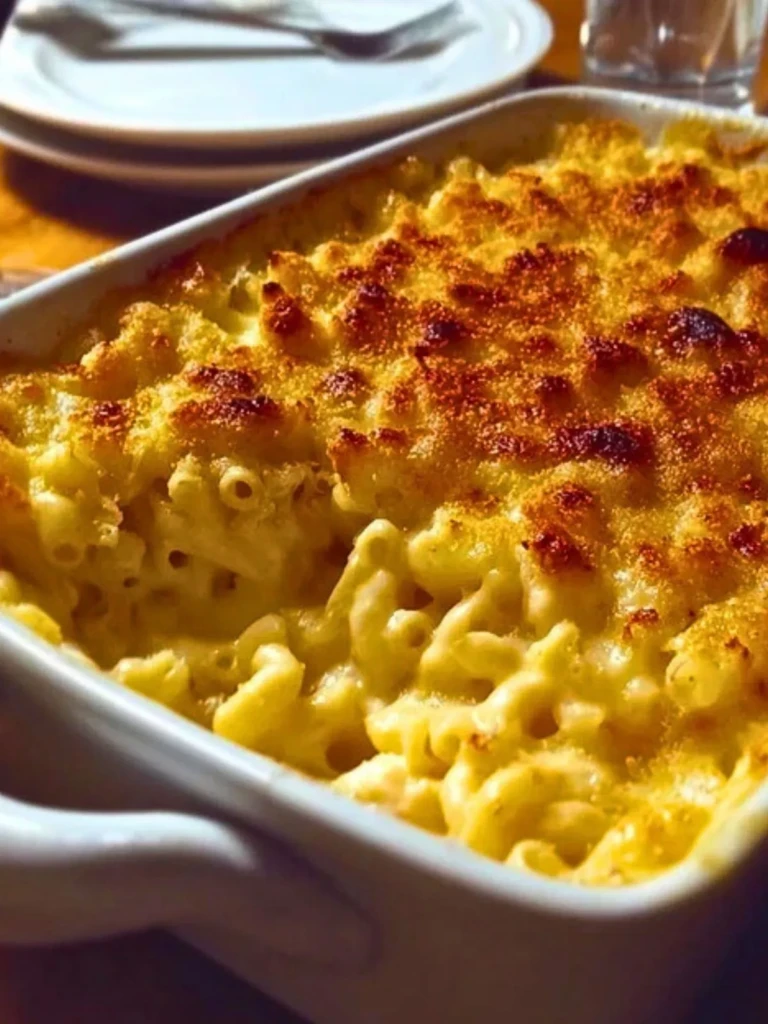
Serving and Storing Classic Macaroni and Cheese
Presentation matters, even with comfort food. I recommend serving this macaroni and cheese straight from the baking dish while the topping is still bubbling and golden. A wide serving spoon lets you lift out layers of creamy pasta with their crispy top intact. Garnishing with a light sprinkle of chopped parsley or a few turns of cracked black pepper adds a touch of contrast and freshness.
One of the advantages of this recipe is its make-ahead flexibility. You can assemble the mac and cheese fully, then refrigerate it unbaked for up to two days. When ready to serve, bring it to room temperature for about 30 minutes and bake as directed. This option is ideal for busy weeknights or prepping ahead for gatherings.
Once baked, leftovers hold beautifully. Stored in an airtight container, they last in the refrigerator for up to four days. Reheat gently in the oven at 325°F covered with foil to restore moisture. The topping won’t be quite as crisp, but the flavor deepens, and the sauce remains indulgent. Microwaving works in a pinch, though it may slightly tighten the texture.
Like other cream-based casseroles, this dish is best eaten warm, but even cold from the fridge, it retains a nostalgic charm. These storage principles apply equally to baked pasta dishes like baked ziti or scalloped potatoes—once the base is well-built, they age gracefully.
A Quick Note on Comparisons With Other Baked Pastas
Compared to other baked pasta dishes, classic macaroni and cheese holds a unique place for its focus on dairy rather than tomato or meat. While lasagna or baked penne lean into layered structure and long simmers, this mac and cheese is all about fast, cohesive richness. It cooks quicker, assembles with fewer components, and showcases a sauce that is built and finished in one pot before baking.
Traditional Southern baked mac tends to be firmer and egg-bound, almost like a custard, while this version stays soft, fluid, and sauce-centric. That texture distinction often surprises first-time bakers who are used to the stiffer, sliceable style. Readers who’ve tried both often describe this version as “restaurant-level” or “gourmet-style”—a testament to the blend of cheeses and the smoothness of the sauce.
For situations where you’re feeding a crowd or need reliable reheating, this recipe’s balance of richness and structure makes it more versatile than stovetop versions. It doesn’t rely on immediate serving to shine. Compared to skillet macs or boxed mixes, it delivers a deeper comfort experience, both texturally and in flavor.
If you’ve enjoyed recipes like broccoli-cheddar rice bakes or creamy cauliflower gratins, you’ll appreciate the same sauce-first philosophy here. The core technique is the same: anchor the vegetables or pasta with a creamy base, then finish with a crisp topping.
Print
Classic Macaroni and Cheese – Ultra Creamy, Golden-Topped Comfort
- Total Time: 50 minutes
- Yield: 8 servings
- Diet: Vegetarian
Description
Ultra creamy macaroni and cheese baked with a bubbling, golden crust. Made with a two-cheese blend and classic béchamel, this is the comfort dish you’ll keep coming back to—for holidays, weeknights, or anytime indulgence.
Ingredients
1 pound elbow macaroni
4 tablespoons unsalted butter
4 tablespoons all-purpose flour
2 cups whole milk
1 cup heavy cream
2 cups sharp cheddar cheese, freshly grated
1 cup Gruyère cheese, freshly grated
1 teaspoon salt
1/2 teaspoon freshly ground black pepper
1/4 teaspoon dry mustard or cayenne pepper
1 cup panko breadcrumbs
2 tablespoons unsalted butter, melted
1/2 cup sharp cheddar cheese, for topping
Instructions
1. Preheat the oven to 375°F (190°C). Lightly grease a 9×13-inch baking dish.
2. Cook the macaroni in salted boiling water until al dente. Drain and set aside.
3. In a large saucepan, melt 4 tablespoons of butter over medium heat. Whisk in the flour and cook for 1 to 2 minutes until pale golden and smooth.
4. Slowly whisk in the milk and cream, stirring constantly until the sauce thickens and coats the back of a spoon.
5. Remove the pan from heat. Stir in the grated cheddar and Gruyère until fully melted and smooth.
6. Add salt, pepper, and dry mustard or cayenne. Taste and adjust seasoning.
7. Stir the cooked macaroni into the cheese sauce until fully coated.
8. Pour the mixture into the prepared baking dish and spread evenly.
9. In a bowl, toss the panko breadcrumbs with melted butter. Sprinkle over the top along with the reserved cheddar.
10. Bake for 25 to 30 minutes until the top is golden and bubbling. Let sit for 5 minutes before serving.
Notes
Use freshly grated cheese for the smoothest melt and best flavor.
Make-ahead tip: Assemble the dish fully and refrigerate for up to two days before baking.
Reheat leftovers gently in the oven covered with foil to retain moisture and creaminess.
- Prep Time: 20 minutes
- Cook Time: 30 minutes
- Category: Casserole
- Method: Baked
- Cuisine: American
Nutrition
- Serving Size: 1 cup
- Calories: 560
- Sugar: 4g
- Sodium: 580mg
- Fat: 34g
- Saturated Fat: 20g
- Unsaturated Fat: 12g
- Trans Fat: 0.5g
- Carbohydrates: 41g
- Fiber: 2g
- Protein: 21g
- Cholesterol: 105mg
Keywords: macaroni and cheese, comfort food, creamy baked mac and cheese