
 Mia McKenny
If you’ve ever struggled with making okra that’s not slimy, this is the recipe that changes everything. This version of Indian-style okra—also known as “Bhindi Fry”—is crisp, richly spiced, and layered with flavor. It’s a weeknight staple in my kitchen and a reliable crowd-pleaser at potlucks and family dinners.
What makes this recipe stand apart is its simplicity and effectiveness. No tomato, no onion, no heavy sauce—just okra, lightly crisped in oil, and coated with a punchy spice mix that clings to each piece. I’ve served this alongside dal and rice, tucked it into wraps with yogurt, and even paired it with eggs for brunch. The versatility and texture make it one of my most revisited vegetable dishes.
The secret to success is managing moisture and mastering the spice-to-oil ratio. This is dry okra done right. The slices caramelize just enough to intensify their natural earthiness, while the spices—a blend of cumin, coriander, amchur, and turmeric—build warmth without overwhelming the palate.
“I never liked okra until I tried her version. Now it’s the one dish I make every week.” – Preeti G., home cook who shared her review after a Diwali dinner.
This recipe is forgiving, fast, and deeply satisfying. If you’re ready to unlock the full potential of okra, let’s get started.

What Makes This Flavorful Indian-Style Okra Stand Out
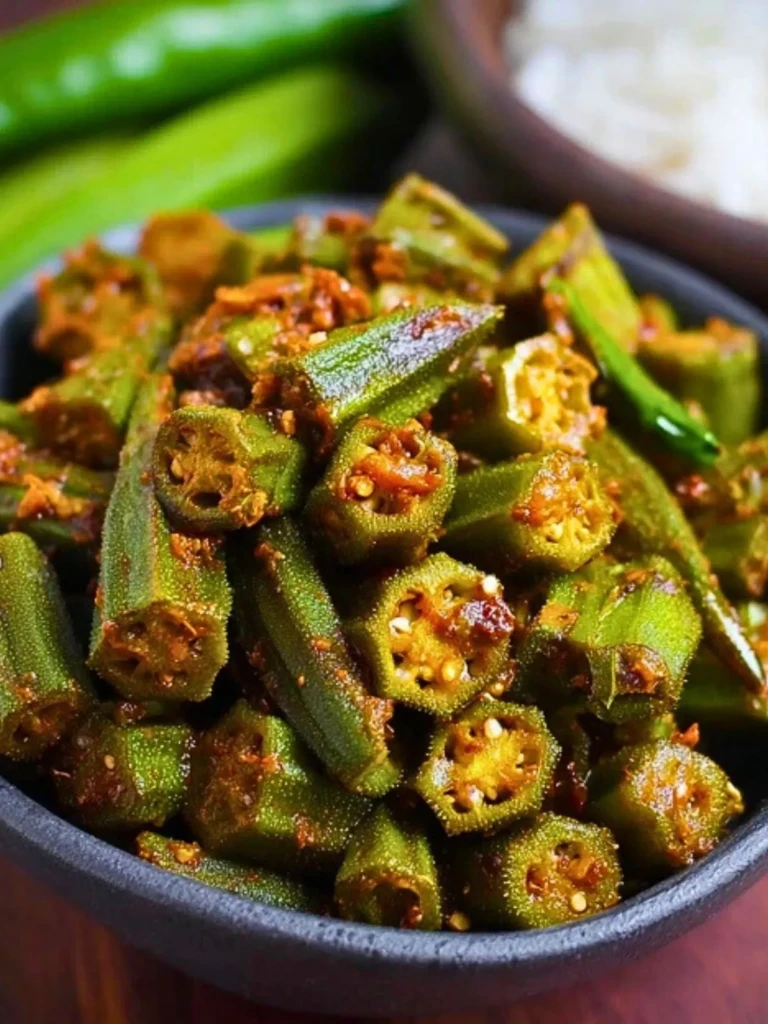
This isn’t the soggy okra that clumps together or the overly fried kind that tastes like little more than oil. What makes this recipe stand out is its perfect texture and strategic layering of spices. We’re talking crisp edges, soft centers, and a dry fry technique that elevates the okra instead of drowning it.
Unlike many North Indian preparations that rely on onion or tomato bases, this recipe leans entirely on dry spices for flavor. That means every bite is intensely seasoned without any water content to create slime. It’s a cleaner flavor profile, which also makes it more adaptable—you can pair it with just about anything.
There are three main components that do the heavy lifting: the dry roasting method, the spice blend, and the final resting time. Roasting the okra in a wide, heavy pan gives you maximum surface area for browning. The spice mix—especially the inclusion of amchur (dried mango powder)—brings a subtle tang that balances the okra’s natural earthiness. And the brief rest after cooking lets the spices cling and settle in, rather than flaking off.
You don’t need any special skills here. If you can slice vegetables and stir gently, you’re set. The only real must-have is patience: give the okra space in the pan and let it cook without stirring too often.
I’ve used both cast iron and non-stick pans for this. Cast iron gives a deeper char, but non-stick makes it easier for beginners. Either way, the key is avoiding steam—no lid, no added liquid, and absolutely dry okra to start with.
Fresh Okra vs. Frozen Okra – Which Is Better?
Let’s talk about one of the first decisions you’ll make: fresh okra or frozen okra?
I’ve tested this recipe with both, and here’s the verdict.
In my notes: Fresh okra gives you the best chance at crispness and flavor retention. It sauté s evenly, holds its shape, and releases minimal moisture when cut properly and patted dry. I always choose smaller pods that are bright green and firm to the touch. They cook quickly and get that perfect light char around the edges.
Frozen okra, while convenient, has a moisture challenge. Even after thawing and drying, it tends to steam in the pan before it sautés, which can quickly make the dish soggy. That said, if you’re in a pinch and all you have is frozen, use a hot cast iron pan and cook in small batches to evaporate moisture fast.
Texture is the main differentiator here. With fresh, you get crisp-tender bites. With frozen, it leans soft. For this dry-fry style, I strongly recommend going with fresh. You’ll immediately taste the difference.
If you do use frozen, skip the salt until the very end—salt early and you’ll amplify the water release and sabotage the crisp factor.
Why I Recommend 2 Tablespoons of Mustard Oil
This isn’t the time to shy away from strong flavors. I recommend using 2 tablespoons of mustard oil for this recipe because it adds depth, heat, and a distinctive sharpness that lifts the whole dish. Mustard oil, when heated properly until smoking, mellows in flavor but retains its punch. It also has a higher smoke point, making it ideal for dry roasting without burning the spices.
In my testing, I’ve tried everything from vegetable oil to avocado oil. While neutral oils cook the okra just fine, they don’t contribute anything flavor-wise. Mustard oil, on the other hand, becomes part of the seasoning. It complements the earthy okra and amplifies the spice blend.
If you’re not familiar with mustard oil, look for cold-pressed versions labeled “for external use only” in international markets—a legal workaround that many Indian cooks know well. Just make sure you heat it until it shimmers and starts to smoke lightly before adding anything else.
Use the Right Pan for Best Results
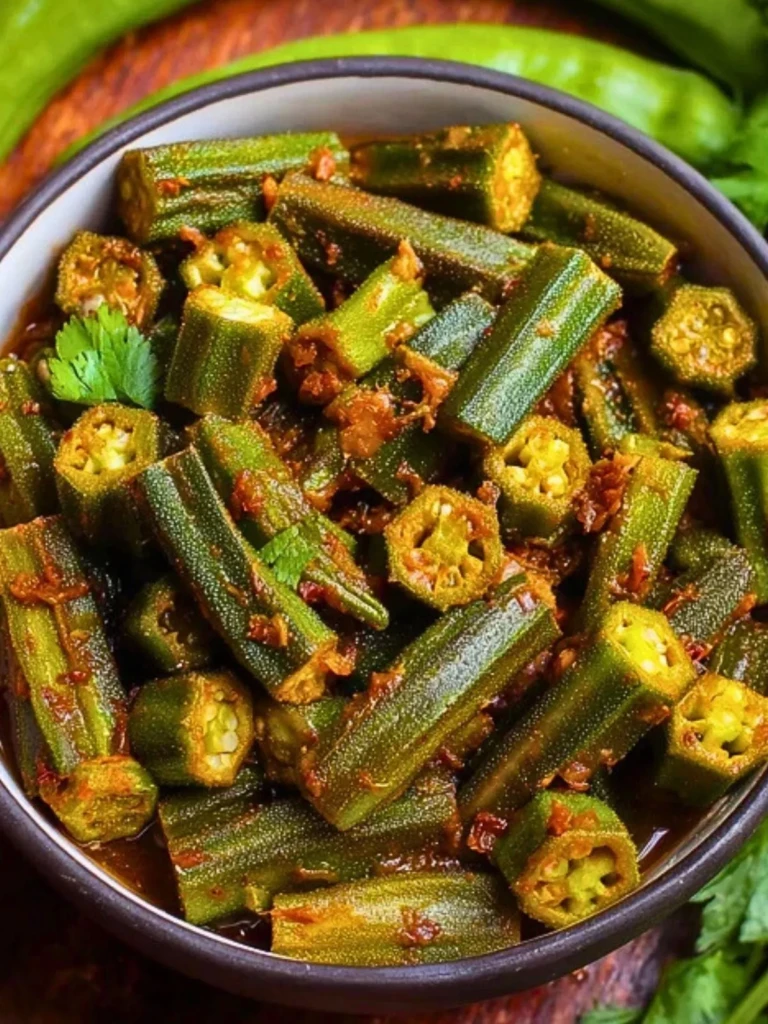
For best results, use a wide, heavy-bottomed pan—cast iron if you can. I’ve tested this with non-stick, stainless steel, and even ceramic. Cast iron consistently gave me the most reliable browning without sticking, and it handled higher heat better, which is crucial for a dry preparation like this.
In non-stick pans, okra tends to sit on top of itself due to sloped sides, leading to steaming instead of searing. Stainless steel needs more oil and constant monitoring to prevent burning. Ceramic works but takes longer to heat and doesn’t retain the same crisp finish.
Whatever you use, make sure it’s big enough to spread the okra out in a single layer. Crowding the pan traps steam—which you want to avoid at all costs.
The Spice Blend: Tangy, Warm, and Never Skipped
I’ve tried the recipe without amchur once. Never again. That dried mango powder is crucial. It brings tang and depth that cuts through the richness of the oil and rounds out the earthiness of the okra.
The spice blend here is straightforward but bold: turmeric for earthiness, cumin for warmth, coriander for citrusy lift, red chili powder for heat, and amchur for that unmistakable tang. Toasting them briefly in the oil before adding okra helps bloom their flavor.
Skip the amchur, and the whole dish flattens. It tastes unfinished. With it, the okra sings.
How to Cook Okra for a Crisp Exterior and Bold Flavor
Start with a large cast iron skillet and heat 2 tablespoons of mustard oil until it just begins to smoke. This step is critical—it tempers the raw sharpness of the oil and prevents soggy okra. Once the oil is ready, reduce the heat to medium and add your spice blend directly to the oil. Let it bloom for 20 seconds max.
Immediately add the sliced okra, making sure it’s as dry as possible and not too crowded in the pan. I recommend working in two batches if necessary. Stir once to coat in oil and spices, then let it sit undisturbed for a couple of minutes to begin browning. This isn’t a stir-fry; minimal movement is the key to that crisp finish.
Cook the okra over medium heat for 12 to 15 minutes, stirring just enough to prevent sticking. You’ll see the edges start to brown, and the okra will go from sticky to snappy. That’s your cue that it’s ready.
Once done, take the pan off the heat and let the okra rest uncovered for about 5 minutes. This step lets the residual steam evaporate and helps the spices adhere more firmly.
If you rush this step or cover the pan, you’ll trap moisture and lose all the crispness you worked for. Trust me, I’ve made that mistake before and the difference is night and day.
A final sprinkle of salt at the end (never during cooking) keeps the okra from sweating out moisture and helps it stay dry and flavorful.
How Long It Lasts and How to Store This Flavorful Indian-Style Okra
This okra is best served warm, right out of the pan when it still has that golden-edge crisp. But if you do have leftovers, they keep surprisingly well. I let the cooked okra cool completely before storing it in an airtight glass container. In the fridge, it holds for up to 3 days without becoming mushy.
To reheat, skip the microwave. A quick toss in a hot dry skillet brings back most of the original texture. If you’re freezing, spread the cooled okra on a parchment-lined tray, freeze until firm, and then transfer to a zip-top bag. It stays good for up to a month. Reheat straight from frozen in a hot pan—no thawing needed.
Serve this dish warm with dal and rice, or at room temperature wrapped in a roti with some yogurt. The texture holds up and the spice mix deepens in flavor overnight, making it a great make-ahead option for meal prep.
Other Indian Vegetable Dishes I Make Just As Often
This okra is part of my go-to rotation, but it definitely has company. I often pair it with a simple Aloo Jeera (cumin-spiced potatoes), or make it the sidekick to a rich Baingan Bharta (smoky mashed eggplant). On lighter days, I’ll go for a cabbage stir-fry with mustard seeds and curry leaves, or sautéed green beans with coconut.
Each of these dishes follows the same philosophy: minimal moisture, layered spices, and crisp textures that don’t rely on heavy gravies. If you’re building a thali or just want variety in your weekly meals, they’re all worth mastering.
Pin This Recipe and Come Back to It Anytime
Add this one to your “Indian Vegetarian Favorites” or “Quick Veg Sides” boards. Whether you’re a seasoned cook or new to Indian flavors, I’d love to hear how you made it your own.
Did you go with mustard oil or another fat? Fresh okra or frozen? Tag your version, and let’s keep improving together. I’ve seen readers add garlic, sprinkle sesame seeds, or throw in diced potatoes—so don’t be afraid to experiment.
Equipment Notes That Make a Difference
Cast Iron Skillet: Retains heat and gives the best browning. Worth the investment if you make dry vegetable dishes often.
Glass Storage Containers: Help preserve texture without introducing excess condensation in the fridge.
Microplane or Spice Grinder: For fresh-ground cumin and coriander, which noticeably boost the flavor of the final dish.
If you’re thoughtful about technique and tools, this simple okra recipe can deliver restaurant-quality results in under 30 minutes.
Print
Flavorful Indian-Style Okra Recipe
- Total Time: 25 minutes
- Yield: 4 servings
- Diet: Vegetarian
Description
This Indian-style okra—known as Bhindi Fry—is crisp, spice-coated, and non-slimy thanks to a dry-fry technique with mustard oil and bold spices like amchur and cumin. Perfect as a side with dal and rice or wrapped in roti, it’s deeply flavorful and comes together in under 30 minutes.
Ingredients
2 tablespoons mustard oil
500 grams fresh okra (small pods, chopped into 1/2-inch pieces)
1 teaspoon cumin seeds
1 teaspoon coriander powder
1/2 teaspoon turmeric powder
1/2 teaspoon red chili powder (adjust to taste)
1 teaspoon amchur (dried mango powder)
Salt to taste (added after cooking)
Instructions
1. Wash the okra and dry thoroughly using a kitchen towel. Let air dry for 10 more minutes to avoid moisture.
2. Heat 2 tablespoons of mustard oil in a wide cast iron skillet until it just begins to smoke.
3. Lower the heat to medium and add cumin seeds. Let them splutter.
4. Quickly add turmeric, coriander, red chili powder, and amchur. Stir for 15–20 seconds to bloom the spices.
5. Add the chopped, dry okra. Stir once to coat in oil and spices, then let it sit undisturbed to brown.
6. Cook over medium heat for 12–15 minutes, stirring occasionally to avoid burning but not too often.
7. Once okra edges are browned and no longer sticky, remove from heat.
8. Let rest uncovered for 5 minutes to let steam escape and spices settle.
9. Sprinkle salt and toss gently before serving.
Notes
Use only completely dry okra to prevent sliminess.
Don’t cover the pan while cooking—steam is your enemy here.
If using frozen okra, cook in small batches on high heat and add salt at the end.
- Prep Time: 10 minutes
- Cook Time: 15 minutes
- Category: Side Dish
- Method: Pan-Fried
- Cuisine: Indian
Nutrition
- Serving Size: 1 serving (approx. 125g)
- Calories: 110
- Sugar: 2g
- Sodium: 270mg
- Fat: 7g
- Saturated Fat: 1g
- Unsaturated Fat: 5g
- Trans Fat: 0g
- Carbohydrates: 10g
- Fiber: 4g
- Protein: 3g
- Cholesterol: 0mg
Keywords: okra, bhindi, dry fry, Indian vegetarian