
 Mia McKenny
If you’re looking for a foolproof way to elevate a weeknight chicken dinner, this Garlic and Parmesan Chicken brings restaurant-level flavor with zero intimidation. Designed for both seasoned cooks and enthusiastic beginners, this recipe teaches how to achieve an irresistibly golden crust, balance bold garlic notes, and build a rich Parmesan cream sauce that never feels heavy.
Most versions of creamy garlic chicken fall flat in one of two ways: either the crust lacks structure and slides off into the sauce, or the sauce overpowers the chicken with too much cream and not enough seasoning depth. I’ve adjusted those common pitfalls here by refining the pan-sear technique and using a garlic infusion method that delivers flavor without bitterness.
This dish fits beautifully into the comfort food category while offering a touch of elegance you can rely on for casual guests or last-minute dinner planning. The contrast between the crisp coating and the velvety sauce creates a dynamic bite every time. If you’ve been frustrated by bland, one-note skillet chicken dishes, this recipe will change your game.
Bringing this skillet to the table feels like delivering something genuinely special. It carries the richness of a classic chicken Alfredo but with sharper flavor definition and more refined texture control. The cream sauce clings to every crispy bite, and fresh parsley at the finish keeps the whole experience balanced and bright.

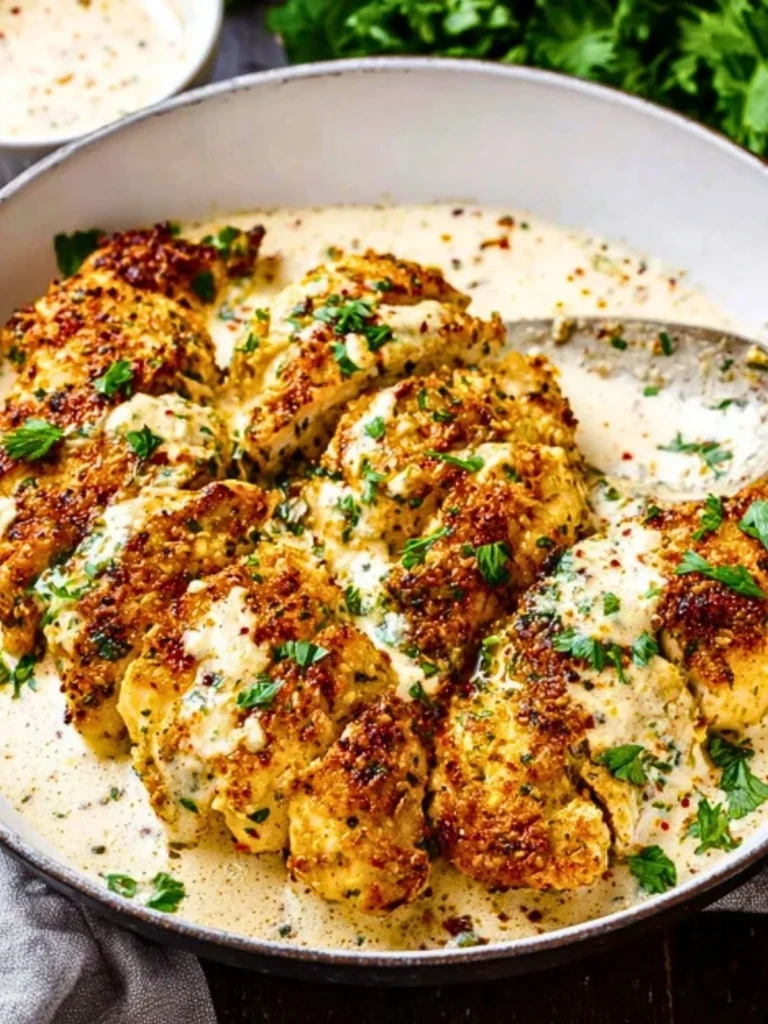
Ingredients for the Garlic and Parmesan Chicken
The crust begins with boneless, skinless chicken breasts, sliced horizontally for faster, more even cooking. This cut also increases the surface area, giving you more golden crust per bite. I prefer chicken breasts over thighs for this recipe because the milder flavor allows the garlic and Parmesan to take center stage.
For seasoning, kosher salt and freshly cracked black pepper lay the foundation. Garlic powder is layered in to deepen the flavor base without risking burnt bits in the skillet, while a touch of smoked paprika adds color and a subtle background warmth that ties everything together.
The crisp exterior comes from a coating of grated Parmesan mixed with fine breadcrumbs. Grated (not shredded) Parmesan melts just enough to bind the crust while remaining distinct and textured. Plain breadcrumbs ensure the cheese isn’t overpowered, but you can substitute panko if you prefer more crunch. I tested both and found fine breadcrumbs provided a cleaner, more uniform crust that better absorbed the garlic butter.
For the sauce, fresh garlic is gently sautéed in butter to extract its mellow sweetness, then deglazed with chicken broth to keep it savory and balanced. Heavy cream builds the luxurious body of the sauce, but it’s stabilized with Parmesan to prevent it from becoming too rich. The sauce is finished with a handful of chopped fresh parsley to lift the overall flavor profile.
Everything about this ingredient list is designed to build a textural and flavor contrast. Each component plays a supporting role—from the garlic’s foundation to the cream’s body—in delivering a chicken dish that’s comforting, crisp, and harmoniously seasoned.
Choosing Between Fresh Garlic and Garlic Powder
The choice between fresh garlic and garlic powder depends entirely on how you want the flavor to present itself in the final dish. In testing, I found that combining both produced the most nuanced result, but knowing when to use each is key.
Fresh garlic brings sweetness and depth once sautéed slowly in butter. It carries a gentle pungency that dissolves into the cream sauce, creating a soft yet present garlic backbone. However, if added too early or cooked too hot, fresh garlic can easily turn bitter, which is why it’s important to gently sauté it just until fragrant and golden.
Garlic powder, on the other hand, blends seamlessly into dry seasonings and the breadcrumb-Parmesan crust. It offers a consistent, well-rounded garlic note that supports the crust without overpowering the other flavors. When testing with only fresh garlic, the crust lacked that punchy top note that garlic powder uniquely provides. When using only garlic powder, the sauce fell flat and one-dimensional.
If you’re in a pinch or cooking for someone sensitive to stronger garlic flavors, using garlic powder alone will still yield a delicious result. But for the richest, most balanced flavor profile, combining both forms gives you layered complexity and dependable garlic presence throughout the dish. This strategy holds true across many chicken skillet recipes that require both aromatic depth and crust-level seasoning.
The Pan-Searing Method That Protects the Crust
Pan-searing is the defining technique in this recipe, and its success depends entirely on temperature control and patience. The goal is to create a deeply golden crust that doesn’t detach from the chicken when the sauce is added. Achieving that crust starts with a preheated skillet and a shallow oil base—just enough to coat the surface and prevent sticking without creating a greasy fry.
The chicken should go into the pan only when it’s hot enough that a breadcrumb dropped in sizzles immediately. Searing for three to four minutes per side without shifting the chicken allows the crust to anchor properly. One of the most common mistakes is flipping too early, which tears the coating and leaves parts behind in the pan.
Once seared, the chicken is briefly removed so the sauce can develop without disrupting the crust. This step also prevents the cream from reducing too quickly due to residual heat from the protein. Deglazing the pan with broth after removing the chicken lifts the fond—the browned bits—into the sauce, giving it deep flavor and reinforcing the garlic profile.
The cream and Parmesan are added gradually, off the heat, to avoid curdling and to keep the sauce emulsified. Returning the chicken at the very end ensures it warms through without losing its crisp edge. This pan-searing method not only protects the texture of the chicken but makes sure each bite is rich, balanced, and firmly coated with flavor.
Serving and Storing Garlic and Parmesan Chicken
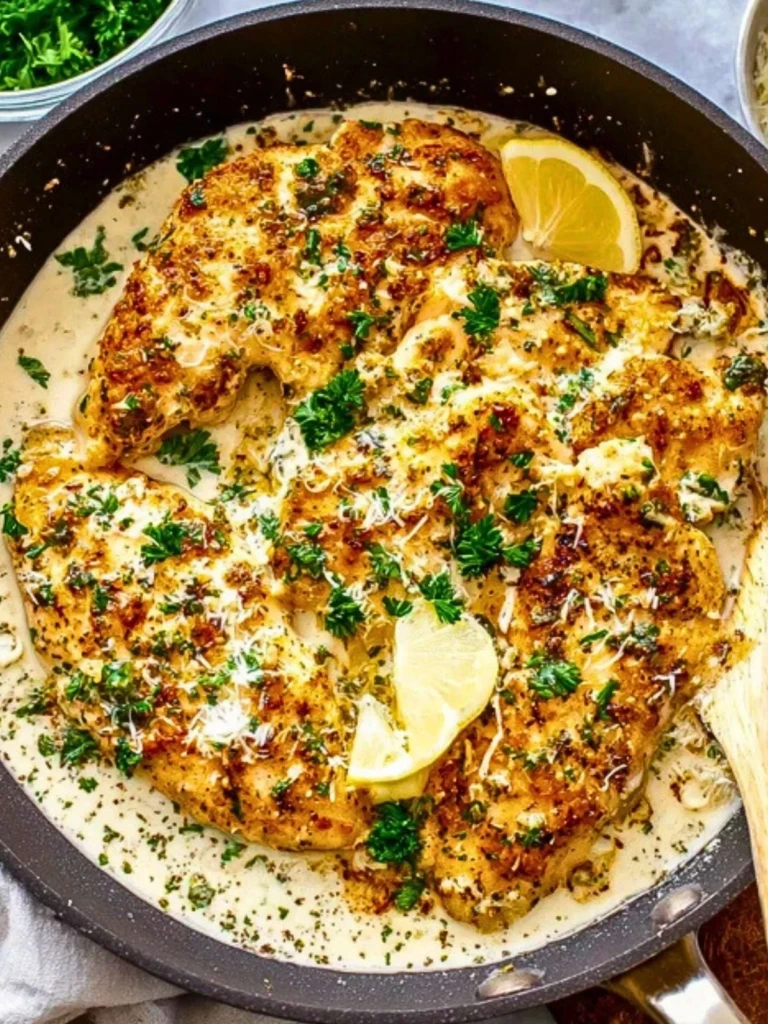
This dish shines brightest when served straight from the skillet while the crust is still crisp and the sauce velvety. A sprinkle of freshly chopped parsley adds the right brightness at the finish, and it pairs wonderfully with sides that absorb sauce well—think mashed potatoes, buttered noodles, or even steamed rice.
For presentation, slicing the chicken and fanning it slightly over the sauce creates a rustic yet refined visual. The texture contrast remains visible and invites your guests to dig in. If you’re serving this for a dinner party, warming the plates beforehand helps keep the sauce fluid and the crust intact for longer.
This recipe also offers excellent make-ahead versatility. You can sear the chicken and store it separately from the sauce, refrigerated for up to two days. When ready to serve, gently reheat the sauce in a skillet and return the chicken just until warmed through. This prevents the crust from going soggy and keeps the textures distinct.
In terms of leftovers, store everything in an airtight container and use within three days. The sauce may thicken slightly, but it loosens beautifully with a splash of broth or cream when reheated on the stove over low heat. Microwaving isn’t ideal, as it tends to soften the crust too much. Flavor-wise, the garlic and Parmesan deepen slightly over time, offering a more mellow profile on the second day—perfect for lunch with a slice of crusty bread to mop up the sauce.
A Quick Note on Comparisons With Other Creamy Chicken Recipes
Compared to traditional creamy chicken recipes like Chicken Alfredo or Tuscan Garlic Chicken, this version trades heaviness for contrast and sharper flavor definition. The use of a crusted chicken base rather than simmered fillets introduces texture as a core element, rather than just a vessel for sauce. This distinction makes the eating experience more dynamic.
Unlike versions that rely heavily on cream, butter, or cheese alone, this recipe balances those elements with garlic and broth, cutting richness without sacrificing flavor. While some versions use sun-dried tomatoes or spinach for brightness, here the chopped parsley and garlic provide that lift in a cleaner, more streamlined way.
Readers often note how the crusted chicken gives them restaurant-level results without needing to deep fry or use flour-based dredging. The Parmesan breadcrumb technique borrows from classic Chicken Milanese but modernizes it with a skillet-to-sauce transition that feels both cozy and elevated.
If you’ve tried baked garlic Parmesan chicken recipes before and found them dry or flat, the key difference here is moisture retention and timing. The pan-sear locks in juices, and the sauce-to-chicken timing ensures nothing gets mushy or overcooked. For anyone looking to upgrade their creamy chicken routine, this recipe becomes a go-to not just because it works—but because it tastes intentional in every bite.
Print
Garlic and Parmesan Chicken – Creamy, Crispy, and Flavor-Rich
- Total Time: 30 minutes
- Yield: 4 servings
Description
Creamy, crispy, and deeply flavorful, this Garlic and Parmesan Chicken delivers a golden crust and a velvety sauce in one pan. It’s a refined comfort dish built on careful searing, layered garlic flavor, and the savory depth of Parmesan. Perfect for weeknights or casual gatherings.
Ingredients
2 large boneless skinless chicken breasts, halved horizontally
1 teaspoon kosher salt
1 teaspoon freshly cracked black pepper
1 teaspoon garlic powder
1/2 teaspoon smoked paprika
1/2 cup grated Parmesan cheese
1/3 cup plain fine breadcrumbs
2 tablespoons unsalted butter
4 cloves garlic, minced
3/4 cup chicken broth
1 cup heavy cream
1/4 cup grated Parmesan (for sauce)
2 tablespoons chopped fresh parsley
Instructions
1. Slice the chicken breasts horizontally to create four thinner cutlets.
2. Season both sides with salt, pepper, garlic powder, and smoked paprika.
3. Mix grated Parmesan and breadcrumbs in a shallow dish. Press each chicken piece into the mixture to coat evenly.
4. Heat a skillet over medium heat and add a light coating of oil.
5. Sear chicken on each side for 3–4 minutes until golden and crisp. Remove and set aside.
6. In the same skillet, melt butter and sauté the minced garlic until fragrant.
7. Deglaze with chicken broth, scraping up the browned bits. Simmer briefly.
8. Stir in heavy cream and remaining Parmesan off heat. Let melt and thicken.
9. Return chicken to the skillet and spoon sauce over. Simmer gently to warm through.
10. Garnish with fresh parsley and serve immediately.
Notes
Use freshly grated Parmesan for best texture in both the crust and sauce.
Don’t overcrowd the pan—work in batches if necessary to maintain crust integrity.
Add a splash of broth or cream when reheating to loosen the sauce smoothly.
- Prep Time: 10 minutes
- Cook Time: 20 minutes
- Category: Dinner
- Method: Pan-seared
- Cuisine: American
Nutrition
- Serving Size: 1 chicken cutlet with sauce
- Calories: 490
- Sugar: 1g
- Sodium: 720mg
- Fat: 32g
- Saturated Fat: 16g
- Unsaturated Fat: 13g
- Trans Fat: 0g
- Carbohydrates: 6g
- Fiber: 0g
- Protein: 43g
- Cholesterol: 140mg
Keywords: garlic parmesan chicken, creamy chicken, skillet chicken