
 Mia McKenny
It started with a whisper of clove in the air one chilly November afternoon. I was pulling out the holiday linens from the cedar chest when the scent of last year’s cinnamon sticks still tucked in the corners reminded me: it was gingerbread season. I’ve always been a little wistful this time of year, when the days grow short and every flicker of the oven light feels like a promise of warmth.
This particular cake was requested by my Aunt Marian, who had spent every winter of my childhood baking spiced cakes that filled the house with sweet heat. Hers always had that deep, molasses-rich aroma, and a texture you could sink a fork into like a hug. But the first time I tried my hand at her gingerbread, it sank in the middle and cracked along the top—more like a question mark than a celebration.
After many quiet Saturday mornings of trial and error—one too dry, another too sweet—I finally found my rhythm. The version I make now holds firm, yet tender, with a moist crumb and a spiced bite softened by a thick swoop of cream cheese frosting. I’ve added freshly grated ginger to honor Aunt Marian’s rule: “Always grate it fresh. That’s where the warmth lives.”
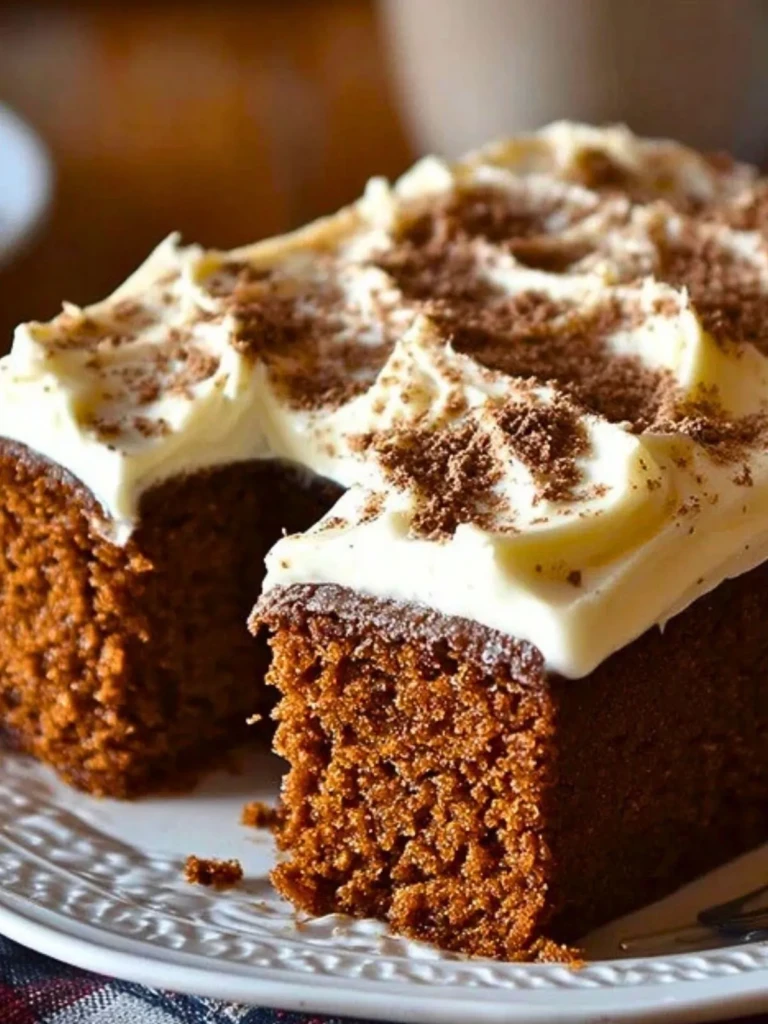
This cake tastes of comfort. The deep brown crumb carries cinnamon, ginger, cloves, and nutmeg through every bite. The frosting—cool and tangy—melts into the spice. It’s the sort of dessert that feels like home, even if it’s your first time making it. And every time I bake it now, I think of that first messy, heartfelt attempt—and how far a little patience and a lot of ginger can take you.

Ingredient Tips for the Gingerbread Base
When I make gingerbread cake, I always start by gathering everything first—like my grandmother used to do. She called it “setting the stage,” and she believed that a peaceful kitchen made better food. I pull out the molasses jar and give it a little shake to loosen it. That deep, dark sweetness is the backbone of this cake.
Fresh ginger is non-negotiable for me. The smell alone, sharp and earthy as I peel and grate it, is a signal to slow down and stay present. Dried ginger gives a background note, but fresh ginger brings the heat to the surface. I like to use both, balanced with cinnamon, nutmeg, and a small pinch of clove—just enough to feel it on the back of the tongue.
I always sift the flour. It’s a simple thing, but it lightens the batter just enough to keep the cake tender. Brown sugar instead of white adds another layer of warmth and moisture, and a bit of buttermilk rounds everything out with a tang that keeps the sweetness from becoming too much.
I’ve learned the hard way not to forget to grease the pan thoroughly, even the corners. Molasses tends to cling to everything it touches. Aunt Marian once told me, “Treat it kindly, and it won’t turn on you.” She was right. Ingredients respond to care, and I like to think this cake is proof of that.
Mixing and Baking the Gingerbread Layer
I start by creaming the butter and brown sugar until it feels like soft sand between my fingers. The molasses goes in next, rich and slow, curling into the bowl like a ribbon of winter. I always pause a moment here—the scent alone brings a hush to the kitchen.
When I add the eggs, one at a time, I think of my cousin Eli, who used to crack them with one hand just to show off. I’m not nearly as flashy, but I crack carefully, watching the yolk slip free. The batter deepens in color with every stir.
In a separate bowl, I whisk together the flour, spices, and baking soda. Sifting feels like breathing—steady and light. The dry mixture meets the wet in stages, alternating with buttermilk. I mix just until everything comes together, folding gently to keep it tender. There’s a moment when the batter smooths out, thick and glossy, and I know it’s ready.
The oven is already warm when I pour the batter into the prepared pan. I smooth the top with the back of a spoon, and into the oven it goes. It bakes slowly, filling the house with spice and memory. When the top springs back at the center and a toothpick comes out mostly clean, I rest it on the counter and let it be.
Creating the Creamy Frosting Finish
Once the cake is cool, I turn to the frosting. Cream cheese and butter, softened until they blend into one another, get whipped with powdered sugar and just a whisper of vanilla. The texture turns from firm to cloudlike in a matter of minutes.
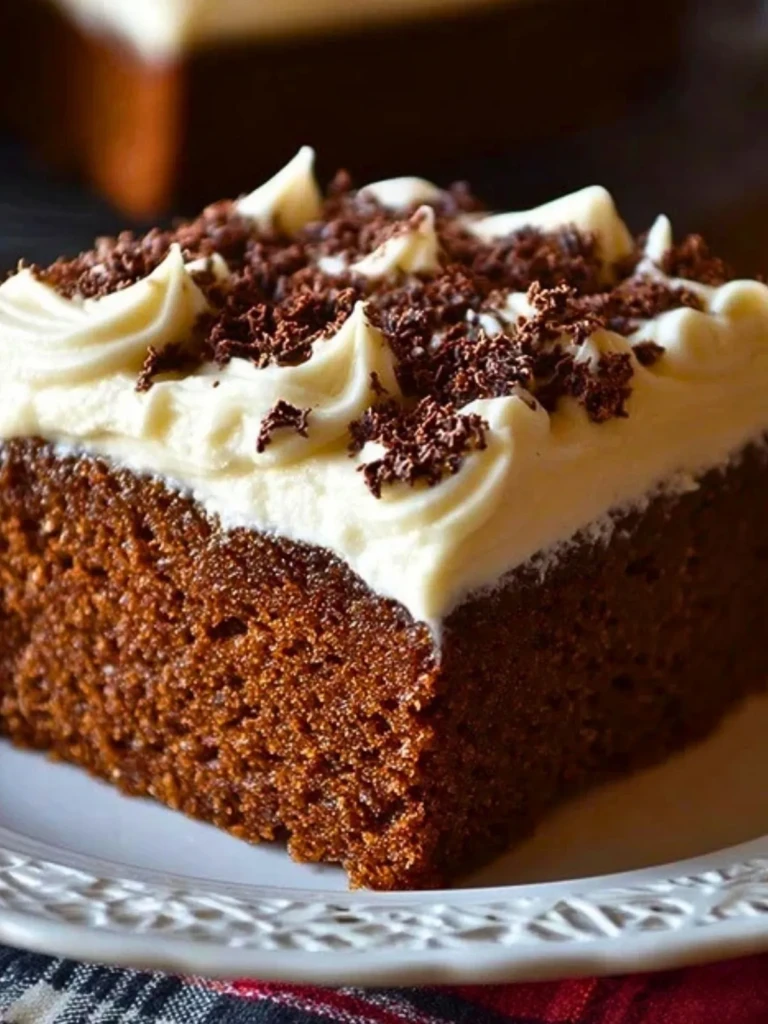
Spreading it across the cake is almost meditative. I move slowly, letting the frosting find its shape in soft swirls and peaks. A dusting of grated nutmeg or dark chocolate on top gives it a finishing touch that reminds me of snow on rooftops.
Finishing With a Soft, Tangy Crown
The contrast of the tangy cream cheese against the dark, spiced cake is one of my favorite parts. It tempers the richness and adds a brightness that keeps you coming back for another bite. I always let the frosting set slightly before serving—just enough to hold, but not so firm it loses its softness.
It’s not a fancy cake. But there’s something in its quiet presence that comforts. It looks humble, with its pale topping and russet base, but when you cut in, the scent and tenderness say everything that needs to be said.
Serving and Personal Reflections
When it’s time to serve the gingerbread cake, I use my warm knife trick—a dip in hot water, then a gentle wipe before each slice. It helps the frosting glide, keeping those edges smooth and the layers intact. I place each square on a simple white plate. Nothing more. The cake speaks for itself.
I think about Aunt Marian when I make the first cut. She always insisted that the corner piece was the best—more edge, more frosting—and I have to agree. This cake tends to disappear quickly, especially when the family’s around. It’s one of the few desserts my dad goes back for seconds on.
There’s something about the way it crumbles slightly, the frosting softening the spice, that makes it feel deeply satisfying. It’s not showy, but it gathers people. Even my neighbor June, who “doesn’t do sweets,” has been known to sneak a slice after dinner.
I usually serve it just as it is, though once I brought it to a holiday potluck with a side of whipped cream, and it vanished in minutes. But at home, I prefer it unadorned—cool, spiced, and honest.
This cake has become a seasonal marker for me. When the leaves crisp and the winds shift, I reach for molasses and cinnamon. And every time I do, I feel like I’m carrying something forward—warmth, memory, love—one slice at a time.
Extra Inspiration: More Spiced Treats
Sometimes I bake this gingerbread cake alongside a batch of molasses crinkle cookies—those chewy little rounds with sugar-dusted tops that my kids can’t resist. On really cold days, I’ll make spiced apple muffins too, just to fill the kitchen with even more warmth.
My sister swears by her chai-spiced pound cake, which has become a quiet favorite at our family gatherings. We often exchange slices wrapped in parchment and twine—little tokens of love in baked form.
There’s something about spice that calls to me this time of year. It feels grounding, like the earth itself is leaning in to listen. I’ve even made a gingerbread pancake version of this cake, served warm with maple syrup for breakfast when my nieces visit. Their delighted faces are worth every early-morning whisk.
These recipes all feel connected. They share that sense of ritual and reflection—slow baking, rich aromas, shared moments. Each one brings a slightly different story, but the heart remains the same: sweetness, warmth, and memory baked into every bite.
Save These Gingerbread Cake Memories for Later
I like to keep a little corner of my Pinterest board just for recipes that feel like home. This gingerbread cake has been pinned, printed, and passed along more times than I can count. Sharing it feels like handing someone a piece of comfort.
A few years ago, my friend Maureen asked for a copy after tasting it at our holiday book club. She now bakes it every December and says her grandchildren call it “snow-frosted spice cake.” I smile every time she sends a photo of it, always with one bite missing before she remembers to take the picture.
Recipes like this one are meant to be shared. They carry more than flavor—they carry moments, laughter, and quiet mornings. Whether it’s pinned online or scribbled on a notecard, gingerbread cake becomes part of the fabric that weaves friends and family together.
So if you’re like me, someone who finds joy in giving as much as baking, don’t hesitate to share this. It might just become someone else’s memory, too.
Print
Gingerbread Cake
- Total Time: 1 hour
- Yield: 12 servings
- Diet: Vegetarian
Description
Gingerbread Cake is a moist, spiced cake with a deep brown crumb and a generous layer of tangy cream cheese frosting—perfect for cozy gatherings and holiday dessert tables. I love making it with rich molasses, warm spices, and fresh ginger for an added kick of warmth. This is a simple recipe that delivers nostalgia and comfort in every bite. Some call it “old-fashioned ginger cake” or “snow-frosted spice cake,” especially when topped with stabilized frosting for special events. I’ve tested versions both with sour cream and buttermilk, and both work beautifully depending on the richness you prefer. Among spiced cake options, Gingerbread Cake stands out for its unbeatable balance of flavor, incredibly soft crumb, and lasting freshness—it absolutely deserves a spot in your seasonal recipe collection.
Ingredients
2 1/2 cups all-purpose flour
1/2 teaspoon salt
1 1/2 teaspoons ground ginger
1 teaspoon ground cinnamon
1/4 teaspoon ground cloves
1/4 teaspoon ground nutmeg
1 teaspoon baking soda
3/4 cup unsalted butter, softened
3/4 cup brown sugar, packed
2 large eggs
1 cup molasses
1 cup buttermilk
1 tablespoon freshly grated ginger
1 teaspoon vanilla extract
8 ounces cream cheese, softened
1/2 cup unsalted butter, softened
3 cups powdered sugar
1 teaspoon vanilla extract
Instructions
1. Preheat your oven to 350°F (175°C). Grease and flour a 9×13-inch baking pan thoroughly.
2. In a bowl, sift together the flour, salt, ginger, cinnamon, cloves, nutmeg, and baking soda.
3. In a separate large bowl, cream the softened butter and brown sugar until light and fluffy.
4. Add eggs one at a time, mixing well after each. Stir in the molasses, fresh ginger, and vanilla extract.
5. Add the flour mixture in three parts, alternating with buttermilk, beginning and ending with the dry ingredients. Mix gently until just combined.
6. Pour the batter into the prepared pan and smooth the top with a spoon or spatula.
7. Bake for 35-40 minutes, or until a toothpick inserted into the center comes out mostly clean. Let cool completely in the pan.
8. For the frosting, beat cream cheese and butter until smooth and fluffy. Add powdered sugar gradually, then mix in vanilla.
9. Spread frosting over the cooled cake in soft, swooping strokes. Dust with grated nutmeg or shaved chocolate if desired.
10. Slice with a warm knife for clean cuts and serve on simple plates to let the cake shine.
Notes
Use fresh ginger for the best flavor depth—it gives warmth that powdered ginger alone can’t provide.
Don’t overmix the batter—stir gently to keep the crumb tender and soft.
Always let the cake cool completely before frosting to prevent melting or sliding.
- Prep Time: 20 minutes
- Cook Time: 40 minutes
- Category: Dessert
- Method: Baking
- Cuisine: American
Nutrition
- Serving Size: 1 slice
- Calories: 420
- Sugar: 35g
- Sodium: 280mg
- Fat: 19g
- Saturated Fat: 11g
- Unsaturated Fat: 6g
- Trans Fat: 0g
- Carbohydrates: 58g
- Fiber: 1g
- Protein: 4g
- Cholesterol: 65mg
Keywords: gingerbread cake, holiday cake, molasses cake, cream cheese frosting, spiced cake