
 Mia McKenny

This Jjimdak recipe brings together the best of Korean comfort cooking—fall-off-the-bone chicken in a glossy, umami-rich soy-based sauce that clings to every bite. The sweetness from onions and the earthy bite of garlic build layers of flavor, while the sauce thickens just enough to coat each piece in deep, savory warmth.
What makes this dish special is its balance of spicy, salty, and sweet. I use whole cloves of garlic, chunky slices of onion, and Korean dried chilies to give it slow-simmered depth, with rice syrup for a mild sweetness. The result is a glossy, almost lacquered braise with soft potatoes and glass noodles soaking up all that flavor.
Most jjimdak recipes lean overly sweet or too oily for my taste. I cut back on sugar and oil, then added more aromatics and a controlled simmer that keeps the sauce rich but not greasy. What you get is a deeply flavored braise that tastes even better the next day.

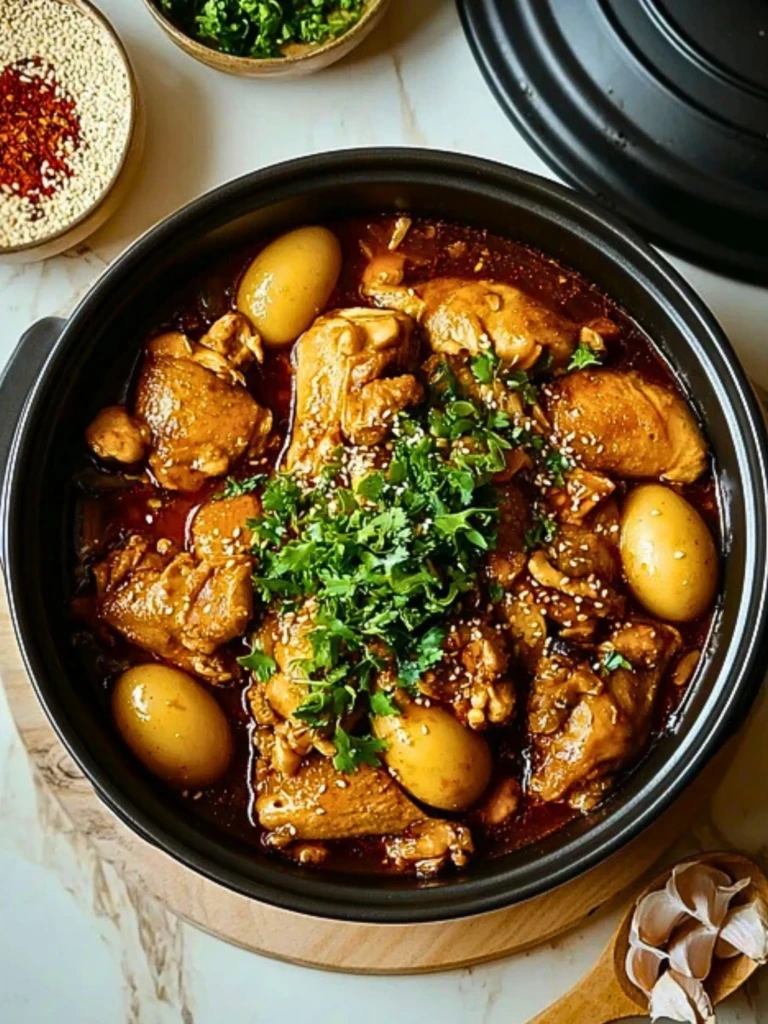
Soy Sauce Depth with a Touch of Sweet
For the base, I always go with a dark Korean soy sauce meant for soup and braises. It has a richer salinity that stands up well to the sweetness from rice syrup. I use less sugar than traditional versions and lean on the natural sweetness of yellow onions and Korean radish to mellow things out. The balance here is savory first, sweet second.
You might be tempted to swap in regular soy sauce or add brown sugar instead, but I wouldn’t recommend it—it veers the sauce too far from its signature balance. What you want is that mellow sweetness that creeps up slowly, not an instant sugary jolt.
Chicken Cuts That Stay Juicy
I always use a mix of bone-in thighs and drumettes for jjimdak. The bones keep the meat moist during the simmer, and the texture stays tender without falling apart. Boneless cuts cook too fast and can dry out or shred before the sauce thickens.
Make sure to blanch the chicken first in boiling water for just a minute. This removes impurities and gives the final dish a cleaner, clearer sauce. I’ve skipped this step before and regretted it—the difference in the finished flavor is noticeable.
Vegetables That Soak Up the Sauce
I go heavy on chunky onion wedges and Korean radish, cut thick so they hold their shape. These simmer until they’re practically translucent, soaking in every drop of flavor. Baby potatoes or peeled regular ones give you a soft, hearty base, and they’re perfect for sopping up leftover sauce at the end.
If you’re adding noodles (which I do), go for Korean glass noodles. Soak them before adding during the last few minutes of cooking—they swell up and turn silky, absorbing the broth beautifully without breaking apart.
Simmer Time and the Glossy Sauce Finish
Once everything is in the pot—chicken, aromatics, and that deeply seasoned braising liquid—the key is to let it simmer uncovered. I give it about 30 to 40 minutes at a gentle bubble, just enough to reduce the sauce without rushing the texture.
As it cooks, the sauce transforms from thin and soupy to thick and syrupy. You’ll start to see it cling to the back of your spoon. That’s when you know the starch from the potatoes and the cooked-down onions have done their job.
In the last five minutes, I toss in the soaked glass noodles. They finish cooking right in the sauce and help absorb any final moisture, pulling the whole dish together. Let it rest for 10 minutes off the heat before serving. The sauce thickens a bit more and settles into the meat.
Serving Notes and Simple Ways to Store Leftovers
I like to serve jjimdak in the same pot it cooked in—the black stoneware keeps it warm, and there’s something comforting about scooping straight from the pot at the table. Garnish with a handful of chopped cilantro or scallions and a scatter of toasted sesame seeds.
This dish pairs best with plain white rice. The soft potatoes and glossy sauce need that clean base, and the rice soaks it up like a sponge. Sometimes I serve it with a side of kimchi for contrast.
Leftovers hold up beautifully. Let it cool, then store in an airtight container in the fridge for up to 3 days. When reheating, add a splash of water to loosen the sauce. The flavor deepens overnight, making it even better the second time around. I don’t recommend freezing it—the potatoes turn grainy and the texture of the chicken suffers.
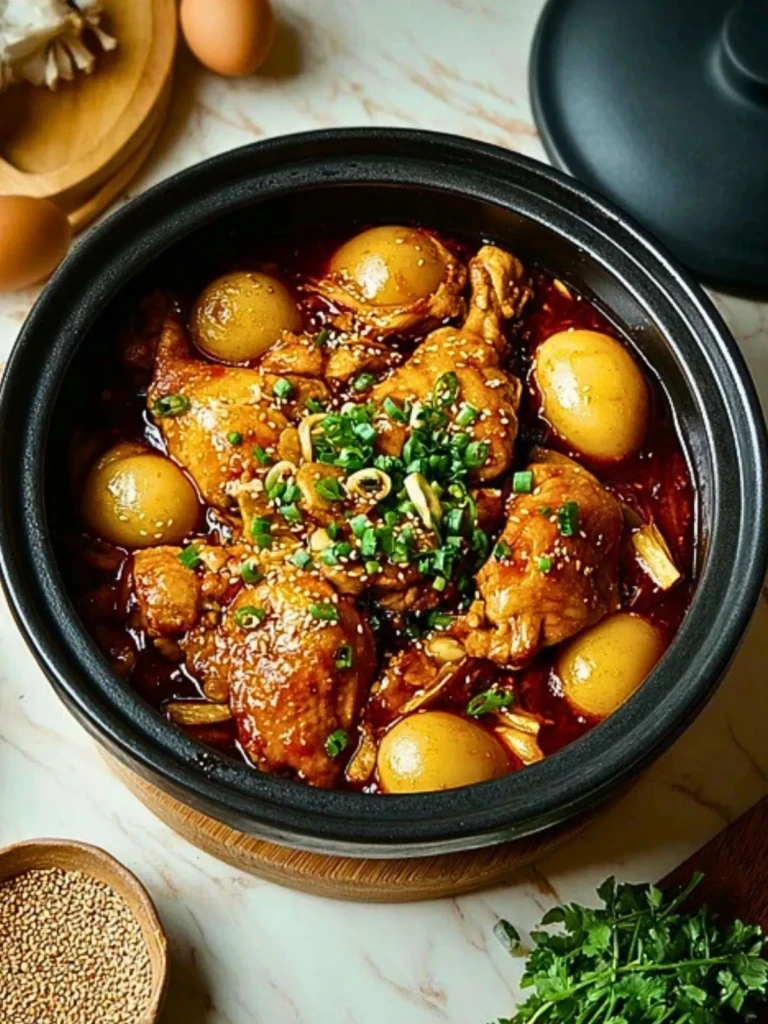
Why This Braised Chicken Belongs in Your Cozy Dinner Rotation
Jjimdak is one of those dishes I turn to when I want something deeply savory but not heavy. It’s filling, full of bold Korean flavors, and comes together in one pot. That makes it an easy go-to for colder nights or when I want to prep ahead for the week.
What I love most is how flexible it is. You can adjust the spice by adding more chilies, or swap in extra vegetables if you’re low on chicken. The sauce carries everything, and you can play with what goes into it as long as you keep that base strong.
Compared to heavier Korean stews or barbecue dishes, jjimdak feels lighter yet just as satisfying. It’s hearty without being greasy, and the braising technique keeps everything tender and packed with flavor.
Before You Go, Pin and Comment Below
If you’re saving this recipe, pin it to your “Korean Dinners,” “One-Pot Meals,” or “Comfort Food Classics” boards. I keep this one bookmarked for cold nights or when I want something bold but not fussy.
Have you made your own jjimdak before? Did you go spicier, or throw in extra veggies? I’d love to hear what you added or swapped out. Leave a comment below—it’s always great to learn how others make it their own.
Print
Jjimdak Korean Braised Chicken: Rich, Sweet Heat with Tender Texture
- Total Time: 55 minutes
- Yield: 4 servings
Description
This jjimdak is Korean comfort food at its best—tender braised chicken, soft potatoes, and glass noodles coated in a savory soy-based sauce. It’s sweet, salty, and a little spicy, made all in one pot for easy cleanup and deep flavor.
Ingredients
1.5 lbs bone-in chicken thighs and drumettes
2 tbsp Korean dark soy sauce
1 tbsp rice syrup
1 medium yellow onion, cut into thick wedges
1 cup Korean radish, chopped
8 baby potatoes, peeled
6 cloves garlic, whole
2 dried Korean chilies (adjust to spice preference)
2 cups water
1.5 oz Korean glass noodles, soaked
1 tbsp sesame seeds
1 tbsp chopped scallions or cilantro (for garnish)
Instructions
1. Blanch chicken pieces in boiling water for 1 minute, then drain and set aside.
2. In a large pot, combine soy sauce, rice syrup, onion, radish, garlic, chilies, and water.
3. Add chicken pieces and bring to a simmer over medium heat.
4. Reduce heat to low and let it simmer uncovered for 30–40 minutes, stirring occasionally.
5. Add baby potatoes after 15 minutes of simmering.
6. Once the sauce starts to thicken and coat the back of a spoon, add soaked glass noodles.
7. Cook for another 5 minutes, stirring to distribute sauce.
8. Let the dish rest for 10 minutes off heat before serving.
9. Garnish with sesame seeds and scallions or cilantro.
10. Serve with hot white rice.
Notes
Use bone-in chicken to keep the meat juicy and flavorful.
Soak your glass noodles before adding—they’ll absorb flavor better and not break apart.
Let the dish rest before serving—it helps the sauce thicken naturally and deepen in flavor.
- Prep Time: 15 minutes
- Cook Time: 40 minutes
- Category: Main Dish
- Method: Braising
- Cuisine: Korean
Nutrition
- Serving Size: 1 bowl
- Calories: 465
- Sugar: 6g
- Sodium: 1180mg
- Fat: 19g
- Saturated Fat: 5g
- Unsaturated Fat: 11g
- Trans Fat: 0g
- Carbohydrates: 37g
- Fiber: 3g
- Protein: 35g
- Cholesterol: 110mg
Keywords: jjimdak, Korean braised chicken, soy sauce chicken, spicy chicken, comfort food