
 Mia McKenny

This Lemon Custard Cake is designed for home bakers looking for both ease and elegance. If you’ve ever wanted to impress with a dessert that naturally separates into a fluffy sponge top and creamy lemon custard base, this is the recipe to trust. You’ll walk away knowing how to master the delicate texture transitions of this one-batter marvel, and you’ll gain confidence in managing citrus flavor intensity without overpowering sweetness.
Unlike many lemon desserts that fall into either overly dense curd territory or dry sponge textures, this version hits a distinct sweet spot. The top bakes into an ethereal sponge, while the bottom stays rich and custardy thanks to a unique mixing and baking technique. It’s far more forgiving than a traditional lemon soufflé, and yet more impressive than your average lemon bar or loaf.
This cake belongs in the same family as magic cakes and pudding cakes, where structure and flavor come from the clever play of temperature and batter separation. But here, the addition of fresh lemon juice and zest creates a brightness that feels luxurious rather than sharp. Every bite balances lightness with creamy indulgence, making it ideal for spring gatherings, Easter spreads, or a refreshing finale to a rich dinner.
When you bring this Lemon Custard Cake to the table, expect questions, compliments, and plenty of requests for the recipe. It cuts with a spoon, serves with elegance, and delivers a flavor that lingers beautifully on the palate.

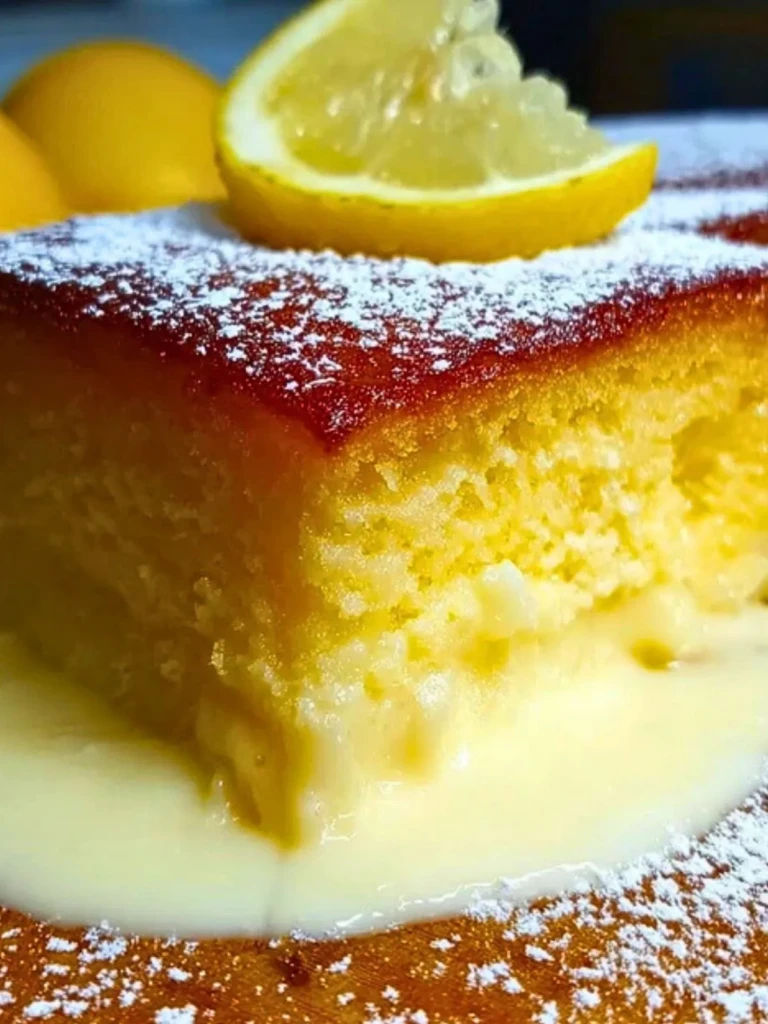
Ingredients for the Lemon Custard Cake
The structural magic of this cake begins with simple, accessible ingredients that transform under careful treatment. We start with whole eggs, separating them to create both structure and lift. The yolks contribute richness and emulsification for the custard, while the whipped whites are folded in to produce that signature airy top. It’s essential to use room-temperature eggs for the most stable whip and optimal integration.
Granulated sugar plays dual roles: it sweetens the batter and helps stabilize the meringue. In testing, I found that using superfine sugar gave slightly smoother batter integration, but regular granulated sugar worked just as well with a few extra seconds of whisking.
Flour is kept minimal to ensure tenderness. All-purpose flour provides the necessary structure without weighing down the batter. I tested cake flour as an alternative, which resulted in a slightly softer texture but compromised the definition between layers. For this reason, I recommend sticking with all-purpose.
Butter is melted and cooled before being incorporated, offering richness and depth. It also helps create the golden top crust that contrasts beautifully with the creamy layer below. Unsalted butter is ideal to maintain flavor control, though if you only have salted, simply reduce added salt slightly.
Milk forms the bulk of the liquid. Whole milk gives the best results, contributing both fat and body to the custard. I experimented with reduced-fat milk, which still worked, but produced a slightly thinner custard. Avoid non-dairy alternatives unless you’ve tested them specifically for custard consistency.
Fresh lemon juice is the heartbeat of the cake. Its acidity activates the structure and brings unmistakable brightness. Bottled juice will not deliver the same nuanced flavor. The zest, meanwhile, enhances the citrus complexity without additional liquid, ensuring the batter remains balanced.
Finally, a small amount of vanilla extract rounds out the lemon’s sharpness and adds familiar warmth. A pinch of salt enhances all the surrounding flavors, preventing the cake from tasting one-dimensional.
This cake is a lesson in balance: fat, acid, air, and sweetness all play pivotal roles. Much like a soufflé cheesecake or a clafoutis, every element is calibrated to achieve both contrast and cohesion in a single bite.
Choosing Between Fresh Lemons and Bottled Juice
In testing this Lemon Custard Cake, the most impactful ingredient decision was whether to use fresh lemons or bottled lemon juice. While both options technically provide the acidity needed to set the custard layer, the difference in flavor and aroma was unmistakable.
Fresh lemon juice delivers a nuanced acidity that plays beautifully with the sugar and vanilla, enhancing the cake’s bright yet balanced flavor. The natural oils released from freshly grated zest further elevate the lemon notes, giving the cake a rounded citrus complexity. When I used bottled juice, the flavor flattened significantly, leaning harsh and monotone without the depth or floral lift of real lemons.
In practical terms, bottled juice is convenient and always available, but it should only be used if fresh lemons are truly out of reach. For those baking in citrus off-season or needing shelf-stable options, consider using frozen lemon juice cubes made from fresh-squeezed juice and zest in advance. This gives much better results than store-bought lemon extract or reconstituted juice.
This recipe truly showcases the lemon, so freshness makes an outsized difference. Like using real vanilla beans in custard or quality chocolate in ganache, the ingredient you highlight the most deserves your best version.
The Folding Method That Protects the Layered Texture
The signature two-in-one texture of Lemon Custard Cake depends almost entirely on how you fold the whipped egg whites into the base batter. This method preserves the aeration needed for the top sponge while allowing the denser, custard-like portion to naturally settle during baking.
Many home bakers fear deflating their egg whites, but the goal here is actually partial incorporation. You don’t want a homogenous batter. Instead, you should fold gently and stop when streaks of white foam remain. Those streaks help hold air at the top, which bakes into a light, golden sponge. Meanwhile, the heavier yolk-milk-flour mixture flows downward, forming the creamy custard base.
If you overmix and fully blend the batter, the cake loses its definition. It becomes a single, dense layer rather than the intended contrast of textures. If you underfold dramatically, the cake may separate unevenly or rise inconsistently. Visual cues matter: the batter should look somewhat marbled, not uniform, as it goes into the pan.
Another key is to pour the batter into the pan from a low height and bake immediately. Delays can cause the whipped whites to collapse, ruining the structure. Use a gentle hand, a wide spatula, and confidence that the oven will do its job separating the layers organically.
This same technique is used in chiffon cakes and some soufflés, where delicate folding preserves the character of each component. Once you master it here, you’ll find the principle useful across dozens of recipes that rely on texture contrast.
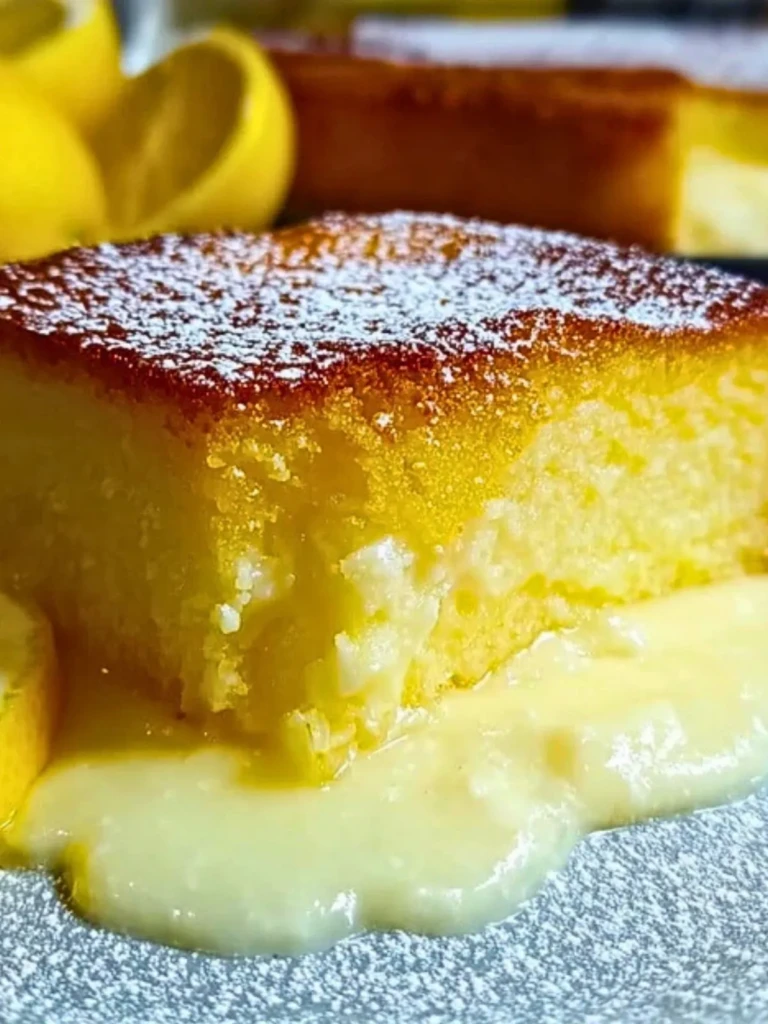
Serving and Storing Lemon Custard Cake
To serve Lemon Custard Cake at its most striking, let it cool fully in the pan before slicing. The contrast between the light sponge and creamy custard sharpens as it sets. For clean slices, refrigerate the cake for one to two hours after cooling, then cut with a hot, clean knife. Dusting with powdered sugar just before serving adds a classic finish without overwhelming the citrus profile. A thin lemon wedge or a sprig of mint makes for a professional, fresh garnish.
This cake can be made a day ahead and stored covered in the refrigerator. In fact, the flavor deepens overnight, with the lemon settling into the custard layer. It remains stable for up to three days when kept cold, though the sponge may soften slightly. Avoid freezing, as the custard texture can become grainy once thawed.
Flavor-wise, this cake pairs well with lightly sweetened whipped cream or fresh berries. It holds its own, but can also complement richer meals with its tart creaminess. Like panna cotta or lemon tart, it delivers both refreshment and richness in each bite.
Whether you serve it straight from the fridge or allow it to sit at room temperature for fifteen minutes, it never loses its elegance. This is a dessert that rewards patience and thoughtful handling, offering both convenience and beauty in presentation.
A Quick Note on Comparisons With Other Custard Cakes
Among the broad category of custard-style cakes, this Lemon Custard Cake stands out for its clarity of flavor and dual texture. Compared to traditional magic cakes, which often feature vanilla or chocolate bases, the lemon version offers a brighter, more seasonal twist. The acidity naturally sharpens the separation between sponge and custard, whereas chocolate versions tend to blur the layers.
When set against classic lemon bars, this cake offers more contrast and a creamier, less sugary experience. Lemon bars lean heavily on dense, curd-like filling and shortbread crusts, while this cake floats a sponge above the custard without added bases. The result is lighter, almost ethereal, yet deeply satisfying.
Feedback often centers around surprise: people don’t expect a cake to create its own custard layer from a single batter. It’s this element of transformation that makes it a standout at gatherings. It also adapts beautifully to individual ramekins for plated desserts or small bakes.
For those who love clafoutis, flan, or even soufflé cheesecakes, this recipe bridges familiar textures with a unique citrus identity. It’s a confident choice when you want both visual appeal and flavor precision in a single dessert.
Print
Lemon Custard Cake – Soft, Tangy, and Magically Layered
- Total Time: 1 hour 5 minutes
- Yield: 9 servings
- Diet: Vegetarian
Description
This Lemon Custard Cake creates its own creamy base and airy sponge top from a single batter. It’s bright, tangy, and soft with elegant contrast—perfect for spring gatherings or a refreshing dessert year-round.
Ingredients
4 large eggs, separated
3/4 cup granulated sugar
1/2 cup unsalted butter, melted and cooled
3/4 cup all-purpose flour
1 and 3/4 cups whole milk, lukewarm
1/2 cup fresh lemon juice
1 tablespoon lemon zest
1 teaspoon vanilla extract
1/4 teaspoon salt
Powdered sugar, for dusting
Lemon slices and mint, for garnish (optional)
Instructions
1. Preheat your oven to 325°F (160°C). Grease and line an 8×8-inch baking dish with parchment paper.
2. Separate the eggs. In a clean bowl, beat the egg whites to stiff peaks and set aside.
3. In another large bowl, whisk the egg yolks with sugar until pale and creamy. Slowly add the melted butter and mix until smooth.
4. Whisk in the flour, then gradually add the milk while stirring to combine. Add the lemon juice, zest, vanilla extract, and salt.
5. Gently fold the whipped egg whites into the batter. Stop when streaks remain for a marbled, airy batter.
6. Pour the mixture into the prepared baking dish. Bake for 40 to 50 minutes, or until the top is golden and the center has a slight jiggle.
7. Let cool completely in the pan. Refrigerate for 1 to 2 hours for cleaner slicing.
8. Dust with powdered sugar before serving. Garnish with lemon slices or mint if desired.
Notes
Room temperature eggs whip better and give the cake its layered structure.
Do not overmix when folding in the egg whites—visible streaks help create the sponge top.
Chilling the cake before slicing ensures clean cuts and enhances flavor.
- Prep Time: 20 minutes
- Cook Time: 45 minutes
- Category: Dessert
- Method: Baking
- Cuisine: European
Nutrition
- Serving Size: 1 slice
- Calories: 210
- Sugar: 22g
- Sodium: 90mg
- Fat: 9g
- Saturated Fat: 5g
- Unsaturated Fat: 3g
- Trans Fat: 0g
- Carbohydrates: 28g
- Fiber: 0.5g
- Protein: 5g
- Cholesterol: 105mg
Keywords: lemon custard cake, magic cake, citrus dessert