
 Mia McKenny
If you’re the kind of cook who likes to push past the familiar without losing sight of comfort, pickle pizza may be your next favorite recipe. It might sound unconventional, but it is surprisingly accessible. The crisp, chewy crust and creamy, garlicky base create a canvas that welcomes the briny tang of pickles and the richness of melted mozzarella. This is a white pizza with an edge, and once you’ve tasted the balance of textures and flavor contrasts, you may wonder why you waited so long to try it.
In this recipe, I’ll walk you through the process of building a truly harmonious pickle pizza, layer by layer. You’ll learn exactly how to choose and prepare the pickles so their acidity complements the cheese instead of overpowering it. We’ll go into dough decisions, sauce options, and topping balance, ensuring every bite holds together with intention. If you’ve ever had a white pizza that felt bland or a pickle-forward dish that leaned too sour, this version strikes the right equilibrium.
Within the broad category of white pizzas, pickle pizza stands out as a modern, flavor-forward innovation that still honors classic pizza-making techniques. Instead of using tomato sauce, we build from a garlic cream base that adds richness and binds the toppings without competing with them. This method avoids the mistake many pickle pizza attempts make—either overwhelming the dough with moisture or making the toppings feel disjointed.
Bringing this pizza to the table delivers more than novelty. It brings contrast, character, and a conversation starter. With every slice, you get the satisfaction of a crunchy bottom, a creamy stretch, and a zingy top note—the kind of bite that lingers and keeps everyone reaching back for another slice.

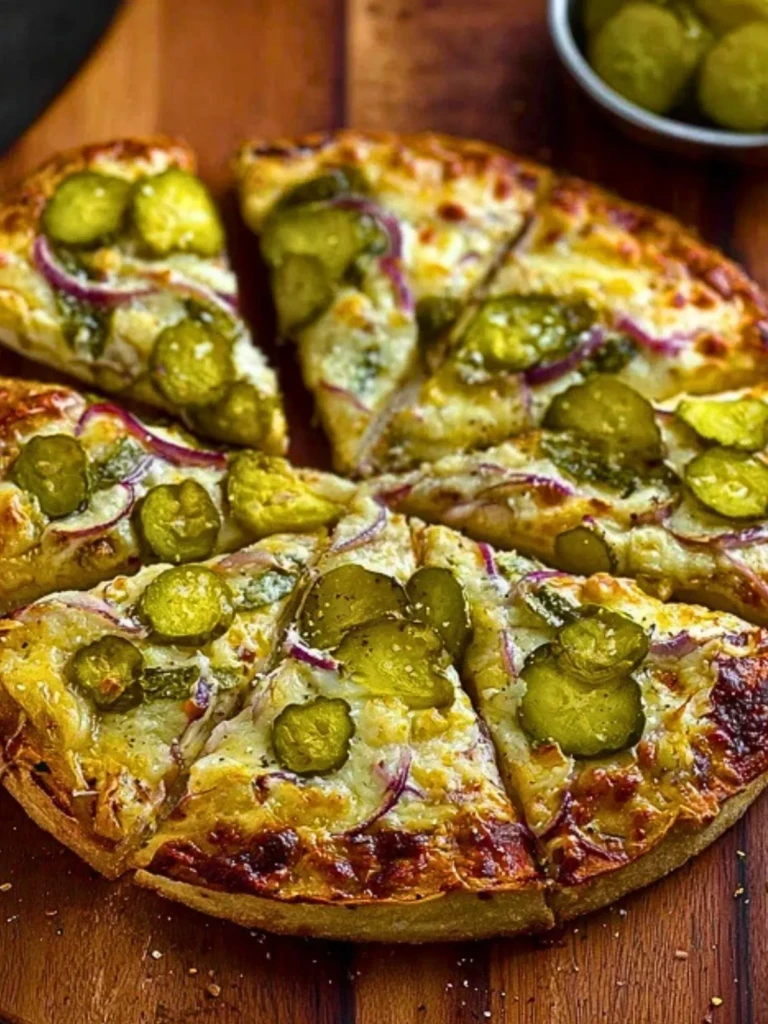
Ingredients for the Pickle Pizza
The foundation of a great pickle pizza starts with the crust. I recommend using a high-hydration pizza dough that bakes into a crisp exterior with a soft interior. A blend of bread flour and all-purpose flour creates the best chew and oven spring, while a 24-hour cold fermentation in the fridge builds flavor and structure. If you’re short on time, a quality store-bought dough can work, but try to stretch it by hand to retain that artisan edge.
Instead of a tomato-based sauce, the base for this pizza is a garlic cream spread. I make mine with a blend of full-fat sour cream, cream cheese, grated garlic, and a touch of lemon juice. This creamy base acts like a mellow foil to the briny pickles and sharp cheeses, and it holds up better than olive oil alone. If cream cheese feels too heavy, you can swap in ricotta, which gives a lighter texture while still maintaining richness.
For cheese, mozzarella is the backbone—preferably low-moisture, shredded mozzarella for its superior melt and browning. I also add small dollops of whole milk ricotta and a sprinkle of grated parmesan near the end of baking to build depth and contrast. Fresh mozzarella is less ideal here as it can release excess moisture, making the crust soggy beneath the pickles.
Now to the star: the pickles. After testing both bread-and-butter slices and classic dill chips, dill wins every time. Their tartness cuts through the richness and amplifies the savory elements without veering sweet. I prefer thick-cut dill chips or whole dills sliced by hand. They should be patted dry before using to prevent the pizza from becoming watery.
To round things out, I add a handful of thinly sliced white onions for a bit of sharpness, and just a hint of dried dill or Italian seasoning over the top before baking. A drizzle of ranch or garlic-infused olive oil after baking offers a final flavor bridge that ties the whole concept together.
Choosing Between Fresh Pickles and Jarred Pickles
When deciding between fresh deli pickles and standard jarred pickles for this recipe, the difference in flavor clarity and moisture control becomes especially important. I tested both extensively, and while either can work, each brings distinct strengths to the table.
Fresh deli pickles, especially those sold from the refrigerated section, tend to offer brighter, sharper acidity with a crisper bite. When sliced thick and patted dry, they hold their structure beautifully through a high-heat bake, maintaining a juicy snap without flooding the crust. They also tend to have less sugar, which keeps the flavor more savory and balanced.
Jarred pickles, particularly classic dill chips from pantry shelves, are more readily available and consistent. However, they often come pre-sliced too thinly and can be packed in higher-sodium brine, which sometimes leaves the pizza tasting one-note unless balanced with additional creaminess or sweetness. That said, their convenience is a real asset, and with proper drying and pairing with a slightly thicker cream base, they absolutely work.
If you’re making this for a crowd or for your first try, start with high-quality jarred dill chips and adjust moisture and acidity by blotting and layering strategically. But if you want to elevate the dish for maximum crunch and complexity, seek out fresh pickles and slice them yourself. Either way, the key is control: get rid of excess moisture and let the pickles complement rather than overwhelm.
In broader white pizza recipes, this kind of decision mirrors the olive vs. caper debate—it’s about choosing a bright, briny element that plays well with fat and flour. You can adapt the same thinking to topping combinations on flatbreads or even savory galettes.
The Bake Method That Protects the Crust
Achieving a crust that stays crisp under creamy toppings and moist vegetables like pickles takes deliberate technique. One of the most effective strategies I rely on is using a pizza stone or steel preheated in a very hot oven—ideally 500°F or higher. This immediate blast of heat from beneath sets the bottom crust quickly, reducing the chance of sogginess no matter what you layer on top.
Before adding toppings, I always par-bake the stretched dough for about 3 minutes. This step gives the dough just enough structure to resist moisture without overbaking. After removing the crust briefly, I spread the garlic cream base while it’s still warm, which helps it settle into the surface without soaking through. Then I layer the cheese, onions, and pickles, always making sure the pickles are blotted and spaced evenly to prevent puddling.
Visually, you should see the edges of the crust starting to blister and turn golden by the halfway point of the full bake. That’s a signal that the bottom is setting properly. If using a sheet pan, a light coating of cornmeal or semolina helps lift the dough off the pan and increase airflow underneath, mimicking the stone effect.
Common mistakes to avoid include overloading the pizza with too much cream or layering wet toppings too densely in one area. Spread things out, respect the balance, and bake with the goal of even browning from crust edge to center.
This baking method closely mirrors what you’d use for a potato pizza or even a white clam pie—two other recipes where moisture management and a firm base are essential to flavor and texture success.
Serving and Storing Pickle Pizza
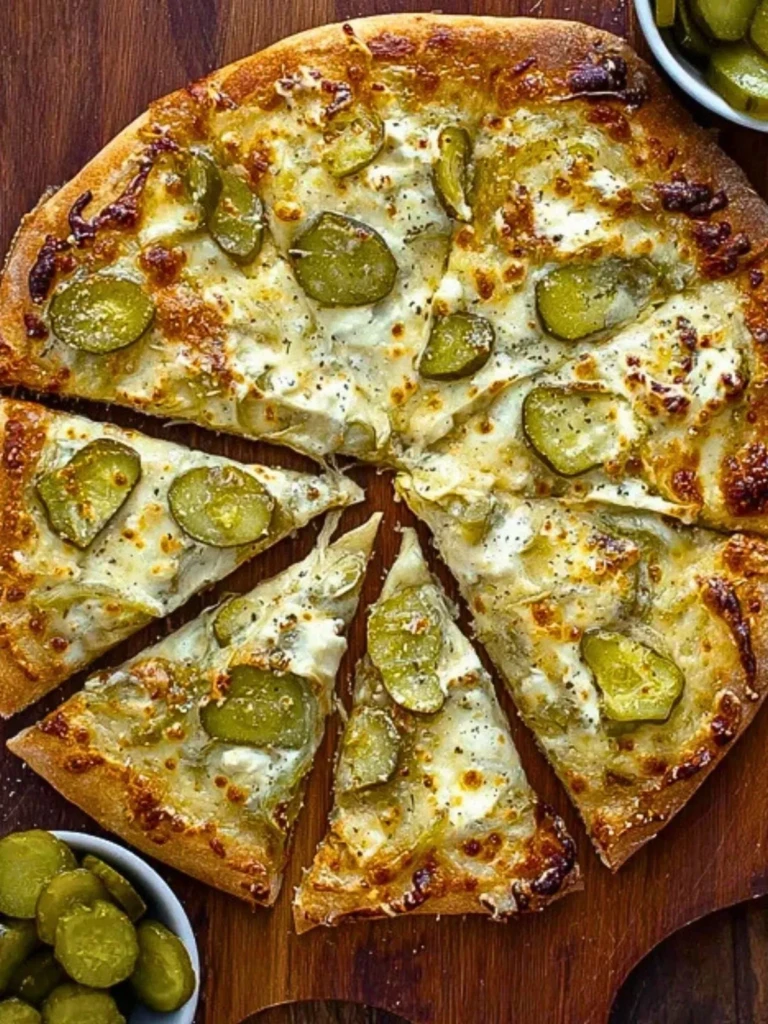
Pickle pizza has a bold flavor and visual personality that deserves thoughtful presentation. Once baked, I let the pizza rest for about five minutes before slicing to give the cheese a chance to set. A light drizzle of ranch dressing or garlic oil right before serving adds aroma and contrast. I recommend serving it on a wooden board or pizza peel for maximum visual appeal, especially if you’re sharing it at a gathering.
This pizza shines brightest fresh out of the oven, but it also holds up remarkably well for leftovers. The tang of the pickles doesn’t dull over time; in fact, it becomes more integrated with the cheese and crust after a few hours. To reheat, I use a skillet or a 400°F oven for about 5–8 minutes, which revives the crispness without drying it out.
For make-ahead situations, the crust can be pre-baked and frozen, then topped and baked directly from frozen when needed. You can also assemble the entire pizza up to 6 hours in advance and refrigerate it, but be sure to let it come to room temperature for about 20 minutes before baking to ensure even cooking.
Flavor-wise, this pizza actually improves slightly on day two, much like how lasagna or focaccia develops deeper flavor after resting. Store slices in an airtight container with parchment between layers to avoid sticking, and enjoy within 3 days.
If you’re familiar with storing other rich, high-moisture pies like spinach-artichoke or mushroom white pizzas, you’ll find this method just as effective—perhaps even more so, thanks to the pickle’s natural preservative properties.
A Quick Note on Comparisons With Other White Pizzas
Pickle pizza may read like a novelty at first glance, but in practice, it fits squarely into the evolving world of modern white pizzas. Compared to classics like spinach-ricotta or four-cheese pies, this recipe delivers a stronger contrast between creamy and acidic elements. It leans into boldness without losing cohesion.
Where many white pizzas play it safe with mild cheeses and soft vegetables, this one brings a sharper edge. The pickles act like olives or artichokes do in Mediterranean-inspired pies, offering both texture and tang. Yet unlike the salt-forward profile of anchovy-based toppings, the acidity here is lifted and refreshing.
In testing, one common piece of feedback was surprise at how balanced the flavor turned out to be. Guests expected something overwhelming or gimmicky but were met with harmony—a testament to careful layering and restrained technique. It’s the kind of pizza that stands out at a potluck not just because it’s different, but because it works.
If you love dishes like fried pickle chips with aioli or deli-style sandwiches with melted cheese and crisp dills, this pizza brings those same flavor themes into a new, shareable format. It’s modern, memorable, and more versatile than you might expect.
Print
Pickle Pizza – Crispy, Creamy, and Boldly Tangy
- Total Time: 33 minutes
- Yield: 1 (12-inch) pizza
- Diet: Vegetarian
Description
Pickle Pizza is a bold and creamy white pizza topped with tangy dill pickles, melty mozzarella, and a garlic cream base. It balances savory richness with a sharp, refreshing contrast from the pickles. Crispy on the bottom, smooth in the center, and full of flavor, this pizza is surprisingly harmonious and a crowd favorite.
Ingredients
1 pound pizza dough (homemade or store-bought)
0.5 cup full-fat sour cream
0.25 cup cream cheese
1 clove grated garlic
1 teaspoon lemon juice
1.5 cups shredded low-moisture mozzarella cheese
0.5 cup whole milk ricotta cheese
0.25 cup grated parmesan cheese
0.75 cup thick-cut dill pickle slices, patted dry
0.25 cup thinly sliced white onion
0.5 teaspoon dried dill or Italian seasoning
1 tablespoon garlic-infused olive oil or ranch dressing for drizzling
Instructions
1. Preheat your oven to 500°F and place a pizza stone or steel inside to heat.
2. Stretch your dough on a lightly floured surface to form a 12-inch round.
3. Par-bake the crust on the hot stone for 3 minutes, then remove from the oven.
4. While still warm, spread the sour cream, cream cheese, garlic, and lemon juice mixture over the crust.
5. Sprinkle mozzarella evenly over the base, followed by dollops of ricotta.
6. Layer the pickle slices and onions across the top.
7. Sprinkle parmesan and dried dill or seasoning over everything.
8. Return to the oven and bake for 8–10 minutes until the crust is golden and cheese is bubbling.
9. Remove and let rest for 5 minutes.
10. Drizzle with garlic oil or ranch just before slicing and serving.
Notes
Use thick-cut dill pickles and blot them well to avoid soggy crust.
For best results, use a pizza stone or steel preheated in a 500°F oven.
The garlic cream base can be made in advance and refrigerated up to 3 days.
- Prep Time: 20 minutes
- Cook Time: 13 minutes
- Category: Dinner
- Method: Baking
- Cuisine: American
Nutrition
- Serving Size: 1 slice (1/8 of pizza)
- Calories: 265
- Sugar: 2g
- Sodium: 640mg
- Fat: 13g
- Saturated Fat: 6g
- Unsaturated Fat: 5g
- Trans Fat: 0g
- Carbohydrates: 28g
- Fiber: 1g
- Protein: 10g
- Cholesterol: 30mg
Keywords: pickle pizza, white pizza, dill pickle pizza