
 Mia McKenny
Roasted pumpkin with burrata is one of those quietly luxurious dishes that feels both rustic and elegant at once. It has a low-effort, high-reward appeal that makes it perfect for busy weeknights or special occasions alike. In this recipe, you’ll learn how to bring together caramelized pumpkin, silky burrata, a punchy herb oil, and a hint of spice to build a side dish that feels complete on its own but also complements mains like roast chicken, grilled lamb, or even a hearty grain salad.
Where many roasted pumpkin dishes fall flat is in texture or balance. They either lean too sweet without contrast or lack that creamy or crunchy interplay that makes bites interesting. This version corrects for that by layering flavors and textures thoughtfully: roasted pumpkin that’s deeply golden and lightly crisped, burrata for lush creaminess, toasted nuts for crunch, and a splash of heat and acidity for contrast.
Positioned between a warm salad and a composed vegetable dish, this recipe teaches you how to balance fat, acid, and sweetness in one composed plate. It’s especially rewarding because the payoff comes from understanding each element’s role—not from complicated technique. By the end, you’ll feel confident putting together not just this dish, but other composed vegetable plates with the same instinctual ease.

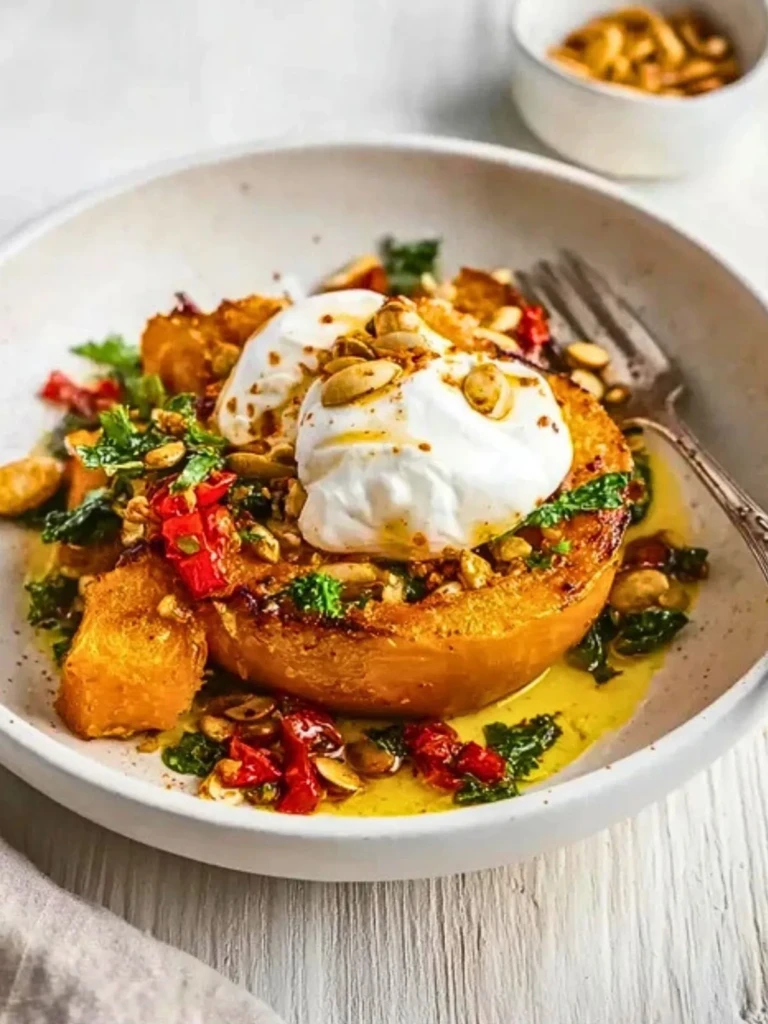
Ingredients for the Roasted Pumpkin with Burrata
The dish begins with the pumpkin itself. I prefer using kabocha or butternut squash, both of which roast into a dense, velvety texture and carry natural sweetness that intensifies with caramelization. Kabocha leans slightly more earthy while butternut is smoother and easier to peel—either will work beautifully. The pumpkin is cut into thick wedges or chunks to allow for blistering edges without losing internal softness.
Olive oil is essential here, not just for roasting but for carrying flavor. A good extra virgin olive oil will add peppery, grassy notes that balance the pumpkin’s sweetness. I also include a touch of maple syrup in the roasting step—not for overt sweetness, but to encourage golden crusting through mild sugar content. Salt and freshly cracked black pepper are fundamental seasoning points that shouldn’t be overlooked.
Burrata takes center stage after the roast. Its dual textures—a mozzarella shell surrounding rich, cream-soaked curds—offer a luxurious contrast to the hot roasted pumpkin. It’s important to let the burrata come to room temperature before plating; cold burrata against hot pumpkin dulls its flavor and spoils the mouthfeel.
To add heat and brightness, I prepare a quick chili-honey or chili oil depending on what’s on hand. Thinly sliced red chili peppers marinated in honey or olive oil release vibrant heat while adding glisten and aroma to the dish. You can adjust the ratio to your taste or even omit for a milder result.
Crunch comes through toasted hazelnuts or walnuts. I like hazelnuts for their buttery snap and ability to stand up against creamy burrata, though walnuts will lend a more bitter contrast if preferred. Toasting is non-negotiable—raw nuts simply won’t deliver the same aromatic lift.
Lastly, a spoonful of herb oil or a loose pesto brings freshness to the plate. I often blend parsley, basil, or cilantro with olive oil and lemon juice, keeping it thin and pourable. This herbal element rounds out the earthiness of the pumpkin and makes the dish feel intentional and complete.
Think of this as a cousin to warm composed salads or plated starters that rely on contrast and composition. Once you master the harmony of sweet, spicy, creamy, and crisp, you’ll find endless opportunities to adapt this recipe throughout the seasons.
Choosing Between Kabocha and Butternut
When deciding between kabocha and butternut squash for this dish, it really comes down to how you want the texture and flavor to play with the burrata. Kabocha has a drier, more starchy interior, which turns wonderfully rich and dense after roasting. It holds its shape even when blistered and has an earthy depth that complements the nuttiness of the hazelnuts. Butternut, on the other hand, is smoother and has a more predictable, buttery texture with less variance between pieces. It roasts quickly and its slight natural sweetness harmonizes with both maple syrup and chili oil.
In my testing, I found kabocha to be ideal when I wanted the dish to feel heartier and more autumnal, especially when paired with walnut instead of hazelnut. Butternut works best when you want a gentler, more neutral base that lets the burrata and herb oil shine through. If ease of prep is a concern, butternut is easier to peel and cube, making it the more accessible choice.
Both squash types work well here, and neither will compromise the integrity of the recipe. It’s more about your mood and the flavor profile you want to emphasize. For a holiday table, go with kabocha. For a lighter lunch or spring adaptation, choose butternut. And if neither is available, delicata squash—sliced into half moons with the skin on—can step in nicely without sacrificing texture or flavor.
The Roasting Method That Protects the Pumpkin’s Integrity
Roasting is deceptively simple, but the way you roast pumpkin in this recipe determines whether the final plate feels luxurious or limp. The key technique here is high-heat roasting with enough space between the pieces to promote browning rather than steaming. I preheat the oven to 425°F and use a large, rimmed baking sheet lined with parchment to prevent sticking while still encouraging caramelization.
Cutting the pumpkin into thick wedges or large chunks allows it to brown without collapsing. I toss the pieces with olive oil, a light drizzle of maple syrup, salt, and pepper, making sure they are evenly coated. The maple helps coax out deeper color and edges that almost crisp, which is essential for contrast against the creamy burrata.
Halfway through roasting, I flip the pieces carefully to encourage even coloring. Visual cues are your best friend: you want dark amber edges, some blistered spots, and fork-tender centers. If the pieces are too crowded, they’ll steam and go mushy. If they’re too small, they can burn before the centers are tender.
This method also works beautifully with other dense vegetables like carrots or sweet potatoes. The combination of high heat, minimal moisture, and a hint of natural sugar is what gives this dish its roasted character. Don’t be afraid to let the edges get truly golden—that contrast is what makes the soft burrata sing.
Serving and Storing Roasted Pumpkin with Burrata
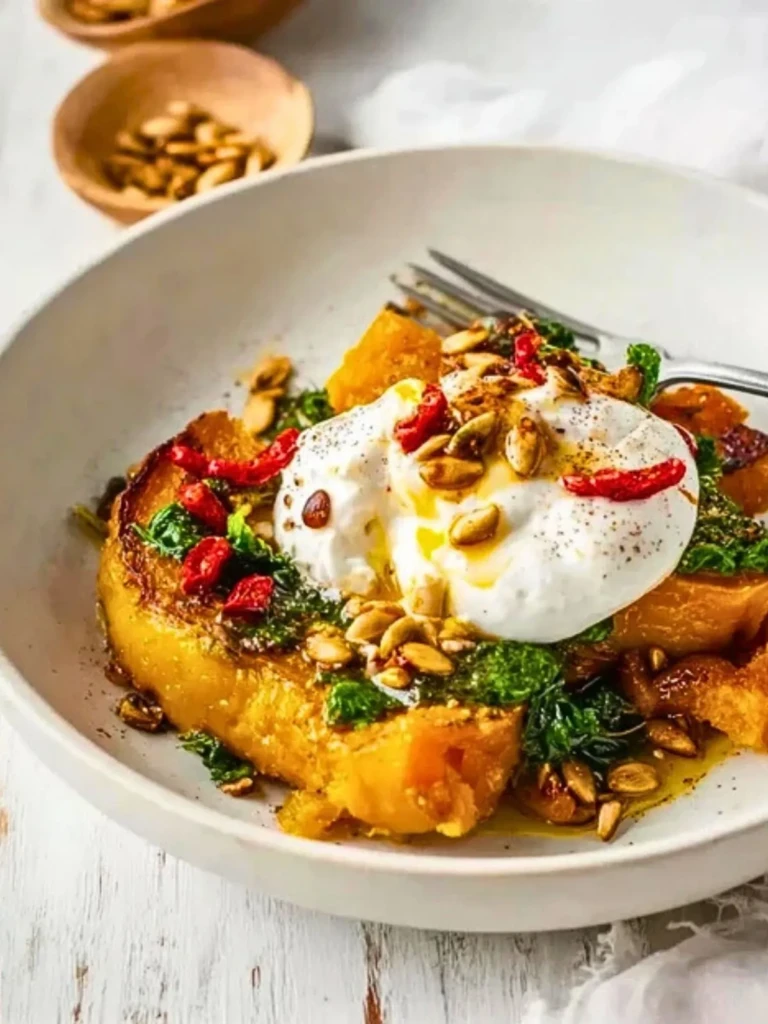
This dish is best served warm, just as the roasted pumpkin comes out of the oven and the burrata is gently nestled on top. The contrast between hot and cool is part of the experience, but it works only when the burrata is brought to room temperature—about 20 to 30 minutes out of the fridge—so that its creaminess fully releases upon contact. For a composed presentation, I plate the pumpkin first, spoon over the herb oil, then top with the burrata and finish with toasted nuts and chili slices. A crack of black pepper and a final drizzle of olive oil elevate the final impression.
If you’re making this ahead, the pumpkin can be roasted up to a day in advance and stored in an airtight container in the fridge. Reheat it in a hot oven until warmed through and the edges re-crisp, which takes about 10 minutes at 400°F. The herb oil can also be made a day ahead and kept chilled, though I recommend bringing it to room temperature for better pourability.
Burrata does not keep well once opened, so plan to use it the day you slice into it. If you need to store leftovers, they’re best eaten within 24 hours and should be kept in a sealed container. Expect some texture loss, but the flavors remain solid.
This dish behaves similarly to warm salads or roasted vegetable sides with dairy elements like labneh or ricotta. It benefits from just-in-time assembly, but offers flexibility in prep. As a bonus, the leftovers, if any, can be turned into a lovely toast topping or folded into a grain bowl the next day.
A Quick Note on Comparisons With Other Roasted Vegetable Dishes
What sets this roasted pumpkin with burrata apart from typical roasted vegetable sides is its sense of intention and structure. Many roasted vegetable recipes focus on simplicity and batch prep, which is incredibly useful for everyday cooking. But this recipe leans into contrast and composure, more akin to something you might find in a seasonal restaurant menu or small plates setting.
Compared to classic roasted carrots with yogurt or sweet potatoes with feta, this dish shifts the balance toward softness and creaminess. Burrata behaves differently from crumbly or whipped cheeses; it creates pools of richness that act as a base sauce for each bite. That’s a key differentiator and also why temperature control matters so much.
Readers often share that this recipe feels like a complete experience—not just a side but a moment of pause during the meal. It can be adapted into a centerpiece for a vegetarian table or sit confidently next to a roast without getting lost.
It also has the advantage of crossing seasonal lines. While it sings in fall with kabocha and chili oil, you can lighten it up with butternut, lemon zest, and mint for spring. The principles hold true, even as ingredients shift.
If you’ve ever enjoyed roasted beet salads with goat cheese, or dishes like roasted squash with tahini, you’ll find this recipe to be a refined yet achievable next step—a dish that asks just a little more and delivers a lot in return.
Print
Roasted Pumpkin with Burrata – A Creamy, Earthy, and Seasonally Vibrant Side Dish
- Total Time: 45 minutes
- Yield: 4 servings
- Diet: Vegetarian
Description
A warm, luxurious side dish of caramelized roasted pumpkin topped with creamy burrata, fresh herb oil, toasted nuts, and a hint of chili. It balances earthy sweetness, rich dairy, and vibrant spice into a composed plate that’s elegant yet simple to prepare.
Ingredients
2 pounds kabocha or butternut squash, peeled and cut into chunks
2 tablespoons olive oil
1 tablespoon maple syrup
1 teaspoon kosher salt
1/2 teaspoon freshly cracked black pepper
1 ball burrata cheese, room temperature
1 red chili, thinly sliced
1 tablespoon honey or olive oil (for marinating chili)
1/4 cup toasted hazelnuts or walnuts, roughly chopped
2 tablespoons herb oil (parsley, basil or cilantro blended with olive oil and lemon juice)
Instructions
1. Preheat your oven to 425°F and line a rimmed baking sheet with parchment paper.
2. Toss the pumpkin pieces with olive oil, maple syrup, salt, and pepper.
3. Spread the pieces out on the sheet without overcrowding.
4. Roast for 25–30 minutes, flipping halfway through, until golden brown with blistered edges and fork-tender centers.
5. While the pumpkin roasts, marinate the sliced chili in honey or olive oil.
6. Toast the nuts in a dry skillet over medium heat until fragrant, then chop.
7. Prepare a thin herb oil by blending herbs with olive oil and lemon juice until pourable.
8. To serve, arrange roasted pumpkin on a warm plate.
9. Spoon herb oil over the pumpkin, place the burrata in the center, and scatter the marinated chili and toasted nuts over the top.
10. Finish with a final drizzle of olive oil and a crack of black pepper. Serve immediately.
Notes
Let burrata come fully to room temperature before serving to maximize creaminess.
Don’t crowd the pan—roasted pumpkin needs space to brown, not steam.
For a spicier version, increase the chili quantity or add a splash of chili oil to the herb blend.
- Prep Time: 15 minutes
- Cook Time: 30 minutes
- Category: Side Dish
- Method: Roasting
- Cuisine: Modern Seasonal
Nutrition
- Serving Size: 1/4 of recipe
- Calories: 340
- Sugar: 7g
- Sodium: 380mg
- Fat: 26g
- Saturated Fat: 9g
- Unsaturated Fat: 15g
- Trans Fat: 0g
- Carbohydrates: 20g
- Fiber: 3g
- Protein: 9g
- Cholesterol: 25mg
Keywords: roasted pumpkin, burrata, holiday side dish, vegetarian, fall recipe