
 Mia McKenny

This version of Salisbury steak meatballs is designed to bring maximum comfort with minimal fuss. Whether you’re cooking for family on a busy weeknight or prepping a cozy weekend dinner, this dish promises a hearty, satisfying result without the traditional steak format. You’ll learn exactly how to balance tenderness and flavor in the meatballs, build a rich onion gravy from scratch, and serve it all over an irresistibly creamy base of mashed potatoes.
Most Salisbury steak recipes rely heavily on large patties and overly salty gravies. Here, I’ve taken the core elements and restructured them into well-seasoned, juicy meatballs that cook more evenly and are easier to serve. The gravy is crafted from real stock and onions, thickened gently for just the right cling. No packets, no shortcuts, just full-flavored simplicity.
Within the comfort food category, this recipe lands somewhere between classic meatloaf and Swedish meatballs, but leans into that deep, brown gravy nostalgia. It’s hearty, it’s savory, and it’s endlessly crowd-pleasing. Expect deep umami flavor, soft textures, and a meal that satisfies at every bite.
Bringing this to the table means bringing warmth. It’s the kind of dinner that feels like home, and with the method you’ll learn here, it will be one of the most dependable recipes in your rotation.

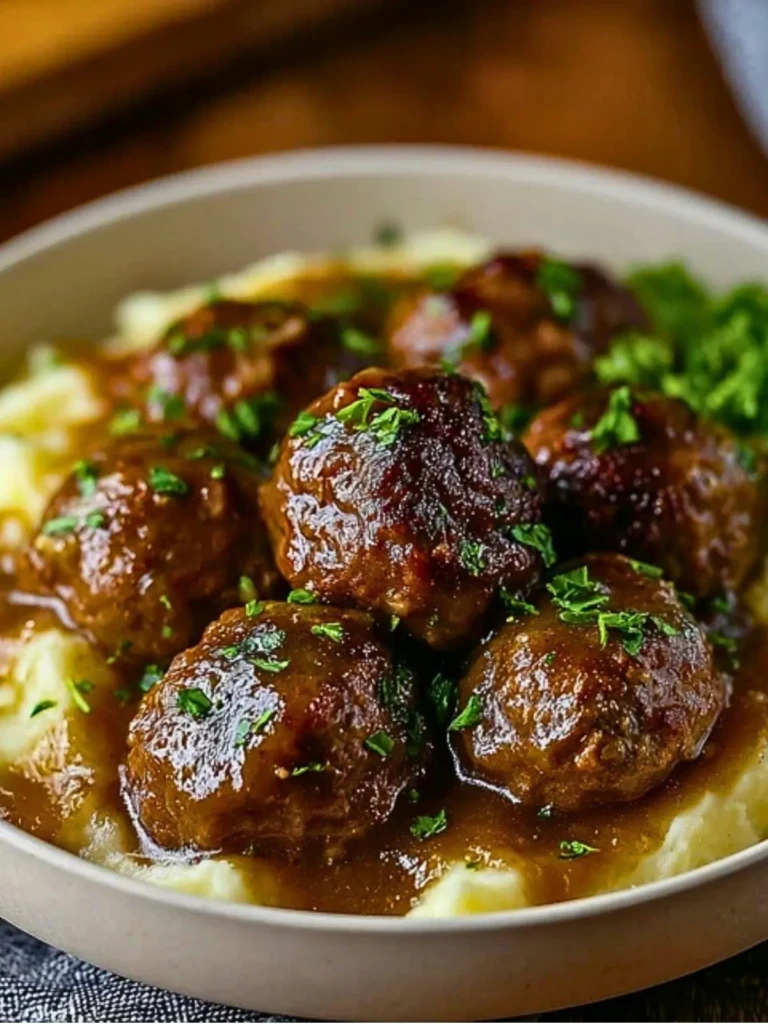
Ingredients for the Salisbury Steak Meatballs
The meatball mixture begins with ground beef. I recommend using 85% lean beef because it strikes the right balance between flavor and moisture. Leaner meat results in dry, tough meatballs, while anything fattier can leave you with greasy gravy. For depth, I blend in finely minced onion and garlic directly into the meat. Raw onion adds pungency, but sautéed onion offers sweetness and soft texture—here, I use fresh onion to keep the bite and contrast the richness.
An egg binds the mixture, ensuring the meatballs hold their shape without becoming rubbery. Alongside it, breadcrumbs act like little sponges that trap juices, keeping the interior tender. I opt for plain breadcrumbs for a neutral flavor, but panko gives a lighter texture if preferred. A splash of milk activates the breadcrumbs and softens the mixture—a key step in achieving that signature tenderness.
Worcestershire sauce and Dijon mustard elevate the savoriness. Worcestershire brings in umami and complexity, mimicking the background notes you’d find in steak sauces. Dijon adds a gentle tang that cuts through the richness without overpowering the other flavors.
The gravy begins with sliced yellow onions, sautéed until deeply caramelized. This step is essential for creating the base flavor. I use unsalted beef stock to maintain control over sodium levels, and a touch of flour to thicken without turning the gravy gloppy. A dash more Worcestershire enhances the beefiness, and butter at the end gives a glossy finish and rounder mouthfeel.
If you’re serving these over mashed potatoes, Yukon Golds provide the creamiest result with a naturally buttery flavor. Real butter, warm milk, and a touch of sour cream turn the mash into something rich enough to match the meatballs without stealing the spotlight.
For flexibility, these meatballs work equally well over egg noodles or rice, and the gravy can be stretched with a bit more stock if you’re serving a crowd. Each element ties together into a plate that feels cohesive, comforting, and expertly crafted.
Choosing Between Fresh and Dried Onion, and Breadcrumb Types
When developing this recipe, one of the more impactful decisions was whether to use fresh onion or dried onion flakes in the meatball base. Fresh onion brings sharper flavor and visible texture, which balances the richness of the meat. But if you’re short on prep time or looking for a smoother meatball interior, dried minced onion works surprisingly well. It hydrates during cooking and integrates seamlessly, making it a practical pantry backup.
As for breadcrumbs, the choice between classic fine breadcrumbs and panko changes both the texture and how the meatballs behave in the pan. Traditional breadcrumbs yield a more cohesive, smoother bite—what you might associate with old-school meatloaf. Panko, on the other hand, introduces a bit of airy lightness and a slightly rougher edge, which can be a nice textural contrast when paired with soft mashed potatoes.
If you’re aiming for maximum comfort and nostalgia, fine breadcrumbs and fresh onion give the most familiar flavor. But for weeknight efficiency, using dried onion and panko shortens prep time and still delivers an excellent result. In the broader world of meatball and meatloaf recipes, this flexibility is key. Both combinations have their place depending on what your kitchen looks like today.
The Searing Method That Protects the Meatball Texture
A critical technique in this recipe is pan-searing the meatballs before simmering them in the gravy. This initial high-heat sear locks in moisture while creating a savory crust, which adds both flavor and structure. Many home cooks worry that browning meatballs will make them dry, but the opposite is true here. As long as your heat is properly managed and the meatballs aren’t overworked during shaping, searing enhances the final result.
I use a cast iron or heavy-bottomed skillet for this step. Its ability to hold heat evenly ensures a reliable crust forms without sticking or burning. Visually, you’re looking for a deep brown color on the outside and a firm shape that doesn’t sag when transferred to the sauce. This is the meatball’s flavor foundation.
Once seared, the meatballs finish cooking in the onion gravy. This two-stage cooking method prevents overbaking and ensures every bite is infused with savory depth. It’s a technique borrowed from dishes like Swedish meatballs or Italian polpette al sugo, where flavor builds in layers and the sauce and protein become inseparable.
A common mistake is overcrowding the pan or rushing the sear. Always leave space between meatballs to allow for proper browning, and don’t flip too soon—let the crust develop naturally. If you do this right, your meatballs will be tender on the inside, boldly flavorful on the outside, and fully integrated into the rich, glossy gravy that defines Salisbury steak in its best form.
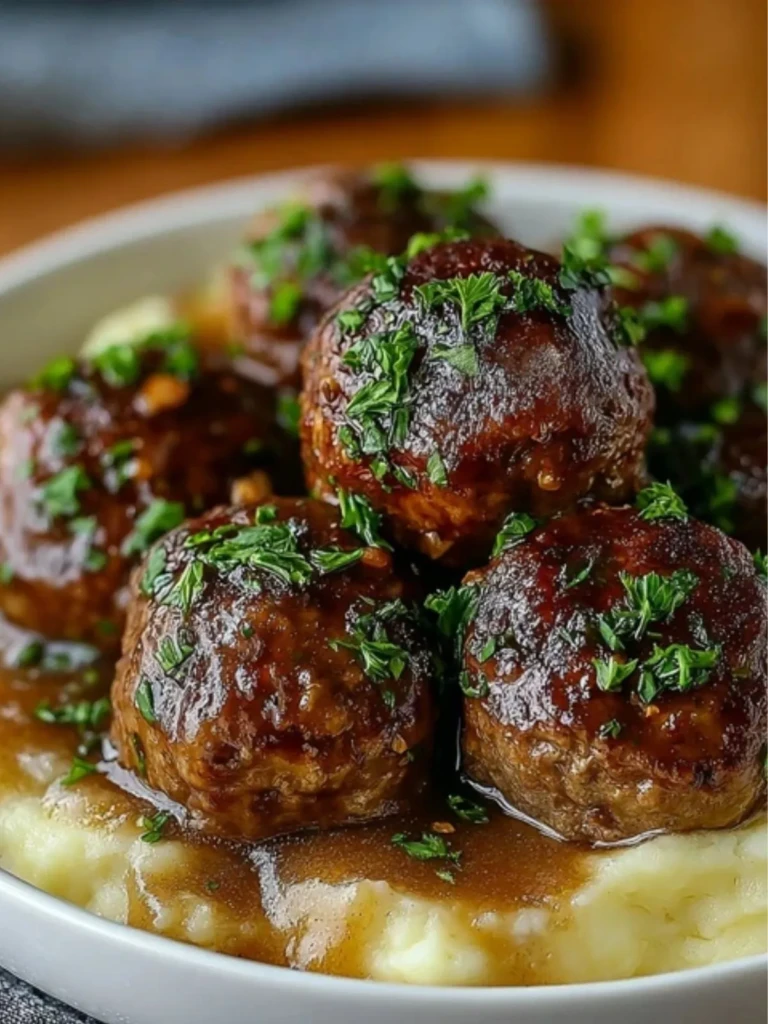
Serving and Storing Salisbury Steak Meatballs
When it comes time to serve these Salisbury steak meatballs, presentation can make a difference in how the comfort is perceived. Spoon the meatballs generously over a smooth bed of mashed potatoes, allowing the gravy to cascade naturally into the crevices. A sprinkle of fresh parsley adds both visual lift and herbal brightness that offsets the richness. This dish shines in a shallow bowl or rimmed plate, which helps cradle the gravy without it spilling across the table.
One of the biggest advantages of this recipe is how well it holds up for make-ahead use. You can fully prepare the meatballs and gravy a day in advance and store them in the fridge. In fact, the flavor deepens as it rests, making next-day servings even more satisfying. Just reheat gently over low heat, adding a splash of stock if the gravy has thickened too much.
For longer storage, freeze the meatballs and gravy together in a sealed container for up to two months. Thaw overnight in the refrigerator before reheating. The texture holds remarkably well, and the flavor is preserved thanks to the rich base and slow simmer technique.
This recipe fits the same storage logic as other sauce-based comfort dishes like beef stroganoff or baked ziti—where flavor builds over time and reheats beautifully. Whether you’re cooking once to eat twice or batch-prepping for family dinners, these meatballs adapt gracefully to your schedule without sacrificing a bit of their homestyle appeal.
A Quick Note on Comparisons With Other Comfort Meatball Recipes
Salisbury steak meatballs often get compared to Swedish meatballs, Italian meatballs in marinara, or even mini meatloaves. What sets this version apart is the combination of classic American steakhouse flavor and deeply savory brown gravy—a profile that’s both nostalgic and robust. While Swedish meatballs lean toward creamy sauces with warming spices, Salisbury-style embraces bold onion and Worcestershire tones that mimic a pan sauce made for steak.
Compared to traditional Salisbury steak, this meatball format offers better portion control, faster cooking, and a more tender result due to the even shaping. Readers often note that this version feels more approachable, especially when feeding children or storing leftovers. You get all the comfort of a traditional diner-style meal, without the risk of overcooked patties or uneven browning.
This recipe also bridges the gap between weeknight practicality and weekend-worthy flavor. Where many meatball recipes focus solely on the sauce or the meat, here, every component—the sear, the gravy, the mash—is developed with balance in mind. That makes it especially popular with readers looking to expand their comfort food repertoire while maintaining a dependable, repeatable cooking process.
If you’ve made other gravy-based meatball dishes, such as mushroom meatballs or French onion beef patties, you’ll appreciate the way this one brings all the pieces together into a cohesive, deeply satisfying dish.
Print
Salisbury Steak Meatballs – Tender, Savory, and Comforting
- Total Time: 55 minutes
- Yield: 4 servings
Description
These Salisbury Steak Meatballs are a comforting twist on a classic American dish. Tender beef meatballs are seared and then simmered in a rich onion gravy and served over creamy mashed potatoes. Ideal for family dinners, make-ahead meals, or when you want homestyle flavor without the hassle of individual steaks.
Ingredients
1 lb ground beef (85% lean)
1/3 cup finely chopped onion
1 clove garlic, minced
1/3 cup plain breadcrumbs
1/4 cup whole milk
1 large egg
1 tbsp Worcestershire sauce
1 tsp Dijon mustard
1/2 tsp salt
1/4 tsp ground black pepper
2 tbsp olive oil (for searing)
1 large yellow onion, thinly sliced
2 tbsp unsalted butter
2 tbsp all-purpose flour
2 cups unsalted beef stock
1 tbsp Worcestershire sauce
Salt and pepper to taste
2 lbs Yukon Gold potatoes
1/2 cup whole milk
4 tbsp butter
2 tbsp sour cream
Salt to taste
Chopped parsley (for garnish)
Instructions
1. In a large bowl, combine ground beef, chopped onion, garlic, breadcrumbs, milk, egg, Worcestershire sauce, Dijon, salt, and pepper. Mix gently until just combined.
2. Shape mixture into 1.5-inch meatballs. Set aside.
3. Heat olive oil in a heavy skillet over medium-high heat. Add meatballs in batches, searing until browned on all sides. Remove and set aside.
4. In the same pan, reduce heat to medium. Add butter and sliced onions. Cook, stirring frequently, until deeply caramelized, about 10-12 minutes.
5. Sprinkle in the flour and stir for 1 minute. Slowly add beef stock while whisking, then add Worcestershire sauce. Simmer until slightly thickened.
6. Return meatballs to the pan and simmer gently in the gravy for 10-12 minutes or until fully cooked through.
7. Meanwhile, boil Yukon Gold potatoes until fork tender. Drain and mash with warm milk, butter, sour cream, and salt until creamy.
8. Serve meatballs over mashed potatoes, spooning gravy on top. Garnish with parsley.
Notes
Use 85% lean beef for the best balance of moisture and flavor.
Let the meatballs rest before searing to help them hold their shape.
Caramelizing the onions slowly builds deeper flavor in the gravy.
- Prep Time: 20 minutes
- Cook Time: 35 minutes
- Category: Dinner
- Method: Stovetop
- Cuisine: American
Nutrition
- Serving Size: 1 plate (with mashed potatoes)
- Calories: 620
- Sugar: 5g
- Sodium: 740mg
- Fat: 38g
- Saturated Fat: 15g
- Unsaturated Fat: 18g
- Trans Fat: 1g
- Carbohydrates: 35g
- Fiber: 3g
- Protein: 30g
- Cholesterol: 155mg
Keywords: Salisbury steak meatballs, brown gravy meatballs, comfort food