
 Mia McKenny

This recipe delivers comfort without complexity. Whether you’re new to casseroles or just craving something that feels nostalgic but tastes refined, this creamy pork chop and potato bake is a foolproof dinner solution. It’s built to feel like a Sunday supper, but streamlined enough for weeknight execution.
What you’ll learn here is how to time and layer the components so the chops stay tender, not dry, and the potatoes soak up all the creamy, savory flavor without turning to mush. Most recipes I’ve seen either overbake the pork or rely too heavily on canned soup shortcuts. This one is different. The balance between homemade creaminess and real-deal texture makes all the difference.
In the broader category of meat-and-potato casseroles, this one stands out because it doesn’t drown in sauce or taste like leftovers before it hits the plate. You’ll walk away with a dish that’s cozy but not clunky, rich but not heavy.
Bringing it to the table, you’re met with golden, lightly crisped chops nestled into a bed of meltingly soft potatoes and creamy sauce with just enough thyme to lift the whole thing. It smells like something you worked on all day—but it didn’t take all day to get here.

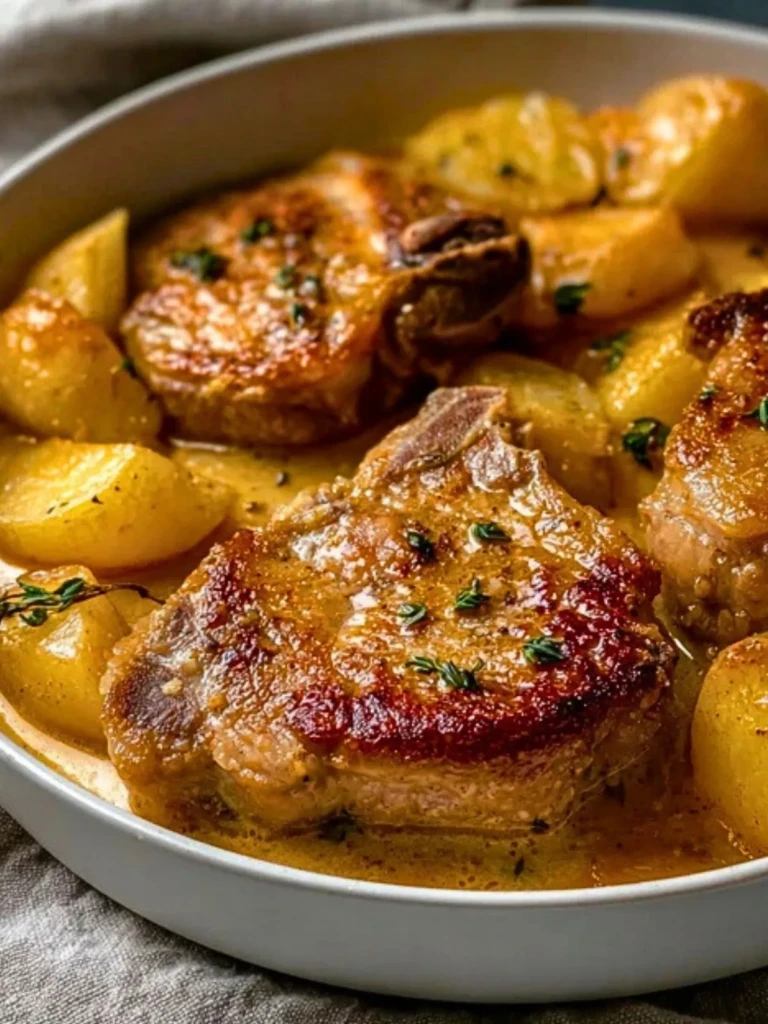
Ingredients for the Creamy Pork Chop Casserole
The casserole begins with thick-cut bone-in pork chops, and that cut is crucial. Bone-in provides both moisture retention and flavor depth that boneless simply can’t replicate under extended oven heat. The thickness—at least an inch—prevents the meat from drying out while the rest of the dish finishes baking.
Gold potatoes are the starch of choice here. Their natural buttery texture breaks down just enough to absorb the cream sauce without disintegrating. I’ve tested this with russets, and while they do soften quickly, they tend to dissolve too much and lack the silkiness golden potatoes bring. Baby Yukon Golds sliced into thick coins hold their shape and create the perfect layered structure beneath the pork.
The creaminess comes from a combination of heavy cream and low-sodium chicken broth. Cream alone can feel too rich and static, but the broth introduces savoriness and fluidity. The low-sodium version gives you more control over the seasoning. A touch of Dijon mustard stirred into the base subtly sharpens the richness and deepens the overall flavor.
Sliced onions add natural sweetness and tender bite after baking, while garlic plays a quiet background role. For herbs, fresh thyme is ideal—its lemony sharpness complements the richness, and its aroma perfumes the entire dish. Dried thyme works in a pinch but use it sparingly; it concentrates during baking.
Finally, a dusting of flour on the chops before searing helps them brown better and adds slight thickening power to the sauce. It’s a small move that pays off when the casserole emerges with a silky, clingy finish instead of a watery pool beneath the potatoes.
Choosing Between Bone-In and Boneless Pork Chops
In testing, the distinction between bone-in and boneless pork chops wasn’t just about aesthetics—it changed the whole eating experience. Bone-in chops maintained their juiciness and developed a deeper flavor in the oven, almost like the bone seasoned the surrounding sauce as it baked. Boneless versions, while convenient, tended to dry out more quickly and lacked the richness that bone-in offered.
The bone acts as insulation, slowing the cooking just enough to allow the chops to stay tender while the potatoes finish cooking. This is especially important in a casserole, where overcooking one layer to finish another is a common failure point. If you must use boneless, reduce the baking time and cover more tightly to preserve moisture—but know that you’ll sacrifice some depth.
Cost and availability sometimes tip the scale. Boneless cuts are easier to find in bulk or pre-packed trays, but if you have a good butcher or can find thick-cut bone-in chops on sale, the payoff is noticeable. For this style of one-pan comfort cooking, bone-in makes the dish feel more intentional and satisfying, both in texture and in flavor retention.
This preference mirrors other classic baked dishes—think chicken thighs with the bone versus skinless breasts. One delivers more forgiveness and flavor over time, and the same holds true here. Choose accordingly depending on your timeline and desired result.
The Searing Method That Protects the Creamy Finish
The key technique that elevates this casserole is a quick, confident sear on the pork chops before they ever touch the baking dish. This single step prevents blandness, keeps the chops from becoming rubbery, and introduces caramelized depth that sets this recipe apart.
Here’s the science: high heat denatures surface proteins and forms a Maillard crust—a browned layer that locks in moisture and intensifies savory flavor. Starting with dry, floured chops helps promote this reaction. If you skip this sear, the pork simply boils in the cream and broth, giving you pale, soft meat and a flat-tasting dish.
Many home cooks worry about overcooking pork at this stage. The sear should only take 2–3 minutes per side—just enough to build color, not cook through. The oven will finish the job gently, surrounded by steam and sauce that keep the chops juicy. A golden crust means more flavor, not dryness.
Visually, look for the edges of the chops to crisp and the center to remain soft to the touch. You’re not cooking fully—you’re building a flavor foundation. The same principle applies in restaurant cooking when proteins are finished in the oven after an initial pan sear. It’s a two-stage method that prioritizes texture and moisture.
Apply this technique any time you bake meat in sauce. It’s how you prevent sogginess, blandness, and that telltale boiled look that so often dooms a casserole.
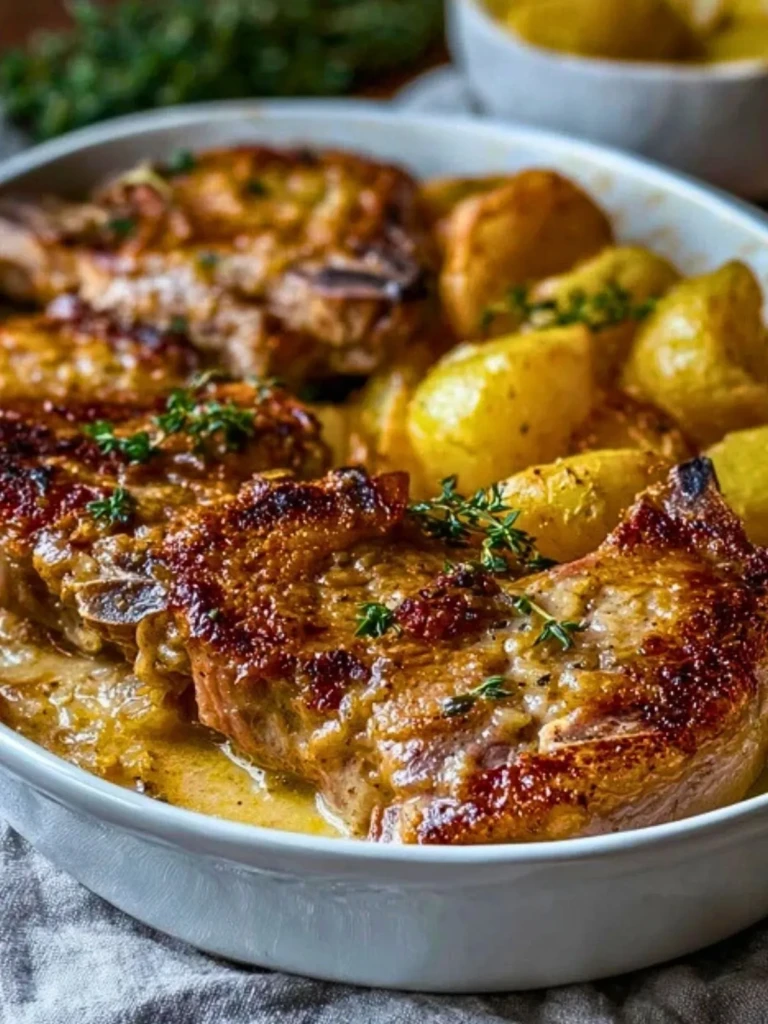
Serving and Storing Creamy Pork Chop Casserole
For serving, I recommend letting the casserole rest for at least 10 minutes out of the oven. This allows the sauce to thicken slightly and gives the juices time to redistribute, especially around the pork. A shallow bowl or rimmed plate works best to catch the cream sauce without it flooding the presentation.
Garnish with fresh thyme sprigs or a crack of black pepper for visual lift. If you’re making it for guests or a special occasion, a light green like sautéed spinach or a lemony arugula salad brings balance to the richness on the plate.
As a make-ahead dish, this casserole performs beautifully. You can assemble it up to the point of baking, cover tightly, and refrigerate overnight. Just allow it to sit at room temperature for 30 minutes before baking to ensure even cooking. Leftovers reheat well, though I prefer using a 300°F oven over the microwave to preserve the texture of the potatoes and the integrity of the sauce.
In terms of storage, the casserole will hold in the fridge for up to 4 days. The flavor actually deepens slightly by day two as the thyme and garlic meld more thoroughly into the cream. It’s also freezer-friendly if portioned into airtight containers—just defrost overnight in the fridge before gently reheating.
This storing method aligns well with other creamy baked dishes like chicken and rice casseroles or scalloped potatoes, where the second-day texture often improves rather than declines.
A Quick Note on Comparisons With Other Pork Casseroles
Compared to traditional pork and potato casseroles, this version avoids the pitfalls of both dryness and oversaturation. Older recipes often relied on condensed soups, which blanket everything in one-note creaminess and mask the individual flavors. Here, the balance of cream, broth, and aromatics allows each element—meat, potato, sauce—to shine through.
The texture is another defining difference. Many casseroles become mushy or grainy, particularly when frozen hash browns or instant potato layers are used. This one retains structure and mouthfeel thanks to the intentional layering and choice of golden potatoes.
What makes this recipe feel elevated is its restraint. There’s no cheese blanket or unnecessary breadcrumbs. That clean profile makes it adaptable—fit for Sunday dinner but streamlined enough for midweek use. It’s the kind of dish that garners second helpings without relying on richness alone.
Readers often say they’re surprised by how “light” it tastes for a creamy dish. That’s the effect of using broth to temper the dairy, and thyme to cut the fat. It’s designed to give comfort food clarity.
Another great comparison is with smothered pork chops, which are typically cooked in a skillet with onion gravy. While those are stovetop and heavier, this baked version achieves a similar flavor profile but with better balance and a more composed presentation.
Print
Tender Chops, Creamy Potatoes, and the Casserole That Tastes Like Sunday
- Total Time: 1 hour 15 minutes
- Yield: 4 servings
Description
Tender, golden-seared pork chops nestled in a creamy, savory bed of Yukon gold potatoes, fresh thyme, and sweet onions. This casserole delivers balanced comfort with rich flavor and melt-in-your-mouth textures—perfect for a Sunday-style dinner made any night of the week.
Ingredients
1 tablespoon flour
4 bone-in pork chops (about 1 inch thick)
1 tablespoon olive oil
1 pound Yukon gold potatoes, sliced into 1/3-inch rounds
1 large yellow onion, thinly sliced
2 cloves garlic, minced
1 cup heavy cream
1 cup low-sodium chicken broth
1 teaspoon Dijon mustard
4 sprigs fresh thyme (or 1/2 teaspoon dried thyme)
Salt and black pepper to taste
Instructions
1. Preheat oven to 350°F (175°C).
2. Lightly flour the pork chops on both sides and season with salt and pepper.
3. Heat olive oil in a large skillet over medium-high heat. Sear pork chops for 2–3 minutes per side until golden brown but not cooked through. Remove and set aside.
4. In a baking dish, layer the sliced potatoes and onions evenly. Sprinkle with garlic and some thyme.
5. In a bowl, whisk together heavy cream, chicken broth, Dijon mustard, and a pinch of salt and pepper. Pour this mixture over the layered potatoes.
6. Nestle the seared pork chops on top of the potatoes and pour any juices from the skillet into the dish.
7. Cover tightly with foil and bake for 40 minutes. Remove the foil and bake an additional 15–20 minutes, or until the potatoes are tender and the top is lightly browned.
8. Let rest for 10 minutes before serving to allow the sauce to thicken and flavors to settle.
Notes
Letting the casserole rest before serving helps thicken the sauce and keeps the pork juicy.
Bone-in chops are preferred for moisture and flavor—boneless may dry out more easily.
For best reheating, use a low oven instead of the microwave to preserve texture.
- Prep Time: 15 minutes
- Cook Time: 60 minutes
- Category: Dinner
- Method: Baked
- Cuisine: American comfort food
Nutrition
- Serving Size: 1 chop with potatoes
- Calories: 540
- Sugar: 3g
- Sodium: 480mg
- Fat: 32g
- Saturated Fat: 16g
- Unsaturated Fat: 13g
- Trans Fat: 0g
- Carbohydrates: 32g
- Fiber: 3g
- Protein: 36g
- Cholesterol: 135mg
Keywords: pork chops, creamy potato casserole, Sunday dinner, baked pork and potatoes